

B4C Manufacturer Explains How to Source High-Purity Boron Carbide for Critical Applications
2026-10-01
Sourcing high-purity boron carbide isn’t just about placing an order—it’s about avoiding costly failures in armor, nuclear, or abrasive applications. Most spec sheets look identical, yet batch-to-batch inconsistencies still derail critical projects. That’s why we asked a B4C manufacturer at HUAYI TECH to break down the real selection criteria, from powder morphology to trace impurity fingerprints, that separate dependable suppliers from the rest.
Why High Purity Is a Starting Point, Not a Guarantee
High purity often gets treated like a finish line, but in practice it merely marks the beginning of what you still need to verify. The label tells you what has been removed, not how the material will behave under your specific conditions. Trace impurities that survive purification can interact with solvents, catalysts, or even container surfaces in ways that a certificate of analysis never captures.
A 99.99% assay sounds reassuring until you realize that the remaining 0.01% may carry the exact functional group or metal ion that poisons your reaction. Batch-to-batch variation within the same purity grade is common, especially when suppliers source precursors from different routes. That is why experienced teams treat purity as a screening criterion rather than a release criterion, and they build in their own incoming quality checks.
What actually matters is fitness for a defined purpose. Sometimes a lower nominal purity with a cleaner impurity profile outperforms a higher purity lot that contains one troublesome contaminant. Asking for a detailed impurity profile and understanding the purification method gives you far more predictive power than chasing an extra decimal point on a spec sheet.
The Supplier Questions That Reveal More Than Any Brochure
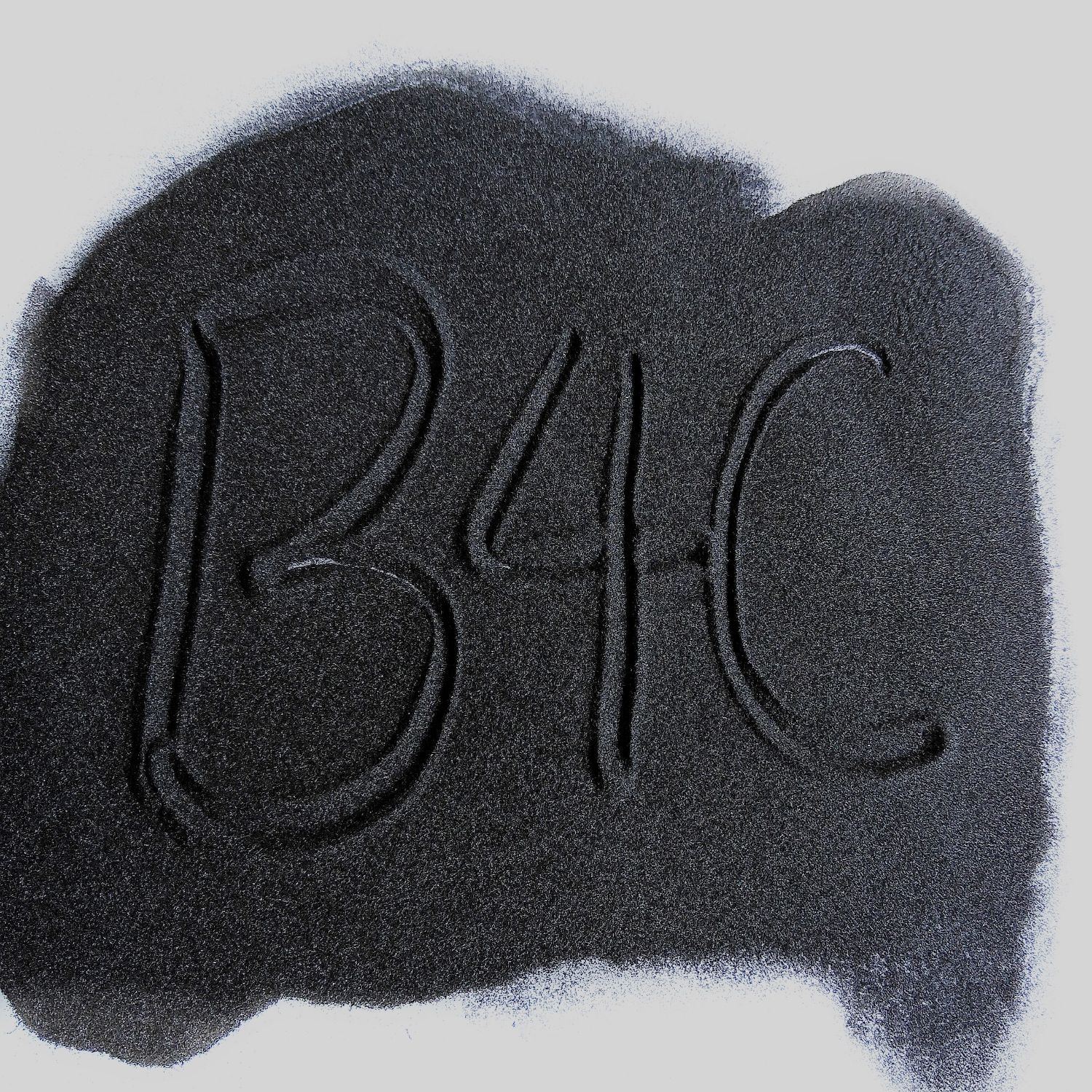
Brochures paint a polished picture, but they never show you what happens when a production line goes down at 2 a.m. or when a key material suddenly doubles in price. The real story comes from asking suppliers how they've handled their worst weeks, not their best trade shows. A question like "What was the last order you had to rework, and what triggered it?" cuts through the marketing gloss faster than any spec sheet ever will.
You also want to know who actually answers the phone when something goes sideways. Not the sales rep, but the person in charge of fixing mistakes. Ask for a specific example of a shipment that arrived late or wrong, then listen for blame-shifting. Suppliers that own the failure and explain the changed process are worth ten that hand you a flawless brochure.
Finally, ignore the glossy capacity charts. Instead, ask how they prioritize customers during peak season and what percentage of their production is already booked. The answers reveal whether you'll be a name on a list or a partner they actually protect when demand spikes. That's information no brochure can print.
How to Audit a Manufacturer's Quality Control Without Leaving Your Desk
Start by requesting the manufacturer's batch records and inspection logs for the last three production runs. Don't accept summaries—ask for raw, unedited forms that show actual measurements, pass/fail counts, and any deviations noted on the line. Look for signs of routine, not polish: repeated handwriting in the same pen, timestamps that vary by minutes rather than perfectly rounded hours, and marginal notes that reference real issues like a dull cutting tool or a humidity spike in the coating room. If every entry is flawless and every checkbox ticked without a single correction, that's a red flag, not a reassurance.
Cross-check those records against their own internal defect data. A factory that claims a 0.2% rejection rate but ships you 5% returns is hiding something—either they're not measuring the right things, or they're culling bad units before inspection. Ask for the rework and scrap tallies by shift and by operator; a drop in scrap on one line while output doubles almost always means inspection is being skipped or gamed. Remote audits fail when you focus on the final certificate, so force the conversation toward where rejects go and who decides what gets remade versus shipped.
Finally, schedule a live video walkthrough of the in-process inspection stations, not the final QC bench. Have them show you the first-article sign-off for a current order, then ask the line supervisor to explain the last three nonconformities they caught and what action followed. If the supervisor can't recall any recent rejects or describes them only vaguely, their quality loop is broken. A strong manufacturer will walk you through a specific failure—the color drift on a molded part, the burr on a machined edge—and show you the updated control plan that prevented a repeat. That kind of specificity can't be rehearsed, and it tells you more than any audit report ever will.
What Critical Applications Actually Demand from Boron Carbide Powder
When engineers spec boron carbide for ballistic armor, they're not just ticking a box for high hardness. They need a powder that presses into a plate with near-zero porosity, because any void becomes a crack initiation point under multi-hit impact. The real demand is for consistent particle size distribution within a tight range—typically 0.5 to 5 microns for hot-pressed tiles—so that sintering reaches full density without excessive grain growth. Off-spec fines or agglomerates silently compromise the armor's ability to stop a second round, which is why lot-to-lot reproducibility matters more than the nominal Vickers number on a datasheet.
In nuclear shielding and control rod applications, the conversation shifts entirely. Here, the critical parameter is the B-10 isotope content and its uniformity across the powder batch. A bulk enrichment of 20% means nothing if segregation during blending leaves some pellets neutron-transparent. Likewise, the oxygen and carbon impurities must stay below a few hundred parts per million, because they form low-melting phases that degrade the ceramic's integrity inside a reactor core. No one gets a second chance to swap out a cracked absorber plate once the fuel is loaded.
Abrasive and lapping uses demand a different profile again: sharp, blocky particles that fracture micro-chipped edges rather than rounding over. The powder must resist hydration in water-based slurries, as boron carbide slowly reacts with moisture to form boric acid, dulling the cutting action. Users also push for high tap density to keep slurry viscosity manageable, but not at the expense of oversized grains that would scratch the workpiece. Ultimately, each critical application defines its own non-negotiable powder characteristics—and suppliers who treat boron carbide as a commodity rarely last long in these niches.
The Hidden Costs of Inconsistent Particle Size and Contamination
In most processing lines, particle size variation rarely announces itself. It shows up later as uneven mixing, poor flowability, or a coating that won’t adhere the same way from one batch to the next. Operators compensate by adjusting machine settings on the fly, lengthening cycle times, or accepting a wider quality window—all of which quietly erode margin. The real cost isn’t a single rejected lot; it’s the accumulated time spent troubleshooting, the extra raw material used to rework borderline product, and the gradual drift in customer trust when specifications are only “mostly” met.
Contamination operates on the same principle, but with sharper consequences. A few foreign particles can force a full line stoppage, deep cleaning, and disposal of in-process inventory. Even when the contamination is caught before shipment, the hidden costs pile up: idle labor, missed production slots, and the need to re-validate equipment before restarting. For regulated industries, the burden is heavier—traceability investigations, documentation, and potential audit findings that tie up quality teams for days rather than hours.
What often gets overlooked is how these two problems feed each other. Inconsistent particle size creates fines or oversized chunks that break off and become their own contamination source. Conversely, a contaminated feedstock can alter particle breakage behavior, making the size distribution even less predictable. Breaking that cycle demands more than a final sieve or a metal detector; it requires controlling the material’s journey upstream, where the real savings hide.
Building a Sourcing Checklist That Separates Serious Suppliers from the Rest
Most sourcing checklists fall apart because they collect the same polished PDFs every factory hands out. A checklist that actually separates serious suppliers starts with evidence of operational discipline. Ask for an unannounced video walkthrough of the production floor, a recent third-party audit with corrective actions marked as closed, and the name of a quality manager who can explain defect rates without deflecting. These requests shift the supply base from sales storytelling to verifiable process.
A second layer should test how a supplier handles problems, not just praise. Request line trial records for your exact SKU, raw material traceability for the last three batches, and a written escalation path if a batch falls outside tolerance. Serious suppliers will share a past order that went wrong and show the containment steps they took before shipping. If a factory hesitates on these items or gives vague answers, that hesitation is itself a useful data point.
Finally, use a weighted scorecard instead of a pass/fail list. Give higher weight to current season production capacity, equipment maintenance logs, workforce turnover rate, and packaging line error tracking. Compare suppliers side by side with those numbers. The point is not to find a flawless factory, but one whose weaknesses are visible enough to manage before they reach your customers.
FAQ
High purity in boron carbide typically means a total B4C content above 99 percent, with the boron-to-carbon ratio close to 4:1. More importantly, trace elements like iron, silicon, aluminum, and oxygen should be kept in the low parts per million range. For radiation shielding, even small amounts of neutron-absorbing impurities can alter the shielding performance enough to fail certification tests.
Certificates are a starting point, but they can hide batch-to-batch drift or use a single test method that misses certain contaminants. A better approach is to request retained samples from the last three production runs, send those to an independent lab for ICP and XRD, and compare the supplier's internal data with the third-party results. If there's a consistent mismatch, move on.
Particle size distribution, tap density, specific surface area, and particle shape all influence how the powder behaves during hot pressing or sintering. A powder with perfect chemistry but a narrow, fine particle size might oxidize too quickly or fail to pack densely, causing porosity in the final ceramic.
Iron, silicon, and oxygen are the biggest concerns. Iron above 0.1 weight percent can form brittle phases, while excess oxygen reacts with boron to create boron oxide which lowers sintered density and weakens grain boundaries. For nuclear-grade powder, total oxygen below 0.5 weight percent and individual metallic impurities below 100 ppm are common targets.
Request a small press-and-sinter trial under your own conditions before committing to a large order. Measure green density, shrinkage, and final hardness. Also examine the fracture surface under SEM. If the supplier cannot provide powder that reaches 95 percent theoretical density under standard hot pressing, their ultrafine claim is mostly marketing.
Nuclear-grade boron carbide usually means the boron-10 isotope abundance has been verified, often at natural levels around 19.9 percent or enriched for specific reactors. It should also meet ASTM C750 for powder characteristics and come with documentation of every lot from raw ore to finished powder. Without full traceability, the label means little.
Start by writing a clear technical specification: chemistry limits, particle size range, isotope needs, and acceptable test standards. Then shortlist manufacturers who have supplied similar components, not just sold powder. Request 500-gram samples from two or three candidates, run your own qualification, and only then negotiate long-term pricing and lot-release agreements.
Conclusion
Sourcing boron carbide for armor, neutron shielding, or wear-resistant components starts with the obvious demand for high purity, but any serious buyer quickly learns that a 99% assay on paper is just the entry ticket. What matters is whether the manufacturer can prove that purity translates into predictable behavior in your process. Ask pointed questions about where the raw B4C powder comes from, how it is milled and classified, and what steps are taken to prevent cross-contamination from tungsten carbide media or iron pickup. A supplier who hesitates to share batch-specific particle size distributions, trace metal reports, or cleaning procedures is hiding more than a brochure can reveal. Remote audits are now entirely feasible: request the actual batch records for the last three production runs, compare the certificate of analysis against an independent third-party lab test you commission yourself, and ask for a short video walkthrough of the sieving and packaging area. If the supplier refuses, treat that silence as a red flag.
Critical applications rarely fail because the powder is slightly impure; they fail because particle size drifts between lots, fines accumulate in corners, or a single contaminated drum finds its way into an armor tile. These hidden costs show up as poor sintered density, uneven hardness, or unexpected absorption in neutron shielding, and they often surface only after you have already committed to a production run. That is why a sourcing checklist should force the manufacturer to commit to lot-level traceability, specify maximum allowable levels for iron, silicon, and free carbon, and provide a reference sample for your own incoming inspection. Verify that their quality system includes sieving under controlled humidity, metal-free milling, and final packaging in clean, lined drums. When you compare suppliers, weigh the price against the cost of a rejected batch or a field failure; the cheap quote usually hides exactly the inconsistency and contamination you cannot afford.
Contact Us
Contact Person: Junting Leo
Email: [email protected]
Tel/WhatsApp: +86 18615009766
Website: https://www.huayimaterial-china.com/