

Best In Line Shuttle Machine for Streamlined Material Handling
2026-11-02
Material handling has a dirty little secret: most slowdowns aren't caused by big failures, but by the clumsy handoffs between stations. That's where the best in-line shuttle machine changes the game. Instead of forcing your production flow to work around fixed transfer points, Rising Sun builds shuttles that adapt to the pace your line actually runs—not the pace a brochure promises. If you're tired of watching parts pile up at the crossover, this post is for you.
Why High-Mix Manufacturers Keep Switching to In-Line Shuttle Systems
Running a high-mix production floor feels like juggling a dozen different recipes in one kitchen. Every order brings its own size, routing, and tooling needs, and traditional fixed conveyors simply can't keep pace without costly downtime or manual reconfiguration. This constant friction pushes managers to look for layouts that bend instead of break when the next product variant hits the line.
In-line shuttle systems answer that call by turning each carrier into a small, independent work platform. Instead of forcing every unit down the same rigid path, shuttles can pause, branch off, or loop back based on real-time instructions. That means a batch of ten custom assemblies and a batch of two hundred standard units can share the same line without halting for changeovers or sacrificing cycle time. Operators also waste less energy walking between stations, since the next job comes to them at the right moment.
The shift isn't just about flexibility on paper—it shows up in daily numbers. Shorter setup times, fewer errors from misrouted parts, and the ability to slot in rush orders without disrupting the whole schedule quickly add up. For plants that live and die by handling variety, the in-line shuttle becomes less of an upgrade and more of a survival tool, which is why adoption keeps climbing among high-mix manufacturers.
What Actually Happens When a Shuttle Replaces Static Transfer Points
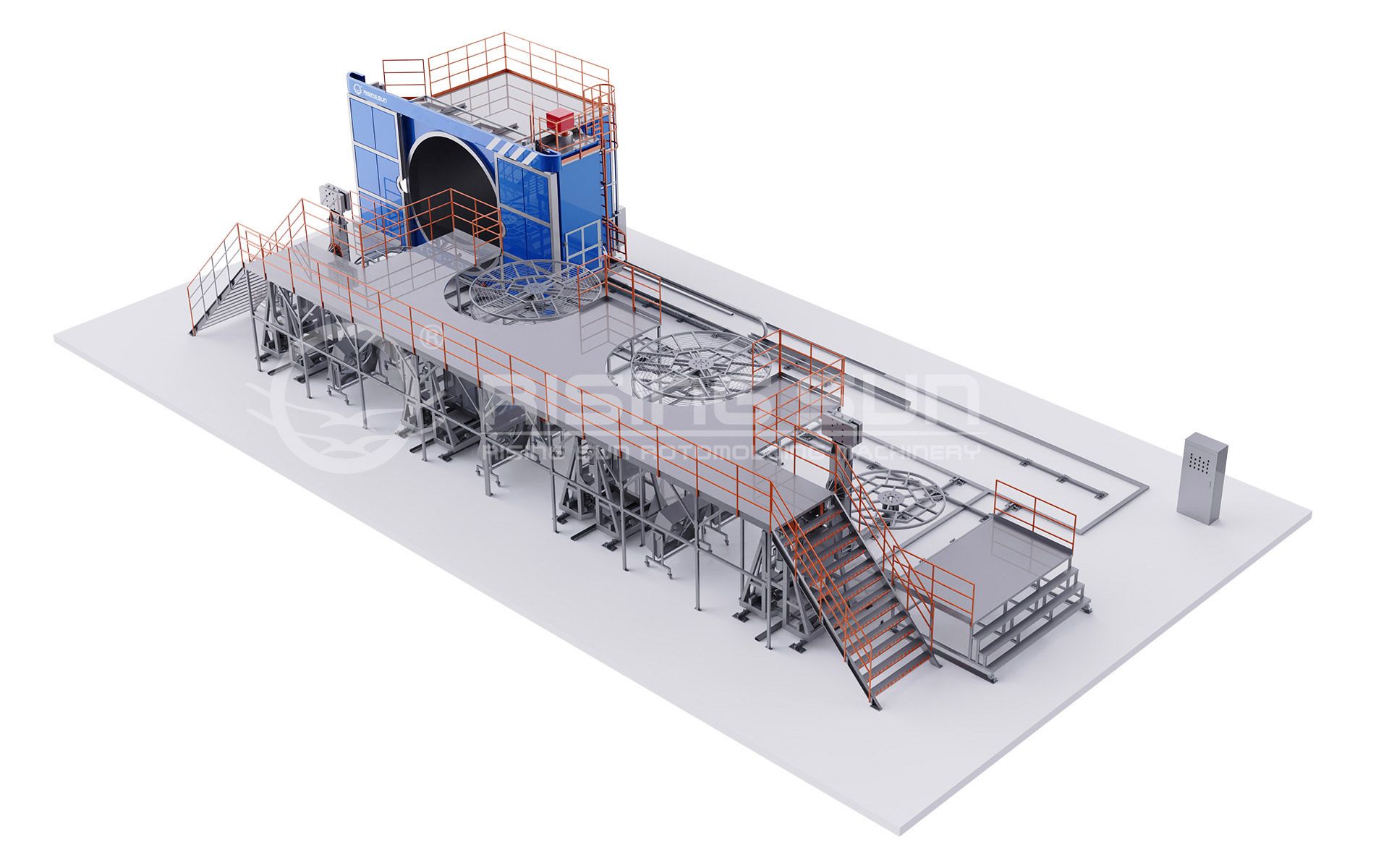
Static transfer points force a hard break in the flow of materials. A shuttle removes that break by physically moving goods from one conveyor or lane to another in a controlled arc. The moment a carton leaves the feed line, the shuttle grips it—often via a small carriage or clamp—and accelerates across a short gap. That gap, once a dead zone where boxes slammed into guides or needed manual nudging, becomes an active lane. Operators stop watching for jams and start trusting the rhythm.
The most immediate change is the disappearance of hang-ups. With no fixed side rails forcing a turn, a box never has to pivot against a static surface and risk catching a flap. The shuttle’s path can be curved or straight, and because the carrier moves with the product, there’s no scrubbing, no skewing. You also lose the need for high-friction wear strips and the constant tuning of guide rails. In plants running mixed case sizes, this is the difference between a line that runs all afternoon and one that stops every forty minutes.
But the real shift is operational. A static point locks the layout—move a conveyor an inch and the transfer angle changes. A shuttle is programmable. It can pick from one lane and place to two or three, altering drop points based on barcode data. That flexibility lets a facility handle peak volumes without adding dedicated spurs. Maintenance changes too: instead of lubing and checking rail wear, technicians watch the shuttle’s drive belt and encoder. It’s a cleaner, faster, and far less fragile connection.
The Overlooked Link Between Shuttle Timing and Line Balance
Most line-balancing exercises treat shuttle movement as a fixed input: a cart leaves every ninety seconds, so the math works out. In practice, shuttle timing drifts the moment operators stop watching the clock. A forklift waiting at a merge point, a sensor delayed by dust, a pallet that isn't square on the forks—each adds seconds that don't show up in the takt time. Those seconds accumulate unevenly across the line, so some stations run dry while others pile up work-in-process. The balance sheet still looks fine on the weekly average, but the hour-by-hour rhythm is broken.
The fix isn't just faster shuttles. It's tying shuttle dispatch to actual station demand rather than a fixed schedule. When a downstream station drops below its buffer threshold, the shuttle should already be in motion, not waiting for the next cycle. That means looking at variance, not just averages. Two lines can have the same nominal cycle time and completely different stability because one shuttle loop has twenty seconds of slack and the other has three. Shuttle timing is where line balance stops being a spreadsheet exercise and starts becoming an operational behavior.
Sizing an In-Line Shuttle Without Overbuilding for Peak Demand
Many system integrators still default to multiplying the highest observed hourly order volume by a safety factor to determine the number of in-line shuttles. The result is a fleet that operates at full capacity for perhaps forty-five minutes a day and loafs through the rest of the shift. Peak demand in a warehouse is rarely a sustained plateau; it spikes during a narrow window after order cutoff or before carrier pickup, then collapses. Designing for that spike as if it were continuous wastes capital, floor space, and energy. Instead of asking how many shuttles are needed at the absolute busiest moment, it is more useful to ask how much of that spike can be absorbed by the buffer already built into the system.
A better approach starts with a histogram of actual throughput over a rolling two-week period, not a single worst-case number. If the median demand sits at sixty percent of peak, and the peak persists for only twenty minutes before falling back, then one can often cover the shortfall by temporarily increasing shuttle speed, shortening docking dwell time, or allowing the pick stations to pull from pre-staged totes. Some facilities go further: they run the shuttle loop slightly hot during the peak window, accepting a modest reduction in battery life as a trade-off against buying two extra units. The trick is to know the shape of the demand curve before committing to hardware. Shuttle systems with modular charging and hot-swappable power packs make this easier, since you can add a unit for a seasonal surge without permanently expanding the loop. Sizing becomes less about guessing the worst hour and more about matching the fleet's recovery rate to the rate at which orders actually arrive.
How to Read Throughput Data Before You Commit to a Shuttle Layout
Throughput specs on a shuttle system rarely tell the whole story. A vendor might quote a peak rate of 600 totes per hour per aisle, but that figure often assumes a steady stream of single-SKU loads, no operator pauses, and all lifts running at full tilt. To make a sound layout decision, pull apart that headline number and ask what it actually measures. Is it system-wide or per-aisle? Does it include time for shuttle acceleration, deceleration, and positioning at each pick face? If the number comes from a clean demo loop rather than a real shift with replenishment mixed in, treat it as an upper bound, not a planning target.
Next, match throughput to your order profile rather than to a generic warehouse. Look at your own transaction mix: how many lines per order, what percentage are full-case picks, how often do you need to cycle the same shuttle to multiple levels. If most picks are singles and you run a lot of urgent orders, the bottleneck may not be shuttle speed but lift capacity or the number of buffer positions at the workstation. Pull a week of WMS data and count the peaks — not the average. A layout that handles 400 units per hour on average but chokes at 3 p.m. wave spikes will create more labor cost than a slightly slower design with better surge buffering.
Before you commit, run a simple what-if test on the proposed aisles. Pick three or four real order waves from your history and trace how totes would move between storage, picking stations, and replenishment. Count wait states: shuttles waiting for a lift, lifts waiting for a shuttle, pickers waiting for a tote. If any one of these queues dominates the model, adjust the layout — add a second lift, shorten the aisle, or change the shuttle-to-station ratio. A small change in these proportions often yields more real throughput than a faster shuttle. Spending an afternoon on this before sign-off is far cheaper than discovering a queue you cannot remove after the racks are bolted down.
Common Integration Pitfalls That Surface After the First Shift
The first shift after an integration goes live often feels like a victory lap. Dashboards show green checkmarks, APIs return expected payloads, and the queue moves without hiccups. But some of the most damaging failures don't appear until the second shift arrives. That's when overnight batch jobs collide with morning user traffic, when a vendor's rate limit quietly expires, or when a cached token that worked for eight hours suddenly rejects every downstream call.
One recurring issue is the assumption that test data reflects production behavior. Teams validate against sanitized records with predictable timestamps and no missing foreign keys. Real customers, however, create edge cases within minutes: orders with negative quantities, addresses with unicode characters, or webhooks that arrive out of sequence. By the second shift, the integration starts logging exceptions that no one configured alerts for, because the monitoring dashboards only track success rates, not partial failures or silent retries.
Another overlooked pitfall is handoff documentation. The engineer who built the connector leaves notes like "retry on 429" but never specifies whether that retry should be exponential, capped, or idempotent. The second shift operator, lacking that context, either floods the endpoint or disables the retry entirely. These issues rarely show up in the first few hours, which is why a post-first-shift review should deliberately probe for drift, error queues, and stale assumptions rather than relying on the initial green light.
FAQ
Its biggest strength is predictability. The shuttle follows a defined path and repeats the same motion, so you get consistent cycle times without needing an operator at every station.
A conveyor simply moves items forward, while a shuttle can accelerate, decelerate, and position a load at exact points. That precision helps when you need to align parts for robots or manual assembly.
Automotive, electronics, packaging, and medical device manufacturing all use these shuttles because they reduce manual lifting and keep work zones organized.
Check the maximum payload, travel length, repeatability, and whether the control system can talk to your PLC or MES. Also look at how easy it is to access the shuttle for tooling changes.
Many designs use adjustable stops or programmable positions, so they can accommodate different part lengths and weights as long as you stay within the rated limits.
Keep the rails clean, lubricate the linear bearings and drive screw or belt, and periodically verify that end stops and sensors are still aligned. Small checks prevent larger drift issues.
Yes, because it moves in a straight line and can be installed between existing workstations. You avoid adding a large loop or rotary indexer, which frees up room for operators and tool storage.
Forgetting to plan for cable management or safety guarding. The shuttle’s travel zone must be clear, and power or air lines need enough slack to follow the motion without snagging.
Conclusion
High-mix production lines rarely tolerate the rigid handoffs of a conventional fixed conveyor. The moment you pull out a static transfer point and drop in an in-line shuttle, what changes isn't just the move itself. It's the pace of the entire cell. A shuttle that arrives two seconds late doesn't simply delay one station—it forces the next operator to wait, then rush, then compensate. That ripple is why line balance and shuttle timing deserve the same attention as payload or travel speed. Most teams obsess over cycle time per move but ignore how that move syncs with upstream release and downstream buffer capacity. When you get the synchronization right, high-mix changeovers stop being an argument about fixtures and start being a non-event. The shuttle becomes less of a transport device and more of a metronome for the line.
Sizing a shuttle for peak demand is a common trap. Engineers often add extra stations, wider carriages, or faster drives to cover a theoretical worst case that shows up twice a month. The result is a machine that eats floor space, waits idle, and costs more to maintain. Instead, read your real throughput data: look at the distribution of transfer times, not just the average. You'll often find that 80% of moves fit a modest envelope, and the outliers are better handled with a small buffer than a bigger shuttle. After the first shift, watch for integration problems that don't appear in CAD models. Sensor brackets drift, handshake timing slips, and operators learn to nudge the shuttle past a fault instead of fixing the root cause. Those small workarounds become the new normal, and suddenly the best shuttle on paper is just another bottleneck. A good in-line shuttle machine is not the one with the most impressive spec sheet. It's the one that still matches your line's actual rhythm three months after installation.
Contact Us
Contact Person: Sharon Zhu
Email: [email protected]
Tel/WhatsApp: 8615712666272
Website: https://www.risingsunroto.com