

China Boron Carbide: Leading Supplier Insights and Industry Applications
2026-11-02
Boron carbide often flies under the radar, yet it quietly powers everything from bulletproof vests to nuclear reactors. As China cements its role as the world's leading supplier, the question isn't just who can deliver—but who can deliver with precision and reliability. Enter HUAYI TECH, a name that's reshaping expectations in high-performance ceramics. In this article, we dive into the real-world applications driving demand and explore why industry insiders are turning to Chinese suppliers for a competitive edge. From abrasive grit to neutron shielding, the next few paragraphs might just change how you view this unassuming black powder.
Inside China's Boron Carbide Belt: Key Production Clusters and Output Trends
The geography of China’s boron carbide industry is far from uniform. Production clusters have formed in regions where raw material access, energy costs, and downstream demand intersect. Henan province, particularly around Zhengzhou and Luoyang, has emerged as a dominant hub due to its long-standing abrasive materials ecosystem and proximity to bauxite and coal-based power. Shandong’s Weifang and Zibo districts also host a dense network of small and mid-sized producers, many of which specialize in ceramic armor plates and nuclear shielding components. In the northwest, Gansu and Qinghai have gained traction by leveraging lower electricity tariffs for arc furnace smelting, a critical stage in boron carbide synthesis. These clusters are not static; they shift as local environmental enforcement and industrial policy reshape the cost landscape.
Output trends reveal a two-speed market. Large integrated producers have expanded capacity for high-purity grades used in neutron absorption and wear-resistant applications, while smaller operators focus on lower-cost powders for abrasives. Over the past five years, national output has climbed steadily, but the pace has been uneven. Some older clusters in inland provinces have stagnated due to furnace efficiency limits and tighter emissions standards, while coastal and western hubs have absorbed the growth. Seasonal factors also matter—production often dips before the Lunar New Year as migrant workers return home, then rebounds sharply in the second quarter.
What makes this belt distinctive is the tight coupling between end-use demand and regional specialization. Armor-grade material flows mainly from Shandong and Henan to export-oriented machining centers, while neutron shielding ceramics are increasingly produced near nuclear equipment manufacturers in Sichuan and Liaoning. This spatial logic means that a disruption in one cluster, whether from power rationing or raw material price spikes, rarely stays local. Buyers who map only total national output can miss these regional fault lines, leaving them exposed when a single county’s furnaces go quiet.
Supplier Vetting Beyond Spec Sheets: Consistency, Traceability, and Real Batch Data
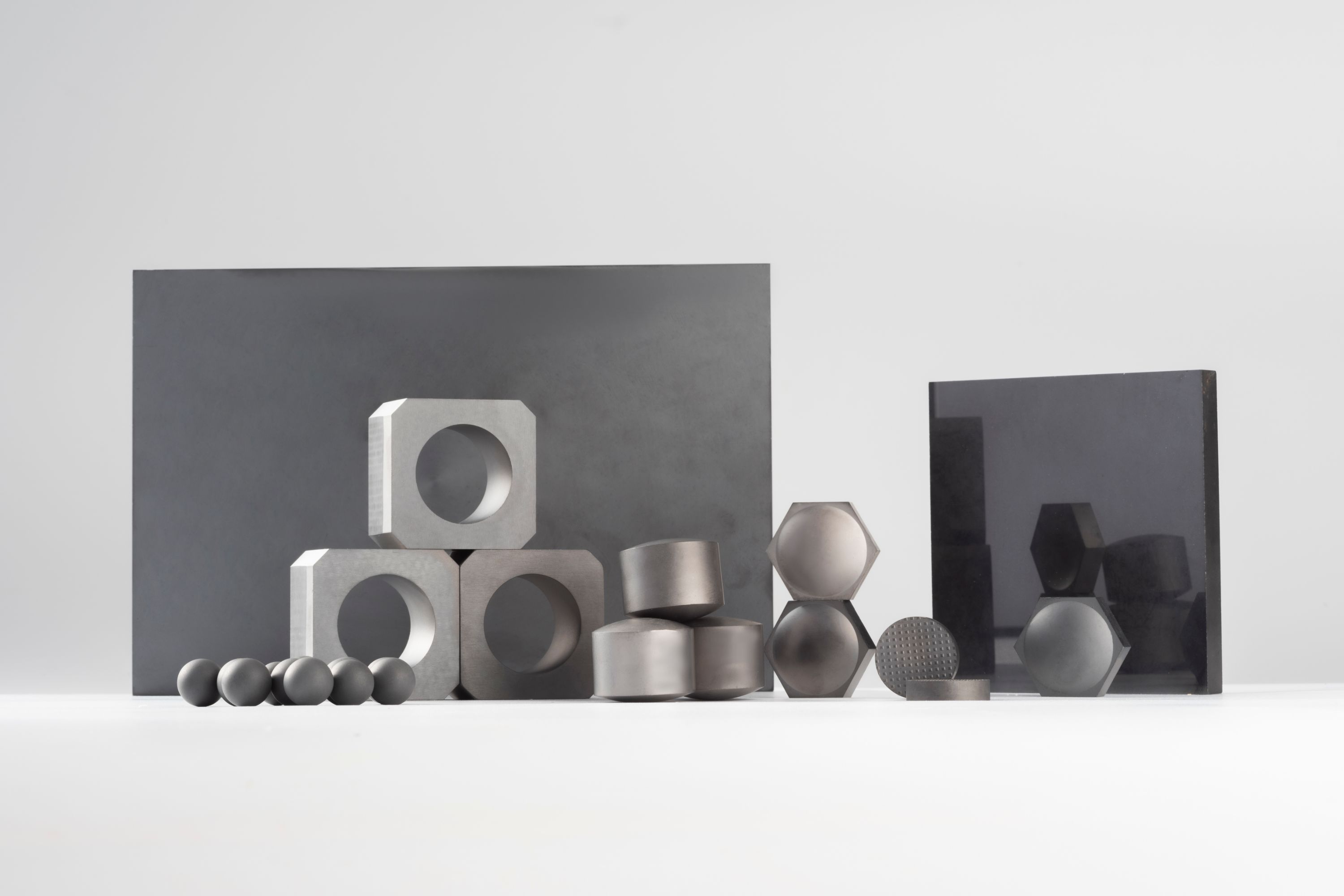
Spec sheets are a supplier's best-case scenario. They don't reveal how often a batch barely squeaks through, or how much rework happens before release. I always ask for the last ten batch records with raw test values, not just pass/fail flags. If tensile strength hovers near the lower limit on seven out of ten lots, that's not consistency—that's luck.
Traceability on paper means nothing until you test it. Have the supplier trace a single batch from incoming raw material certificates to the final shipping manifest, including any in-process adjustments. Most can't do it in under an hour, and that delay tells you more than any ISO certificate.
Real batch data also exposes hidden variation. Compare the coefficient of variation for critical parameters across at least twenty lots. A supplier can quote a tight specification range, but if their actual data clusters near the edges, you'll inherit that instability. Ask for unedited QC logs, not the cleaned-up summary they usually attach to a quote.
Ballistic Armor Grades: Why Chinese Boron Carbide Keeps Gaining Ground
Ballistic armor grades exist because a single material can't handle every threat level. From soft panels rated for handgun rounds to rigid inserts that stop rifle fire, the hierarchy is usually defined by standards like NIJ or VPAM. Within that spectrum, boron carbide has long occupied the high-end slot—light, incredibly hard, but historically pricey. What's changing now is that Chinese production has quietly rewritten the cost equation. The same NIJ Level IV plates that used to command a premium are becoming far more accessible, and that shift is forcing serious conversations about supply chains, quality control, and what actually constitutes 'good enough' in a life-or-death product.
A big part of why Chinese boron carbide keeps gaining ground comes down to sintering scale. Producing this ceramic requires reaching temperatures above 2,000°C and managing grain growth meticulously—two things that get cheaper with volume. Chinese manufacturers have invested heavily in large-batch hot pressing and pressureless sintering techniques, driving defect rates down while output climbs. The result isn't just a flood of cheap plates; it's a steady improvement in consistent density and hardness. Independent ballistic tests from buyers in Europe and Southeast Asia increasingly show Chinese plates matching or exceeding the performance of legacy US or Israeli equivalents, often at half the retail price. That kind of gap doesn't stay niche for long.
Still, the rise of Chinese boron carbide isn't purely a story of manufacturing efficiency. Trade dynamics, raw material access, and evolving procurement habits all play roles. Countries that once relied on Western armor suppliers are now mixing sources, partly to hedge against supply disruptions and partly because the performance data has become hard to ignore. For consumers and agencies alike, the practical outcome is clear: the old assumption that high-grade boron carbide armor must carry a Western brand premium is eroding. The plates themselves perform, the grades are verifiable, and the market is adjusting to a new equilibrium where materials science, not geography, is the main differentiator.
Neutron Absorption Markets: The Unseen Demand Driver for Chinese Suppliers
Neutron absorption might not be the first thing that comes to mind when thinking about nuclear supply chains, but it quietly underpins almost every stage of the fuel cycle. Control rods, spent fuel racks, and radiation shielding all rely on materials that can soak up neutrons without creating secondary radiation hazards. As more reactors come online and existing fleets push for higher burnup rates, the need for high-purity boron compounds, cadmium sheets, and hafnium-based alloys has grown at a pace that often escapes mainstream market commentary.
Chinese suppliers have carved out a meaningful position in this specialized segment by pairing cost-effective production with a growing track record in nuclear-grade quality control. Facilities in Zhejiang and Liaoning, for example, now produce boron carbide powders and hot-pressed plates that meet international specifications, while local manufacturers of neutron-absorbing polymers have expanded into export markets that were once dominated by European and North American firms. The shift is not driven by aggressive pricing alone; cumulative investment in testing infrastructure and certification has made Chinese products more acceptable to buyers who previously viewed them with caution.
What makes this demand driver particularly difficult to see is the nature of the procurement cycle. Nuclear projects move slowly, and many purchases are tied to long-term maintenance or decommissioning schedules rather than headline-grabbing construction announcements. Yet, as spent fuel pools reach capacity and regulators tighten safety margins, the need for reliable neutron absorbers continues to climb. Chinese suppliers are increasingly positioned to serve this quiet but persistent market, turning a niche industrial requirement into a stable growth channel.
From Lapping to Slicing: Boron Carbide's Overlooked Edge in Precision Abrasives
Boron carbide rarely gets the same attention as diamond or silicon carbide in precision abrasive work, but that misses a key advantage: it sits in a sweet spot between hardness, density, and slurry behavior. In lapping, where flatness and low subsurface damage matter more than raw speed, B4C particles fracture into fresh cutting edges instead of dulling into rounded fines. That means the plate keeps cutting evenly across long runs without the sudden drop in removal rate you often see with alumina or fused silica.
Move from lapping to slicing, and the overlooked edge becomes even more practical. Wire saws running boron carbide slurry on sapphire or silicon carbide can hold a thinner kerf because the abrasive stays suspended at lower viscosity, reducing wire drag and heat buildup. Operators notice fewer foam issues and less agglomeration in the tank, which keeps the kerf consistent from the first wafer to the last. It is not a miracle abrasive, but for shops tired of babysitting diamond slurries or fighting silicon carbide breakdown, boron carbide offers a stable middle path that is often cheaper per cut.
The real difference shows up in process stability. Boron carbide does not embed into softer workpieces as readily as diamond, nor does it polish out as fast as silicon carbide. That combination reduces rework on lapped surfaces and shortens cleanup between slicing batches. In precision work where repeatability carries more weight than headline removal rates, that quiet consistency is exactly the edge most people overlook.
What Global Buyers Watch Before Committing to a Chinese Boron Carbide Contract
Before signing anything, experienced buyers dig into the consistency of the boron carbide powder itself. They aren't just checking the quoted purity percentage; they want batch-to-batch particle size distribution data, actual XRD results, and evidence that the B4C phase content matches what the spec sheet claims. A common trap is assuming a low price means a smart deal, when in reality a supplier might be blending recycled or off-spec material to hit a number. Smart procurement teams request retained samples from the last three production runs and compare them against independent lab reports before even discussing payment terms.
Logistics and export compliance quietly decide whether a contract survives first contact with reality. Chinese boron carbide is a dual-use item in many jurisdictions, so buyers verify the exporter's license history, the correct HS code classification, and whether the supplier has handled shipments to their region before. One overlooked detail is packaging: moisture-resistant liners, double-bagged vacuum sealing, and palletization that survives ocean freight matter more than a flashy certificate. Ask for photos of the exact packing line and a recent bill of lading with the same incoterms you plan to use.
Finally, serious buyers probe the human side of the factory. A quick video call walking through the crushing and classification area reveals more than any brochure. They look for calibrated sieves, dust control systems, and a quality manager who can explain rejection criteria without reading from a script. References from other international clients carry weight, but so does the supplier's willingness to share a deviation report from a past shipment. If a vendor can't discuss a past failure and how it was corrected, that's often the clearest signal to keep looking.
FAQ
Chinese producers have access to abundant boron-rich raw materials and operate large-scale reduction furnaces, which keeps production costs competitive while still meeting high purity requirements for advanced applications.
Defense and security sectors use it for lightweight ceramic armor, nuclear facilities value its neutron absorbing capacity, and abrasive tooling manufacturers depend on its hardness for grinding and cutting.
They typically integrate powder processing with hot pressing and sintering under strict in-house controls, and many provide batch-level certificates for particle size, boron content, and impurity profiles.
Standard offerings range from abrasive-grade powders with broad particle distribution to high-purity submicron powders for sintering dense armor and control rods.
The core compound is the same, but suppliers in China often excel at scaling production and customizing particle size ranges, while buyers should still verify trace element limits for specialized nuclear or electronic uses.
Reputable manufacturers usually provide ISO 9001 documentation, detailed SDS, and, for nuclear applications, additional documentation on impurity levels like iron, silicon, and aluminum.
Sintered boron carbide tiles are bonded into composite plates to stop high-velocity projectiles while keeping the overall weight significantly lower than steel or alumina alternatives.
There is a clear move toward finer and more uniform powders for advanced ceramics, along with greater investment in cleaner production processes and value-added densified components.
Conclusion
China's boron carbide sector has moved far past the days when buyers could simply compare data sheets and assume equivalence. The country's major production clusters—concentrated in provinces like Heilongjiang, Liaoning, and Henan—have developed distinct output profiles, yet annual capacity figures alone mask the real story: consistency varies markedly across plants. Buyers who dig into batch-level records, raw powder traceability, and furnace-to-finished-product documentation quickly learn that two suppliers quoting identical B4C content and particle size can deliver very different fracture toughness or impurity profiles. This gap matters most in ballistic armor grades, where Chinese material has been gaining ground not because of price alone, but because select mills now hold tighter control over boron-to-carbon stoichiometry and residual free carbon. Armor ceramic producers increasingly treat those batch logs as more persuasive than a polished spec sheet, and that shift is reshaping which suppliers get repeat contracts.
Neutron absorption remains the quieter demand driver, yet Chinese suppliers serving nuclear shielding and spent-fuel storage have learned that reactor-grade powder cannot be an afterthought. The same discipline shows up in precision abrasives, where boron carbide's overlooked edge in lapping and slicing hard materials depends on narrow particle size distributions and low contamination—not headline purity alone. Global buyers now watch for evidence of stable kiln cycles, third-party test reports that match actual shipped batches, and a supplier's willingness to share failure analyses. Before committing to a Chinese contract, they scrutinize logistics buffers, export licensing history, and the supplier's ability to hold specifications across a 12-month call-off rather than just one impressive sample. That practical, evidence-led approach is what separates a dependable long-term partnership from a one-off transaction.
Contact Us
Contact Person: Junting Leo
Email: [email protected]
Tel/WhatsApp: +86 18615009766
Website: https://www.huayimaterial-china.com/