
China Heavy Duty Steel Pallet Manufacturer: Crafting Robust Pallets for Global Industrial Needs
2026-06-15
In the world of heavy industry, the right pallet can make or break your logistics chain. From automotive to chemical storage, global supply chains demand more than just wood or flimsy metal — they need rugged, reliable foundations that laugh off extreme loads and brutal handling. That’s where Chinese manufacturing has quietly revolutionized the game, and Lanyuda stands at the forefront. Forget one-size-fits-all; this is about engineering pallets that shrug off decades of abuse, tailored for your exact needs. Curious how a single steel pallet can transform your warehouse efficiency and cut long-term costs? Let’s unpack the story behind China’s rising dominance in heavy duty steel pallet production.
Why Steel Pallets Are Reshaping Modern Logistics
Supply chains are under constant pressure to move more goods, faster, and with fewer disruptions. Traditional wood and plastic pallets have served their purpose, but their limitations are becoming all too apparent—splintered boards, contamination risks, and short lifespans drive up hidden costs. Steel pallets entered this landscape quietly, yet now they’re rewriting the rules of material handling. By eliminating single-use mindsets and embracing a product built for decades of rough service, warehouses and distribution centers are finding a surprising new baseline for efficiency.
What makes steel pallets stand out is their sheer structural integrity. They don’t warp under heavy loads or absorb moisture, which means less damaged inventory and fewer workplace hazards from collapsing stacks. In automated storage and retrieval systems, precision matters—steel’s dimensional stability ensures smooth interfacing with robotics and conveyors without jams. For industries like pharmaceuticals or food processing, the non-porous surface becomes a hygiene asset; it won’t harbor bacteria or soak up spills, and a simple washdown keeps it compliant with strict sanitation standards.
The shift goes beyond day-to-day performance. While the upfront price tag is higher, a steel pallet can outlive dozens of wood or plastic counterparts, drastically cutting replacement cycles and waste streams. When it does eventually reach end-of-life, the material is fully recyclable, feeding back into production rather than landfills. Logistics managers who once viewed pallets as consumables are now treating them as long-term capital investments—one that lowers total cost, strengthens sustainability claims, and keeps goods flowing with fewer hiccups. That quiet rebalancing of cost and reliability is what’s propelling steel pallets from niche option to global logistics mainstay.
Inside a High‑Tech Heavy‑Duty Production Line
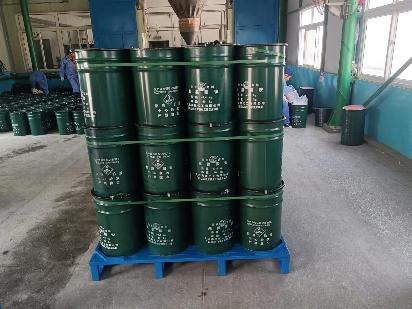
Step onto the floor of a modern heavy‑duty production line and you’ll immediately sense the fusion of raw power and digital precision. Gigantic robotic arms, guided by real‑time sensor arrays, lift multi‑ton components with a delicacy that belies their size. Every weld, every rivet, every torque value is monitored by a central AI that adjusts parameters on the fly, learning from each cycle to shave off microseconds without compromising structural integrity.
The line itself is a kinetic organism of interconnected stations, where autonomous guided vehicles glide silently between cells, delivering parts only when needed to keep inventory lean and floor space uncluttered. Workers, wearing augmented‑reality visors, receive instant overlay instructions, their roles shifted from manual exertion to high‑level oversight. Even the concrete beneath their feet is embedded with vibration sensors, feeding data into predictive maintenance algorithms that flag a failing bearing before it hums out of tune.
Quality control has transcended the end‑of‑line check. In‑process laser scanners and high‑speed cameras map every millimeter of a moving assembly, comparing it to a billion‑data‑point digital twin. Defects are caught the moment they birth, and the line seamlessly reroutes or corrects without a single halt. It’s not just manufacturing; it’s a closed‑loop ecosystem where information flows as tangibly as steel, forging machines that don’t just meet specs—they redefine them.
Engineering That Withstands Extreme Loads and Environments
Designing structures and systems that endure punishing forces and hostile conditions demands more than textbook formulas. It calls for a deep blend of material intuition, real-world testing, and creative load-path strategies. From deep-sea pressure vessels to earthquake-resilient towers, every solution starts with understanding how stress flows through a structure and where unseen weaknesses might form under repeated abuse.
Material choice becomes a dialogue between performance and failure. High-strength alloys, advanced composites, and smart materials are pushed beyond their normal limits—sometimes deliberately to the breaking point—so engineers can map safe operating envelopes with confidence. Add temperature swings, corrosive agents, or vibration, and the margin for error shrinks fast. It’s in that tightening space that novel geometries and adaptive designs earn their keep, redistributing energy away from vulnerable zones.
Validation is never a one-and-done exercise. Prototypes face battery after battery of accelerated life tests, shock loads, and environmental exposures that outmatch anything expected in the field. The goal isn’t just survival; it’s predictability. By pairing simulation with gritty empirical data, teams refine their designs until the boundary between theory and reality blurs—yielding systems that keep performing long after conventional engineering would have called it quits.
Custom Fabrication for Specialized Industrial Applications
Every industrial environment brings its own set of challenges, and off-the-shelf components rarely fit the bill. We’ve spent years refining a process that starts with your operational realities—temperature extremes, corrosive materials, space constraints, or throughput demands—and ends with a fabrication that slots right into your workflow. It’s not about mass production here; it’s about listening closely, asking the right questions, and pulling from a deep bench of materials and techniques to build what you actually need.
What sets this apart is the blend of hands-on expertise and an almost obsessive attention to the details that others overlook. From exotic alloy welding to precision-machined assemblies that maintain tolerance under load, every step is handled in-house by people who’ve seen the consequences of a near-miss design. They know that a 0.2mm deviation in a food-grade chute or a misjudged heat treatment on a mining rig component can grind a line to a halt, so there’s no room for guesswork.
Across sectors like chemical processing, heavy equipment repair, and energy generation, the common thread is a fabrication that simply works longer and adapts better. It’s not about flashy claims—just a track record of solving problems where standard catalogs fall short, delivered with a straightforwardness that engineers appreciate. If your next project demands a part that hasn’t been drawn yet, we’re ready to make it real.
Sustainability and Lifecycle Value in Steel Pallet Design
Steel pallets carry a sustainability story that often goes untold. Unlike wood or plastic alternatives, they sidestep deforestation, chemical leaching, and the short, disposable lifecycles that plague their counterparts. Their rust can be remedied, their dents pounded out—wear becomes patina rather than obsolescence. In a world waking up to circular economies, steel pallets embody a quiet resilience that bends with time instead of breaking under it.
The real leverage lies in the full lifecycle cost. While the upfront investment may raise eyebrows, the decades-long service life flips the equation. A steel pallet doesn’t just survive hundreds of trips; it maintains structural integrity where wooden blocks splinter and plastic warps. Repairs are a matter of welding, not replacement, and at the end of its long road, the material is 100% recyclable without downcycling—a closed loop that most logistics tools can’t claim.
Designing for that longevity, however, demands foresight. It’s not simply about thickness or weight class; it’s about joint geometry, fatigue distribution, and compatibility with automated systems. Thoughtful engineering can reduce material use while boosting load capacity, turning minimalistic into a virtue. When paired with modular thinking, the pallet becomes a serviceable asset rather than a commodity, flipping the narrative from consumption to stewardship.
From Factory Floor to Global Supply Chains: A Track Record
It started on a single factory floor, where every production line, every shift, and every outgoing pallet carried the weight of a promise: deliver quality without excuses. Those early years weren't about scale—they were about proving that disciplined manufacturing could win trust in a market crowded with louder competitors. That trust became the foundation, layer by layer, as the team took on increasingly complex orders and tighter deadlines without ever letting a shipment slip.
Growth didn't come from chasing trends but from quietly solving problems others avoided. When the first international clients asked for localized variants of a core product, the response wasn't a brochure but a pilot line configured in under three weeks. That agility turned a tactical win into a strategic shift, leading to a network of regional hubs that could source, assemble, and deliver with the same consistency as the home plant. Each node was designed not just to replicate the original facility but to absorb local supply chain realities—customs quirks, infrastructure gaps, seasonal demand spikes—and turn them into advantages.
Today, that track record speaks through millions of end users who never see a warehouse or a freight route. It shows up in shelves that restock ahead of shortages, in components that reach assembly lines despite port closures, and in contracts renewed without a second thought. The journey from a single floor to a global web of supply and demand wasn't a straight line, but every pivot was anchored in the same belief that reliability is built one decision at a time, not claimed in a slogan.
FAQ
The pallets are fabricated from high-grade structural steel, often sourced from certified mills, and may incorporate anti-corrosion treatments like hot-dip galvanization or powder coating to withstand harsh environments.
Heavy-duty steel pallets typically offer significantly higher static and dynamic load ratings, often supporting several tons, and they resist deformation under heavy, uneven loads that would crack or warp wooden or plastic pallets.
Yes, the manufacturer provides extensive customization options including dimensions, reinforcement patterns, runner configurations, and coatings tailored to automated storage systems, export packing, or hazardous material handling.
Each pallet undergoes rigorous testing such as weld integrity checks, dimensional accuracy verification, and load testing per international standards like ISO 8611 to ensure reliability before shipment.
Absolutely, the precision engineering ensures consistent dimensions and flatness, making them compatible with automated guided vehicles, conveyor systems, and high-bay racking without jamming or misalignment.
The company partners with experienced freight forwarders to offer FCL and LCL options, utilizing durable export packaging and handling documentation for smooth customs clearance, with regular shipments to major ports worldwide.
Support includes technical consultation for pallet integration, replacement parts like runners or mesh decks, and guidance on maintenance practices to maximize service life, backed by a warranty against manufacturing defects.
Chinese manufacturers often combine advanced automated production lines with cost-effective raw material access, offering competitive pricing without compromising on certifications, along with scalability to handle large-volume orders rapidly.
Conclusion
Steel pallets have become a game‑changer in modern logistics, offering unmatched durability and safety where wood or plastic often fall short. A leading Chinese heavy‑duty steel pallet manufacturer stands at the forefront of this shift, combining advanced automated production lines with rigorous engineering. Every pallet is fabricated to handle extreme loads, from multi‑ton industrial equipment to corrosive chemical storage, thanks to precision welding, robotic assembly, and thorough load‑testing protocols. The result is a range of products that outperform conventional options in longevity and reliability, directly addressing the needs of global supply chains that demand zero failure.
Beyond standard offerings, this manufacturer excels in custom fabrication, tailoring designs to niche applications—whether for cold storage, offshore rigs, or automotive assembly lines. Sustainability is also a core pillar: steel pallets are 100% recyclable, reducing waste and offering a lower total cost of ownership over time. With a proven track record of exporting to over 50 countries, the company ensures seamless integration from the factory floor to international logistics networks, backed by certifications and responsive client support. This holistic approach—merging innovation, resilience, and environmental stewardship—solidifies its role as a trusted partner for industries worldwide.
Contact Us
Contact Person: Johnny
Email: [email protected]
Tel/WhatsApp: +86 18151010686
Website: https://lydstorage.com