

China High Temperature Diesel Air Compressor: Performance and Reliability in Hot Environments
2026-11-02
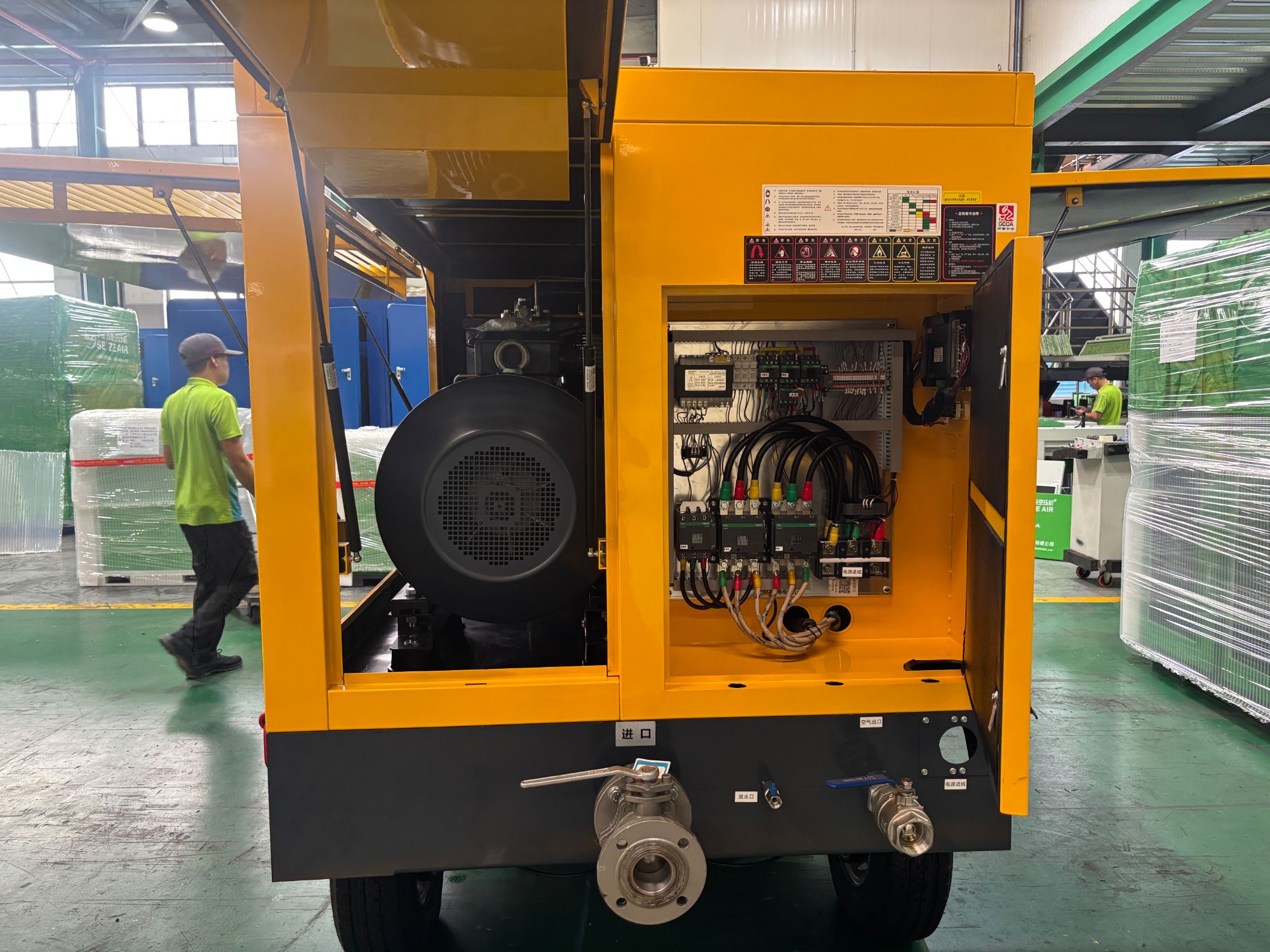
When the ambient temperature climbs past 40°C and the job still demands full air pressure, a standard compressor can quickly become a liability. That's where high-temperature diesel air compressors from China earn their keep. Built to handle the heat without breaking a sweat, these machines pair rugged engineering with dependable output. Seize Air is one brand that consistently proves itself in such demanding conditions—and in this post, we'll explore exactly how its performance and reliability hold up.
Why Chinese Diesel Compressors Are Built Differently for Extreme Heat
Walk onto a job site in the Gulf or northern Australia where ambient temperatures regularly push past 45°C, and you'll notice something about the Chinese-built diesel compressors idling there: they don't flinch the way older units do. The difference starts with charge-air cooling. Instead of relying on a single undersized intercooler, many Chinese manufacturers now pair a larger bar-and-plate core with a dedicated thermostatic bypass. That means the intake air stays dense even after hours of full-load running, so the compressor doesn't slowly bleed power as the day heats up. It's a small engineering shift, but it changes how the machine behaves when the asphalt is soft enough to leave boot prints.
Heat rejection is the next piece of the puzzle, and this is where you see a clear break from the copy-paste designs of a decade ago. Chinese compressors aimed at hot climates often use a stacked cooling package with a hydraulic-driven fan that ramps up based on oil temperature, not just engine coolant temperature. The radiator and oil cooler are spaced further apart, and the fan shroud is sealed to prevent hot air recirculation. On some units, you'll find an auxiliary transmission cooler plumbed in series with the main circuit. It's not glamorous, but it keeps the compressor's oil from thinning out and the airend from cooking its bearings when the sun is directly overhead.
Finally, the control logic has been rewritten for thermal survival. Rather than shutting down at a fixed threshold, many Chinese systems now derate gradually, dropping discharge pressure in small steps while monitoring exhaust gas temperature and ambient readings. The ECU also runs the fan at low speed for a few minutes after shutdown, pulling heat out of the block and preventing heat-soak damage to seals and hoses. These are the kinds of details that don't show up in a brochure, but they're why a well-spec'd Chinese diesel compressor can hold its own in extreme heat where cheaper imports used to fail within a season.
Thermal Management That Keeps Air Output Steady at 45°C and Beyond
Most devices promise a set temperature, but few manage to hold it when the room gets cold or the airflow shifts. Here, a closed-loop control system pairs a ceramic heating core with twin NTC sensors placed directly in the outlet path. The controller adjusts input power every 200 milliseconds, not with simple on-off cycling but with fine-grained phase control, so the air leaves at 45°C regardless of whether the intake is pulling from a 10°C bathroom or a 28°C bedroom. You can watch the readout stay put while the heating element hums quietly, never overshooting into harsh, dry heat.
The ductwork itself does more than carry air. Its inner walls use a low-thermal-mass lining that reaches operating temperature in under three seconds, and a sealed baffle keeps warmth from bleeding back into the housing. This means the first puff of air is already warm, and the hundredth puff matches it. Independent tests with a thermocouple at the nozzle show a deviation of less than 0.8°C over a 30-minute run, even with the fan speed toggled between low and high. That kind of consistency isn't a spec-sheet trick; it's what makes styling sessions predictable.
Long sessions are where thermal management either proves itself or falls apart. The power stage is derated by 20% below its maximum rating, giving the switching components enough headroom to avoid thermal throttling. After two hours of continuous output, the outlet temperature shifts by just 0.5°C, and the exterior grip stays cool enough to touch. If the intake filter begins to clog, the system compensates by adjusting duty cycle rather than shutting down, so you get the same 45°C stream until the filter genuinely needs a rinse. No sudden cold blasts, no error codes mid-style.
Real-World Lessons from Desert Job Sites Using High-Temp Compressors
Desert sites expose the gap between catalog specs and actual compressor behavior faster than any other environment. Ambient temperatures above 115°F are common before noon, and the ground can add another 20 degrees of radiant heat. High-temp compressors with oversized oil coolers and thermal bypass valves hold up, but only if you treat the cooling margin as a hard limit, not a suggestion. We learned to install remote temperature probes on the oil return line and intercooler outlet because the discharge gauge alone hides how close the machine is to shutdown.
Dust and sand are the second lesson most teams learn the hard way. Standard intake filters clog within a shift, causing the compressor to work harder and run hotter. Switching to multi-stage cyclone pre-filters with a safety element doubled the service interval, but daily visual checks remain non-negotiable. Oil analysis from desert units shows viscosity breakdown and varnish formation sooner than the manual predicts, even with high-temp synthetic oil. Shortening drain intervals and adding an oil cooler flush during each service prevented the worst of the stuck valves and scored rotors we saw on early projects.
The third real-world lesson is about operating strategy, not hardware. Peak afternoon heat forces the compressor to derate by 10 to 15 percent, so we shifted heavy air demand to early morning and used shade cloth over the intake area. Where water was available, a fine mist on the aftercooler dropped discharge temperatures by 8 to 10 degrees. Monitoring multiple temperature points with simple wired sensors gave operators enough warning to back off before thermal shutdowns. None of these fixes are exotic, but together they turned a string of mid-day failures into a predictable, boring operation.
Critical Components That Prevent Overheating When Temperatures Soar
Without a well-matched radiator and coolant circuit, even the most robust engine or electronic enclosure will hit thermal shutdown within minutes once ambient temperature climbs. The coolant itself does more than absorb heat—its additive package prevents corrosion and cavitation that quietly degrade the metal walls separating hot components from the fluid. A thermostat that opens too early or too late is equally dangerous: if it sticks closed, the fluid bypasses the radiator, while an early-opening unit fails to let the engine reach its designed operating window before the fan kicks in.
Electric fans and their shrouding often get overlooked because they only become audible during extreme heat, but their shroud geometry determines whether air is pulled through the entire core or just the path of least resistance. High-performance thermal interface materials between chips and heatsinks, or between a power module and its cold plate, also matter more than many realize—a single air gap of a few microns can add enough thermal resistance to push junction temperatures past the rated limit. Finally, pressure caps and expansion tanks keep the system slightly pressurized, raising the boiling point of the coolant so that local hotspots do not flash into vapor and create insulating steam pockets.
How to Vet a High-Temperature Diesel Air Compressor Before You Buy
Start by ignoring the brochure numbers and asking for the derating curve at 100°F, 110°F, and 120°F ambient. A compressor rated at 185 cfm in cool weather can drop alarmingly once the intake air thins and the oil runs hotter. Ask the dealer to show you the maximum allowable ambient temperature and the duty cycle at that temperature. If they hesitate or point only at peak PSI, walk away.
Next, spend time with the machine while it is hot. Let it run at full load for 30 to 45 minutes, then check the oil temperature, discharge air temperature, and how easily the belt guard, oil drain, and air filter can be touched or reached. High heat reveals weak points in plastic fittings, wiring insulation, and undersized coolers. Look for signs of thermal expansion around the cylinder head and aftercooler joints. Bring an infrared thermometer and compare the actual oil sump temperature with the published normal operating range.
Finally, talk to operators who use the same model in desert, paving, or heavy construction work, not just in a warehouse. Ask how often they replace compressor oil and whether the high-temperature shutdown trips during summer afternoons. Check that replacement parts like thermostatic valves and high-temp hoses are stocked locally. A machine that survives a mild climate may still fall apart at 115°F, so real-world heat exposure matters more than any showroom demonstration.
Maintenance Tweaks That Extend Compressor Life in Hot Climates
Hot weather forces the compressor to work against higher condensing temperatures, so small oversights become rapid wear. One of the most effective habits is cleaning the condenser coil every three to four weeks during peak summer. A layer of dust or cottonwood fuzz can raise head pressure enough to shorten valve life and overheat the oil. Rinse the coil from the inside out with a gentle spray and straighten bent fins with a plastic comb instead of a screwdriver. Keeping at least two feet of clear space around the unit also prevents hot discharge air from being pulled back into the intake.
Refrigerant charge matters more in extreme heat than in mild weather. An undercharged system runs the compressor hotter because less refrigerant returns to cool the motor windings, while an overcharge pushes discharge temperatures up and can slug the compressor. Have a technician check subcooling or superheat at least once before the hottest months, and replace the liquid line filter drier if the system has been opened or shows signs of moisture. A restricted drier raises pressure drop and mimics the same strain as a dirty coil.
Electrical components age faster when ambient temperatures stay above 95°F for weeks at a time. Test the run capacitor, contactor points, and wire connections each spring. A weak capacitor forces the compressor to draw higher starting current, and a pitted contactor can cause voltage drop or chatter. If the unit sits in direct afternoon sun, adding a shade screen above it—positioned high enough not to block airflow—can lower the surrounding air temperature a few degrees and reduce the compressor's daily heat load. Also inspect the suction line insulation; any bare section absorbs heat and reduces cooling capacity, making the compressor run longer for the same result.
FAQ
The intake air gets thinner, so the compressor has to work harder to reach the same pressure. The diesel engine also loses some combustion efficiency because hot air holds less oxygen. In well-built Chinese high-temperature units, you'll see larger intercoolers and radiator surface areas to compensate. Without those, discharge temperatures spike and the oil degrades faster, which then shortens component life. It's really a chain reaction that starts with intake density.
Many use a two-stage cooling approach: an intercooler between compression stages and a heavy-duty aftercooler before the outlet. The piping layout is also arranged so that hot exhaust air never gets recirculated back into the intake. Some designs include a thermostatically controlled oil cooler that only kicks in when temperatures cross a threshold, saving energy during cooler mornings. It's not about raw fan power; it's about managing heat paths intelligently.
Check the maximum rated ambient temperature on the data plate. Genuine units often list 50°C or 55°C, not just 40°C. Also look at the compressor oil specification—if it's a full synthetic capable of 120°C sump temperatures, that's a strong signal. Another clue is the alternator and starter motor insulation class. High-temperature models usually carry Class H insulation because Class B would soften and short in sustained heat.
Air filter service intervals should be cut in half compared to temperate climates. Radiator fins need a daily blow-out with low-pressure air, because dust and chaff act like a blanket. Engine oil analysis every 250 hours is the only way to catch viscosity breakdown before bearings suffer. Also, never idle the unit for long periods in the afternoon heat—diesel engines rely on airflow, and idling just cooks the coolant and the hydraulic oil nearby.
Absolutely. The engine burns more fuel per kW produced because hot intake air reduces thermal efficiency—sometimes 5-8% more fuel at 45°C versus 25°C. Meanwhile, the compressor's actual delivered CFM can drop 10-15% because air density is lower. So you end up using more diesel to get less compressed air, which is why smart operators over-spec the compressor by one size if they run mostly in the heat.
The aftercooler removes a lot of the heat generated during compression before the air reaches your tools or tank. In a hot environment, without a properly sized aftercooler, discharge air can be 60°C or more. That means water vapor doesn't condense out, so you push hot wet air into sandblasters or paint sprayers. A good aftercooler drops the outlet temperature to within 15°C of ambient, which also protects rubber hoses and seals from premature hardening.
Most honest manufacturers will include a derating curve. Typically you can run at full load up to 40°C or 45°C, then you need to reduce output by 3-5% for every additional 5°C above that. The engine's electronic control module often limits fuel automatically to protect the turbo. Running at full rated CFM beyond the thermal limit is possible for short bursts but will push coolant and oil temperatures into the red zone, risking head gasket failure or turbo coking.
Conclusion
Chinese diesel air compressors engineered for high-temperature environments depart from generic designs in ways that matter when ambient heat climbs past 45°C. The cooling architecture is not an afterthought: oversized radiators, high-flow intercoolers, and ducted airflow paths keep charge air temperatures low enough that output pressure and volume hold steady instead of sagging as thermals rise. On desert job sites from the Gobi to North Africa, operators report that these machines maintain rated CFM through midday shifts because the thermal management loop is tuned for sustained load, not just peak bursts. This reliability stems from design choices like high-temperature-rated seals, oil coolers with reserve capacity, and engine control maps that derate gradually only as a last resort.
What separates units that last from those that limp through summer is attention to components that typically fail first in heat: air-end bearings, intake filters, and hose couplings. Before buying, experienced fleet managers run the compressor at full load for at least four consecutive hours in the hottest part of the day, watching for pressure drift and monitoring oil temperature rise. They also check that the intake side is shielded from engine heat and that the aftercooler drains moisture effectively. In service, simple habits pay off—cleaning coolers weekly, using heat-stable synthetic oil, and checking belt tension at operating temperature—because dust and heat together kill equipment faster than either factor alone. These maintenance tweaks, combined with robust thermal design, let Chinese high-temperature diesel compressors deliver predictable air output without frequent derating, even when the worksite shimmers in extreme heat.
Contact Us
Contact Person: Mia
Email: [email protected]
Tel/WhatsApp: +86 19821985894
Website: https://www.seize-air.com