

China Rotary Concrete Reclaimer: How It Works and Why You Need One
2026-08-26
Every cubic meter of returned concrete costs more than you think. Before you write it off as waste, consider the machine that’s quietly changing the math: the rotary concrete reclaimer. Chinese manufacturers like Sinou have turned this once-bulky system into a practical, compact solution. But how exactly does it separate sand, stone, and slurry—and why should your plant care? Let’s break it down.
What Happens Inside a Rotary Concrete Reclaimer, Step by Step
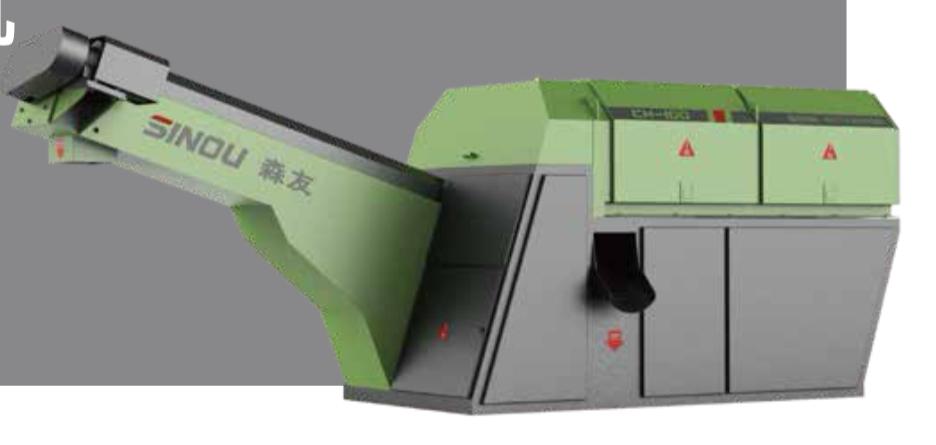
Freshly returned concrete slides down the feed chute into a shallow receiving hopper, where a set of high-volume spray nozzles immediately blasts it with recycled process water. This first wash loosens the cement paste and turns the mix into a flowing slurry that can be moved without clogging. An inclined auger or bucket elevator then lifts the thinned material toward the rotating separation drum, but not before a coarse screen catches stray rocks, hardened chunks, and job-site debris that would otherwise jam the downstream components.
Inside the main drum, a continuous spiral flight forces the slurry against the perforated shell while more water jets work the mixture. Sand and smaller fines drop through the screen holes and are carried away in a wet sump below, while aggregate that is too large to pass travels the length of the drum and discharges at the far end. The drum speed, water volume, and spiral pitch are tuned so that cement and fine sand wash off the larger stone instead of simply riding along with it. What leaves the machine is two separate streams: a pile of clean, reusable coarse aggregate and a gray water-sand blend ready for settling or further classification.
From the sump, the slurry flows into a small collection tank where a paddle stirrer keeps particles suspended until a transfer pump can send it to a cyclone or settling basin. Heavier sand settles quickly in the cyclone underflow and can be stockpiled for reuse, while the remaining cement-rich water overflows back to the storage tank that supplies the wash-down sprays. This closed loop means the reclaimer constantly recycles its own wash water, losing only what evaporates or leaves with the recovered aggregate. The result is not a single dramatic moment but a steady, wet sorting process that turns truck washout back into usable material with very little manual attention.
The Practical Case for Bringing Concrete Recovery In-House
Many contractors find that outsourcing concrete recycling hides costs beyond the per-ton fee. There are truck wait times, dumping charges, fuel surcharges, and the scheduling delays that ripple through a job site when haulers are late. One commercial foundation crew tracked 40 tons of broken concrete leaving the site each week and realized that six months of outsourced fees would cover a compact jaw crusher. That simple math pushed them to bring the process inside the fence.
Quality control is the quieter argument. External recycling yards often blend waste from multiple projects, so the aggregate you get back may contain brick, asphalt, or stray rebar fragments. Running your own crusher lets you pull metal with a magnetic separator before crushing and screen for a single clean size. The payoff shows up at the batch plant, where a consistent recycled aggregate can replace 30 percent of natural stone without hurting slump or strength. In one trial, a team saw 28-day compressive strength rise by 4 percent because the crushed particles had a more uniform shape than the quarried material they had been buying.
Operationally, in-house recovery compresses the window between demolition and backfill. Instead of waiting for a third-party fleet to show up, crews can crush on the same day and reuse the material immediately, reducing double handling. The upfront investment and ongoing maintenance are real, but many firms start by renting equipment to prove throughput before committing to a purchase. Some even process waste from neighboring projects to offset depreciation, turning what was once a cost center into a small profit stream.
How Chinese Manufacturers Rethought the Rotary Reclaimer
For decades, the rotary reclaimer followed a blueprint that changed little across the industry. Chinese manufacturers saw that imported designs often struggled with the abrasive, high-moisture bulk materials common in domestic mines and power plants. Instead of tweaking wear plates or upgrading motors, they went back to the kinematics of the bucket wheel and boom. The result was a lighter, stiffer frame that could sweep a wider face without sacrificing reach, paired with a redesigned slewing ring that reduced cyclic stress. This wasn't cost-cutting; it was a deliberate shift to match the machine to the actual duty cycle rather than a generic specification.
Automation came next, but not as a bolt-on sensor package. Many Chinese firms rewired the control architecture so that load sensing, vibration monitoring, and laser scanning of the stockpile fed into a single onboard controller. This let the reclaimer adjust its slewing speed and bucket fill rate in real time, preventing the kind of overload that causes premature bearing failures. Operators who had spent years relying on manual feel suddenly had a machine that could hold a consistent reclaim rate through shift changes, reducing both energy use and wear on the conveyor downstream.
Perhaps the most radical rethink was in how the machines were delivered and maintained. Instead of shipping fully assembled reclaimers that required heavy cranes and weeks of site work, Chinese manufacturers broke the structure into modules that could be trucked on standard trailers and bolted together in days. They also offered retrofit kits that upgraded older reclaimers with the same sensing and control packages, extending service life without forcing a full replacement. This approach lowered the entry barrier for mid-sized plants and pushed the whole market toward faster design cycles.
Real Numbers: Payback, Water Savings, and Aggregate Reuse
Every gallon saved through aggregate reuse cuts straight into the utility bill—and the payoff shows up faster than most facility managers expect. Instead of buying virgin stone and paying to haul off old concrete, a site can crush and screen demolished material on the spot. The avoided disposal fees alone often cover the rental of a portable crusher within the first few projects, while the replacement aggregate cost drops to nearly zero.
Water savings tell a quieter but equally important story. Processing virgin rock demands significant water for dust suppression and washing, but recycled aggregate is already sized and often requires only light misting. In drought-prone regions, this reduction can be the difference between staying within a municipal water budget and facing surcharges. One mid-size paving contractor reported using roughly forty percent less water on jobs where recycled base material replaced quarried stone, simply because the material arrived cleaner and produced less airborne fines.
Aggregate reuse also compounds the return. Every ton of crushed concrete kept on site is a ton that doesn't need to be mined, trucked, and placed from a distant quarry. The diesel saved on those haul routes, combined with lower material costs and reduced water draw, turns a one-time crushing effort into a recurring operational margin. For organizations tracking sustainability metrics, the numbers are hard to ignore: lower carbon output, fewer truck trips, and a measurable drop in both water and procurement expenses.
Choosing a Reclaimer That Won't Become a Maintenance Nightmare
When a reclaimer goes down, it tends to take the entire job with it. The first thing to check is how the manufacturer handles wear components. Look for bolt-on liners, easily replaceable teeth, and drive systems that don't require removing half the machine to reach a bearing.
Pay close attention to the sealing arrangement around the rotor and discharge conveyor. Dust and fines have a way of working into every gap; a reclaimer that uses labyrinth-style seals plus a simple purge air system will survive longer than one that relies on grease alone. Ask about lubrication intervals and whether all zerks are accessible from ground level.
Finally, consider the electrical side. Moisture, vibration, and heat are brutal on sensors and wiring. Choose a model with connectors that are clearly labeled, well-supported, and mounted away from high-temperature zones. If a harness is pinched under a bolt from the factory, that's a sign of what's coming later.
Small Batch Plant or Mega Project: Finding the Right Fit
Choosing between a small batch plant and a mega project often boils down to how much control you need over the production process. Small batch facilities give you room to experiment without committing to massive volumes. You can tweak a formula, adjust packaging, or switch suppliers after just a few hundred units. This agility is invaluable when you are still reading customer feedback and figuring out what actually sells. A mega project, by contrast, locks you into standardized workflows that prioritize efficiency over flexibility. Once the line is running, changing even a minor detail can mean costly downtime and revalidation.
Cost per unit tells a different story. Small batch production almost always carries a higher price tag because you are spreading setup, labor, and material waste across fewer items. But that premium buys you the freedom to fail cheaply. A mega project demands a huge upfront investment in infrastructure, automation, and long-term supply contracts. If your forecast is off by 20 percent, you could be sitting on warehouses full of unsold inventory. So the real question is not which option is cheaper, but which one matches your tolerance for financial risk and your confidence in demand stability.
Finding the right fit means looking beyond raw output numbers. Consider your product's shelf life, your distribution network, and how fast your industry changes. A small batch plant makes sense for seasonal items, personalized goods, or anything that benefits from a local, artisanal story. A mega project is better suited to commodities where consistency and low cost matter more than novelty. Some companies even run a hybrid model, using small batches for market testing and then scaling up to a mega project only after a proven winner emerges. The key is to match the production scale to the stage of your product, not to some idealized version of efficiency.
FAQ
It separates leftover wet concrete into reusable aggregate and water, so you're not paying to haul off waste or buying fresh materials to replace what you tossed.
The drum spins at a controlled speed and uses a continuous water spray. Heavier aggregate sinks and gets carried out by internal flights while the lighter cement slurry and fines wash over a discharge weir into a settling tank.
Chinese manufacturers have narrowed the quality gap dramatically while keeping prices 30-50% lower. Many units come with stainless steel contact parts, direct-drive gearboxes, and modular wear plates that used to be premium upgrades elsewhere.
Yes, most plants recover the cost in 12-24 months just from avoided disposal fees, reduced fresh water use, and sale or reuse of reclaimed aggregate. If your plant washes out more than 5 trucks a day, the math usually works.
It's fairly low. You'll grease a few bearings weekly, check the spray nozzles for clogs, and inspect wear plates every few months. The main gearbox is sealed, and the drum has no internal screens that need replacing.
Reclaimed aggregate can replace a portion of virgin stone in many non-structural mixes, and the recycled water with cement fines can be used as batch water. You still need to test regularly, but consistent batching is achievable with proper controls.
Look for a solid drum thickness, a European or Japanese brand gearmotor, stainless steel wash pipes, and a manufacturer willing to share reference sites or videos of real installations. A good Chinese supplier will also offer remote commissioning support and wear part drawings.
A well-run reclaimer recycles 80-90% of washout water. Traditional pits lose water to evaporation and leaking, and you often need to pump in fresh water to keep the pit from becoming a solid block.
Conclusion
Inside a rotary concrete reclaimer, leftover mix from trucks and mixers is fed into a rotating drum where high-pressure water jets strip cement paste from sand and aggregate. The tumbling action, combined with a spiral flight, separates heavier stone and sand from the slurry. Fine particles wash through a screen while the cleaned aggregate is discharged for reuse. It’s a straightforward mechanical process that turns what used to be a disposal headache into a continuous loop of recoverable material. For any plant running multiple trucks daily, that loop means fewer dumpster pickups, lower fresh water demand, and a much smaller environmental footprint.
Chinese manufacturers have pushed the design beyond the old cast-iron clunkers. They’ve added sealed bearings, replaceable wear plates, and simpler drive systems that don’t demand daily greasing. Some units come with automatic flocculant dosing and water clarification tanks, letting you reclaim nearly all process water for the next batch. Real-world numbers from mid-sized plants show payback in under eighteen months when you factor aggregate reuse and eliminated washout disposal fees. When shopping, look for a drum that can handle your peak pour day, not just the average. A slightly oversized reclaimer with a good warranty and local spare parts support will save you more than a cheap import that sits idle waiting for a seal kit from halfway around the world.
Contact Us
Contact Person: HaiYan
Email: [email protected]
Tel/WhatsApp: +86 18957325588
Website: https://www.senyoubeton.com/