

Custom CZ Purlin Roll Forming Machine Company: Delivering Precision and Reliability for Your Projects
2026-11-02
When your project demands precision and reliability in cold-formed steel framing, the right equipment makes all the difference. A custom CZ purlin roll forming machine from Beenew is engineered to handle variable web widths and lip sizes without sacrificing speed or accuracy. In this post, we’ll explore how tailored tooling, smart controls, and robust construction can streamline your purlin production and keep your builds on track—no matter the profile.
Starting With Your Blueprint, Not Our Catalog
Most projects start the wrong way round. Someone flips through a catalog, picks the thing that looks almost right, then spends weeks trying to reshape their actual life around it. We skip that entirely. Your blueprint—whether it's a handful of photos, a hand-drawn plan, or a list of frustrations—comes first. If it doesn't match anything we already have, that's a good sign, not a problem.
That blueprint won't be polished. It'll have scribbled notes, arrows pointing to the tricky corner, maybe a coffee stain. We read all of it. The wall you refuse to move, the window that faces the wrong way, the daily routine that never made it into the original plans—those details tell us more than any product page could. They become the actual starting point for every decision.
At the end, what you get may not look like anything in our showroom. It probably shouldn't. It should feel like it was drawn from your blueprint, because it was. If a standard catalog item could have done the job, you wouldn't have needed to talk to us in the first place.
Where Custom Really Means Custom
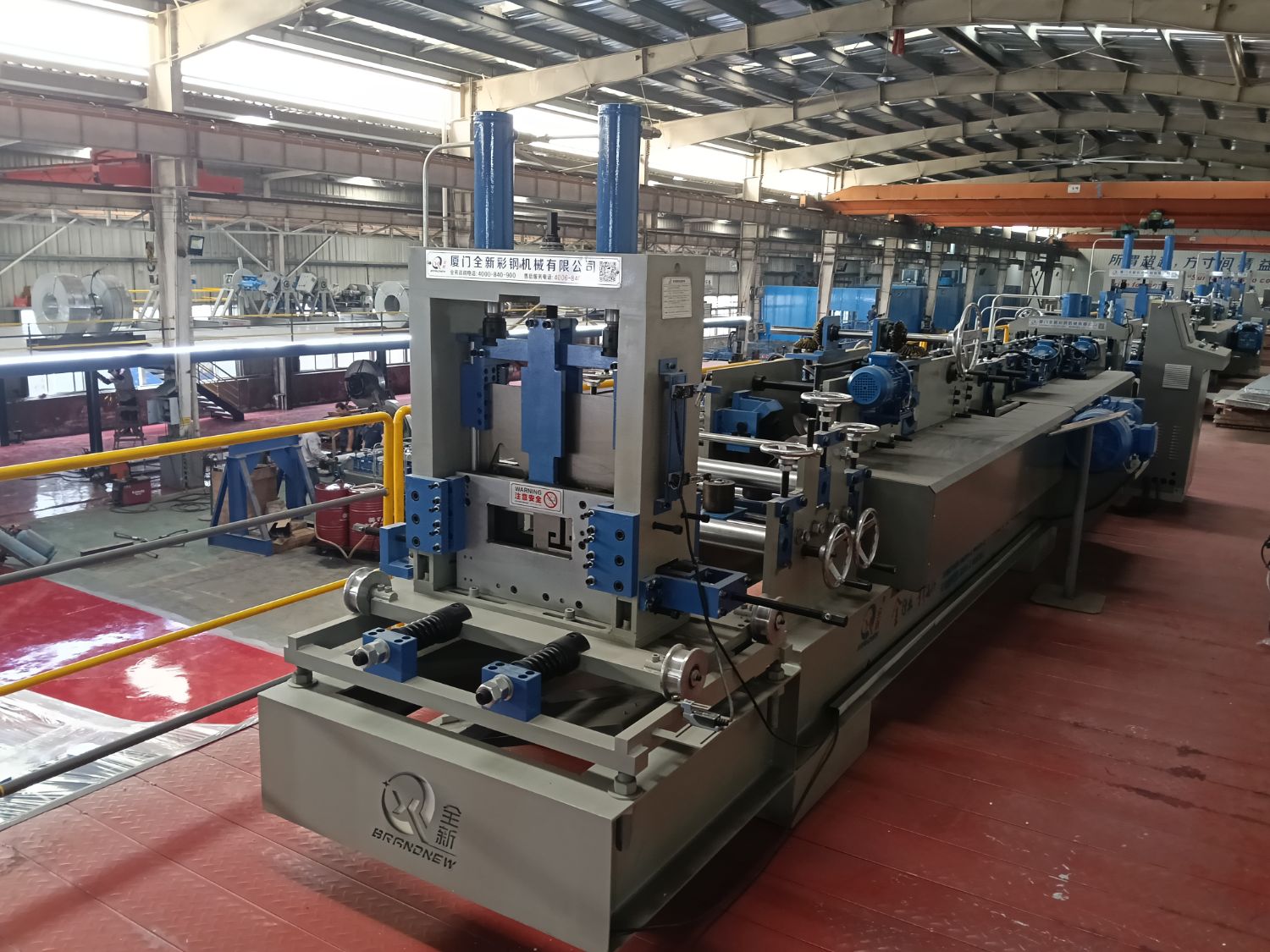
Most shops throw the word “custom” around like confetti at a parade. They’ll swap a color, tweak a size, maybe bolt on an accessory from a catalog, and call it a day. That’s not custom. That’s rearrangement. True custom means starting from a blank page—or a blank slab of metal, a bare circuit board, an empty loom—and building outward based on how you actually live, work, or play. It means the designer asks questions you haven’t even thought to ask, then disappears into the workshop and returns with something that feels less like a product and more like a piece of your own habits made tangible.
Here, that distinction is taken seriously. Whether it’s a piece of furniture shaped to the exact curve of a bay window, a guitar neck carved to fit the span of your left hand, or a software dashboard arranged around the way your team actually runs a Monday morning, the process refuses shortcuts. Materials are sourced for how they age alongside you, not just how they photograph. Dimensions are double-checked against the way you stoop, stretch, or settle into a chair. The result isn’t simply “made to order”—it’s made to fit, in the same way a good tailor’s suit doesn’t just cover your body but understands it.
That level of attention doesn’t come from a checklist. It comes from a stubborn belief that “custom” should never be a marketing label attached to a pre-existing template. It means walking away from the easy sale when a client asks for something that could be found in a showroom. It means building jigs, writing code, and mixing finishes for a single piece that may never be repeated. And when you live with that piece, day after day, you stop noticing it as an object and start relying on it as an extension of your own routine. That’s when custom genuinely earns its name.
Precision You Can Measure on the Shop Floor
When a machinist talks about precision, they don't mean a number buried in a lab report. They mean the difference between a part that drops into place and one that needs a hammer. On the shop floor, accuracy is something you can feel in the handle of a micrometer, see in the crisp line of a dial indicator, and verify with a gauge block that's been in service since before you were hired.
Real measurable precision lives in the worn edges of everyday tools. It's the tenths indicator that still returns to zero after a thousand cycles, the surface plate that gets wiped down before every setup, and the hard stop on a lathe that hasn't drifted in three years. These aren't shiny specs on a brochure — they're the quiet, repeatable truths that let a skilled hand hit a tolerance without crossing fingers.
What matters is what you can prove right now, next to the machine, with the tools already on your bench. A well-kept bore gauge, a test indicator that's been dropped twice but still reads true, a set of Jo blocks with the calibration sticker peeling off. That's the precision that pays the bills. Not the theoretical kind, but the kind you can lean on when the customer is waiting and the next shift is already walking in.
Uptime Isn’t a Buzzword—It’s a Build Requirement
When a platform promises uptime, they usually mean the polite version of "mostly working." That doesn't hold up when your team is pushing code at 2 a.m. and the dashboard freezes. Real uptime is not a marketing slide—it's the result of failing over gracefully before anyone notices the blip. If the architecture treats redundancy as an afterthought, every deploy becomes a bet against your own stack.
Build requirements should read like an engineer's checklist, not a brochure. A load balancer that drains connections. A database that replicates without drama. Monitoring that pages the right person instead of logging a ticket into the void. These aren't nice-to-haves; they're the difference between "we had a hiccup" and "we lost three hours of customer trust." Good uptime is invisible because someone already solved the problem before it became yours.
So next time someone says "99.9% uptime," ask what the last 0.1% actually cost. Was it a hard crash during peak traffic, or a silent degradation that only one user noticed until the next morning? The teams that take uptime seriously don't talk about nines—they talk about recovery time, blast radius, and how fast a human can be woken up when the pager goes off. That's not a buzzword. That's a build requirement.
Coil Handling That Cuts Waste Before It Starts
Scrap from coil processing rarely appears suddenly. It builds quietly from the first touch—how a coil is lifted, set down, and fed into the line. A slightly uneven mandrel grip or a fork placement that nudges the outer wrap can create edge distortion that later turns into trim loss. Teams that treat coil staging as a precision step, not just a forklift task, often see yield improve without changing anything downstream.
The real leverage sits in the moments before the uncoiler even spins. Using cradles with adjustable side rollers that match the coil's true width prevents telescoping. Adding a soft-landing saddle for heavy coils protects the leading edge from flat spots. Some facilities go further by pairing coil arrival data with line speed—so a just-in-time drop means the coil spends fewer hours sitting, reducing the chance of rust bloom or handling dings that lead to rejected first wraps.
Waste prevention here is less about heroic fixes and more about removing small, habitual errors. When operators can see coil condition at a glance—perhaps with a simple chalk mark on the outer lap or a digital tag showing measured camber—they make better threading decisions. That kind of upstream clarity does more for material yield than any downstream trimming adjustment ever could.
What Your Installation Crew Will Notice First
The moment the pallet gets dropped, the crew will pick up on how the components are packed. Instead of loose parts shifting around, brackets, fasteners, and panels come in clearly marked, tear-away compartments. That cuts the first ten minutes of searching.
The next thing is the physical layout. Mounting holes line up without forcing, and the heavier sections have recessed grips or built-in lift points. If someone grabs a rail, it doesn't flex or twist. That tells the crew the frame was designed with actual install in mind, not just warehouse stacking.
Most likely, they'll also notice the single-page visual guide zip-tied to the top layer. It shows the sequence in three steps with actual photos, not exploded diagrams that assume prior knowledge. No one has to radio the office or scroll through a PDF.
FAQ
Our equipment forms both C and Z profiles with adjustable flange heights and lip dimensions, so you aren't locked into a single cross-section. The tooling can be reconfigured to match your exact steel framing requirements.
Most changeovers take under 30 minutes because the roll stations are designed for rapid adjustment rather than full retooling. Some configurations also include servo-driven positioning that recalls saved profile settings.
Typically we hold dimensional accuracy within ±0.5 mm on flange width and height, and straightness stays within 1 mm per meter. This consistency comes from precision-machined rollers and an in-line straightening unit.
Yes, the frames and shafts are sized for materials up to 550 MPa yield strength. You can run galvanized, galvalume, or pre-painted coils without sacrificing speed or precision.
Daily checks are mostly limited to lubrication points and hydraulic oil levels. Bearings and roller surfaces typically need inspection every 500 operating hours, and we provide a detailed checklist to keep downtime minimal.
Absolutely. We can add hydraulic punching units for bolt holes, service holes, or custom notches before the cutoff. The pattern is synchronized with the line speed to keep hole placement accurate.
We send a technician to your site for mechanical setup, electrical commissioning, and hands-on training. You also get remote support for troubleshooting and process optimization after production starts.
From small agricultural sheds to large distribution centers, the machines are sized for both job-shop flexibility and high-volume runs. The key is matching the line speed and coil handling capacity to your target output.
Conclusion
Most roll forming suppliers start with a catalog and then look for ways to make their standard machines fit your drawings. This company works in reverse. The process begins with your blueprints, your load tables, your hole patterns, your flange widths, and your job site constraints. From there, every drive unit, shaft, and forming station is selected or machined to match the profile you actually need to run. Custom here does not mean picking from a list of pre-engineered options and calling it tailored. It means altering roll tooling, adjusting centers, and building frame sections around unusual purlin depths or lip configurations without forcing you to accept a near-enough shape. That distinction shows up on the shop floor as well: bolt holes line up the first time, flange flatness stays within your tolerance, and the cut length repeats coil after coil.
Reliability is built into the frame, not promised in a brochure. Heavy mill stands, oversized shafts, and direct-drive gearboxes reduce deflection and keep the line running through full shifts. Coil handling starts with a decoiler and straightener sized for your material width and gauge, so edge wave and camber are corrected before the strip enters the first pass. Scrap drops because the entry section feeds true. Installation crews notice the difference quickly: pre-wired control panels, clearly marked hydraulic and pneumatic connections, and leveling pads that make setup faster. Downtime is treated as a design problem, not a maintenance afterthought. The result is a CZ purlin line that holds its settings, produces accurate parts, and keeps doing it week after week.
Contact Us
Contact Person: Sophie
Email: [email protected]
Tel/WhatsApp: 8615959271231
Website: https://www.beenew-rollformer.com/