

Extruder Manufacturer Selection Guide for Consistent Output Quality
2026-11-01
If you’ve ever watched an extruder’s output drift mid-shift, you know the manufacturer’s name matters less than their grip on consistency. That’s the focus of this selection guide—spotting the builders who prioritize stable output over clever brochures. SFC is one name that keeps showing up for the right reasons.
Barrel and Screw Alignment Checks That Catch Early Wear
Misalignment between the barrel and screw rarely announces itself with a sudden failure. Instead, it leaves subtle traces that build up over weeks of production runs. A quick way to spot trouble is to watch for uneven wear patterns on the screw flights—if one side of the flight shows more polish or scuffing than the other, the screw is likely drifting off-center under load. Another early sign is a faint, rhythmic scrape that changes pitch as screw speed cycles. Operators who log these observations against barrel temperature zones often find that a hot spot on one side of the barrel correlates with the scrape, pointing directly to a sagging or bowed screw.
Routine checks don’t need laser rigs or teardown. A simple dial indicator mounted on the barrel’s purge port can measure radial runout at the screw shank while the machine is warm but idle. More than 0.005 inches of movement usually means the barrel support or thrust bearing has shifted. For machines with long barrels, a straightedge laid across the exposed screw section after removing the hopper can reveal a visible bow—anything you can slip a feeler gauge under is worth flagging. Catching these issues before the screw kisses the barrel wall saves not just the screw, but also the downstream melt quality that shifts when clearance opens up on one side.
One underused method is to compare screw pull force before and after a production campaign. A healthy, aligned screw should pull out with steady resistance. If it suddenly feels easier on one side or requires prying at a specific angle, the barrel has likely warped or the screw has developed a slight bend. Pair that with a visual check of the barrel bore using a borescope—look for bright streaks near the feed throat or compression zone. Those streaks are polished metal from contact, and they appear long before measurable wear cuts into output. Fixing alignment at the streak stage costs a fraction of a rebuild, and it keeps the line running without the quality drift that operators usually blame on resin or tooling.
Thermal Stability Across Multi-Shift Runs
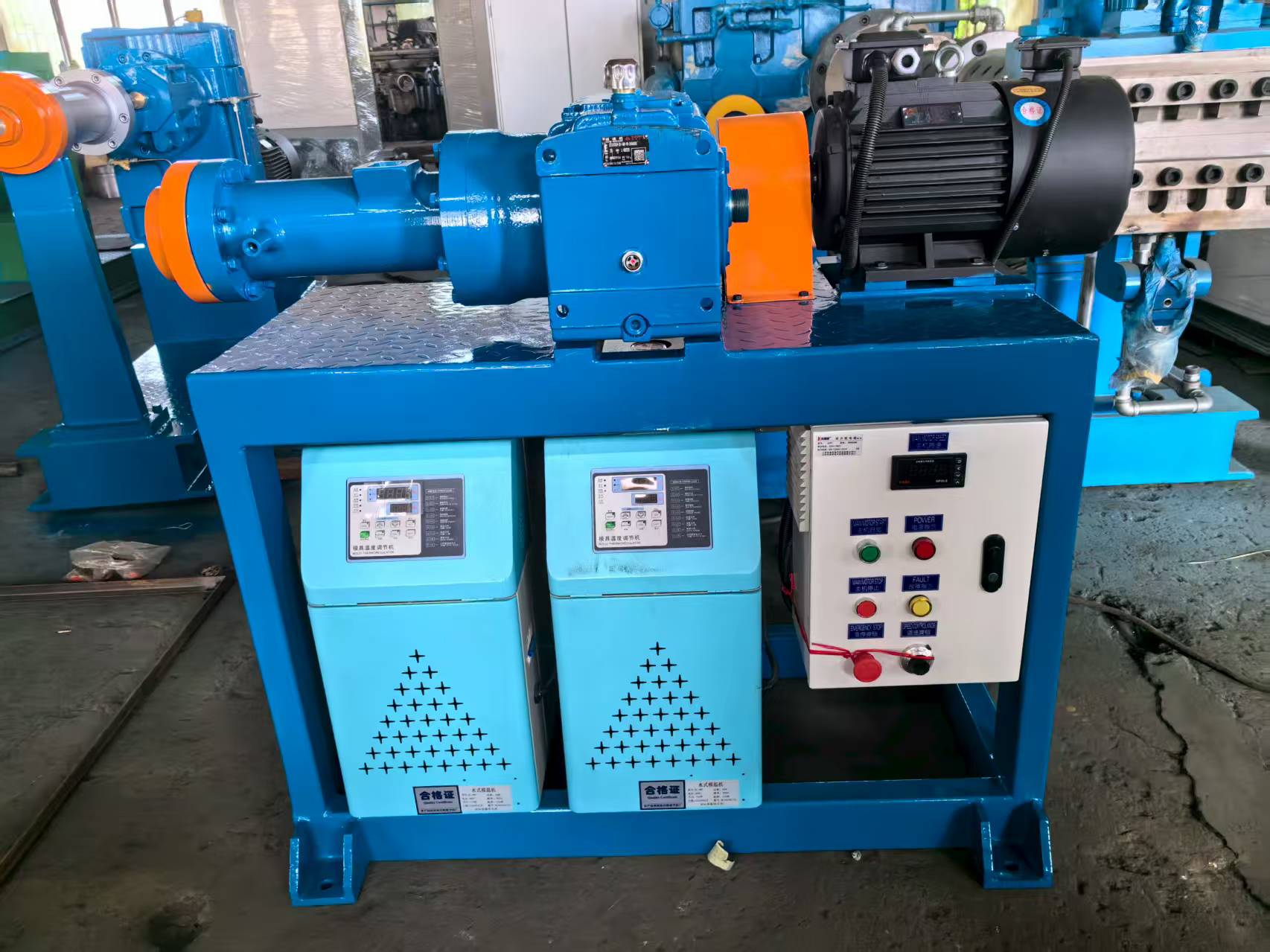
When a production line runs across three shifts, thermal stability becomes a quiet test of whether the process can hold its shape. It is not enough for a machine to reach the correct temperature once at the start of a run. The real question is whether it stays within a narrow band at 2 a.m., after hours of steady load, and again at 7 a.m. when the next crew takes over. Small drifts that look harmless on a single-shift log can accumulate into visible differences in part dimensions, surface finish, or material flow by the end of the week.
Multi-shift operation exposes weak points in thermal management that a short trial run never sees. Heat soak into surrounding structures, changes in ambient factory temperature between day and night, and cooling water temperature swings all influence how a machine behaves hour to hour. Operators may follow identical set points, yet the actual temperature at a critical zone can shift enough to alter viscosity in an injection barrel or change the cure rate in a bonding process. The handoff between shifts is often where these shifts get noticed, because a new operator may trust the displayed value without knowing that the previous crew made small manual offsets to compensate.
Strong thermal stability across multi-shift runs usually comes from closing the loop rather than relying on operator attention alone. Active temperature control with frequent or continuous measurement at the point of interest helps keep a process centered even when ambient conditions drift. Thermal insulation, controlled warm-up sequences, and compensation algorithms also reduce the influence of overnight cooling or weekend shutdowns. When the process can return to the same thermal state shift after shift without chasing offsets, the output becomes more predictable, and the difference between a Monday morning run and a Friday night run shrinks to something a quality inspector can hardly detect.
Wear-Resistant Coatings That Hold Up to Filled Polymers
Processing filled polymers such as glass-reinforced nylon or mineral-filled polypropylene quickly exposes the limits of standard surface treatments. The hard, angular filler particles act like a continuous lapping compound, eroding screws, barrels, mold cavities, and gate inserts within a fraction of the expected service life. A coating that survives in unfilled resin often fails in weeks when abrasive fillers are present, so material selection has to start with the specific wear mechanism rather than generic hardness claims.
Coatings that actually hold up tend to combine a very hard outer layer with a tough, well-bonded interface. Thin-film options like titanium aluminum nitride or chromium nitride work well on polished mold surfaces where dimensional change must be minimal, while thicker thermal-sprayed tungsten carbide or chromium carbide coatings are better suited to screws and barrels that see heavy particle impingement. Layered architectures help too: a ductile metallic underlayer absorbs impact, while the ceramic top layer resists micro-cutting. The key is matching coating thickness and chemistry to the filler type, loading level, and processing temperature, because a coating that excels against glass fiber may struggle with mineral fillers that generate fine, hard wear debris.
Cross-Checking Throughput Claims with Real Trial Data
Vendor datasheets rarely survive contact with a messy production line. The stated throughput of a filling machine, for instance, often assumes a perfectly homogeneous product, zero changeovers, and operators who never pause. When you run the same equipment against real trial batches—short runs, varying viscosity, frequent label swaps—the gap becomes obvious. A proper cross-check starts by logging every stop, slow-down, and reject during a timed cycle, then comparing that observed rate against the original claim. Not to embarrass the supplier, but to understand what the number actually means on your floor.
One common mistake is averaging throughput over a whole shift and calling it verified. That hides the true profile: a machine might hit 120% of rated speed for the first two hours, then drop to 60% after a jam or a material splice. Real trial data should be segmented by product, operator, and time block. Plot the cumulative units produced against elapsed time—if the curve bends away from the theoretical straight line, you have found the hidden bottleneck. Comparing this bend across different vendors' trials often reveals that the "faster" machine only wins in steady-state conditions, while the slower one recovers from stops far quicker.
Finally, treat throughput as a distribution, not a single point. Run the trial enough times to see the spread: best case, worst case, and typical. A machine that occasionally hits a spectacular peak but falls apart with minor variability is less useful than one that delivers a boring, consistent 85% of its rating. When you cross-check claims with real data, you are not just validating a spec sheet—you are building a defensible model for planning, staffing, and downstream capacity decisions.
Service Turnaround Times and Spare Parts Logistics
When a machine goes down, every hour of waiting ripples through the entire operation. Our turnaround benchmarks are built around that reality: standard repairs leave the shop within 48 hours, while critical failures get a dedicated line that cuts that window to under a day. These aren't just numbers on a chart—they come from tracking actual dispatch records and driver handoffs, so the estimate you see is the one your site team can plan around.
Spare parts logistics runs on a different clock. Rather than treating every component as a generic shipment, we split inventory by failure pattern: high-wear items stay stocked at regional hubs within one-day reach, and slow-moving parts are pulled from a central warehouse with overnight air options when the downtime cost justifies it. Each shipment gets a delivery window, not a vague 'in transit' status, and the receiving team can see exactly which pallet is on the truck before it arrives.
In practice, the two move together. A pump rebuild might wait on a single bearing, so the parts order is linked to the service ticket from the first diagnostic call. Once the bearing clears the warehouse, the bench schedule updates automatically, and the completed assembly heads back out on the next scheduled route. That link between service milestones and part movements is what keeps turnaround promises from becoming wishful thinking.
What Current Users Say About Consistency After a Year
After the first year, the comments that surface in user interviews aren't about wow moments or big reveals. Instead, people talk about the absence of drift—menus stay where they left them, keyboard shortcuts never change position, and the weekly export lands in the same folder without being asked twice. One long-time customer put it simply: "I forgot it was software until someone asked me what tool I used." That quiet forgetfulness is exactly the consistency they were hoping for.
Team leads echo a similar note when they review a full twelve months of usage. The numbers they pull from the platform in month eleven match the numbers they pulled in month two, without needing a spreadsheet reconciliation in between. Updates ship, but they're tucked into small release notes instead of forcing everyone to relearn the interface. A few power users mention that their custom dashboards survived every patch, which wasn't true of other tools they tried before.
Of course, not every piece of feedback is glowing. The recurring gripes have moved from "the sync feels fragile" to "I'd like a dark mode for the reports page." For a product that's been in daily use for a year, that shift from survival to polish is the most honest sign of consistency. Users aren't surprised when it works; they're surprised when it doesn't, and that gap between expectation and disappointment has grown reassuringly wide.
FAQ
Look beyond spec sheets. Ask about their tolerance control on barrel and screw machining, how they validate thermal uniformity, and whether they share real production data from similar materials. Builders who invest in in-house testing and keep detailed process logs tend to deliver machines that hold steady output hour after hour.
Request a thermal stability test report. The best builders measure temperature variation across the barrel and die under load, not just idle. Also ask about their control loop tuning—oversimplified PID settings often cause slow drift that shows up as dimensional changes in the extrudate.
Pay attention to the compression ratio, mixing section design, and surface finish. A poorly matched screw for your resin can cause surging, even if the drive system is solid. Ask the manufacturer how they match screw geometry to your specific melt flow index and whether they offer different coatings for abrasive or corrosive materials.
Yes, if they have a dedicated lab line. Run your actual material on their equipment and measure output rate, melt temperature, and pressure fluctuations over at least four hours. Many shops skip this and end up compensating for inconsistencies with extra downstream equipment.
Find out how many heating zones they use, where the melt pressure sensors are placed, and whether the control system logs data at a high enough frequency to see short-term variation. Ask if they use barrel cooling or just heating—active cooling matters for tight temperature control in high-speed extrusion.
Consistent output depends on regular screw and barrel maintenance. Choose a builder who offers wear measurement services, spare parts on short lead times, and remote diagnostics. A manufacturer who helps you track screw wear and adjust barrel temperature profiles will keep your line stable as components age.
Beware of vague phrases like "high precision" without numbers. Ask for the expected variation in output rate and melt temperature—reputable builders will quote a percentage or a range. If they can't provide reference customers running similar materials, that's another warning sign.
Not always. Some premium pricing comes from automation features you may not need. Focus on the core elements: screw/barrel dimensional accuracy, closed-loop temperature control, and a sturdy drive system. A mid-priced machine with a well-designed screw and good thermal management can outperform an expensive one with unnecessary extras.
Conclusion
Choosing an extruder supplier for dependable output rarely hinges on catalog torque numbers. Instead, ask how the builder verifies barrel and screw alignment during assembly and after heat-up—misalignment under 0.001 inch can cause asymmetric wear within months. Request the alignment tolerances they hold and the inspection intervals they recommend after rebuilds. Look for manufacturers that share thermal mapping data from overnight, multi-shift runs, not just stable setpoint curves at a single operating point. If you process glass-filled or mineral-filled resins, insist on barrel liners and screw flights with coatings proven in your specific filler type; a generic hard chrome claim won't hold up.
Before signing off, run your own material on their lab line and compare actual throughput, melt temperature, and energy draw against quoted figures—small deviations here often widen after year one. Ask how they measure and report those values, and whether the trial's screw configuration matches what you'd actually buy. Check typical service response times for on-site screw removal or gearbox repairs, and confirm which spare parts are stocked locally versus shipped from overseas. Finally, talk to users running similar hours and materials; ask how output consistency, screw wear, and melt stability have shifted after 12 months. A machine that holds melt temperature within ±2°C at hour 10 as at hour 1 is a better predictor than any spec sheet. Manufacturers that openly connect you with long-term customers are the ones betting on their process, not just their brochure.
Contact Us
Contact Person: Chen Zhengwei
Email: [email protected]
Tel/WhatsApp: +86-13963975727
Website: https://www.sfcrubbermachine.com