

Inkjet Marking System Company Delivering Precision Coding Solutions
2026-08-15
Most inkjet marking systems are designed in a lab, then dropped into a factory where the real variables live. Danmajet took the opposite path: we built our precision coding solutions from the line up, not the top down. The result is marking that stays sharp, readable, and reliable when the conveyor doesn't slow down for anyone. If you've ever doubted that a code can survive real production, this is where that changes.
Inkjet Marking That Keeps Up with High-Speed Lines
Modern high-speed production lines often run at speeds that leave little room for error, with products moving past marking stations in fractions of a second. Traditional inkjet systems, designed for slower packaging lines, frequently struggle to maintain legible codes at such velocities. The ink droplets must be precisely timed, the printhead positioned to compensate for product movement, and the ink formulation tuned to dry almost instantly on contact. Without these adjustments, codes blur, smear, or disappear altogether, leading to costly rework and potential compliance failures.
Engineers have responded by rethinking the entire marking architecture. High-frequency piezo printheads now fire tens of thousands of droplets per second, while advanced motion sensors track each product's exact speed and position in real time. The controller adjusts droplet ejection timing to within microseconds, effectively freezing the product's motion relative to the printhead. Some systems also employ rapid-cure inks that solidify the instant they touch the substrate, whether it's a glossy label, a curved bottle, or a porous cardboard surface. These inks are formulated to maintain adhesion and contrast even at line speeds exceeding 300 meters per minute.
Integration with line control systems adds another layer of reliability. High-speed inkjet markers now communicate directly with encoders and vision inspection cameras, creating a closed-loop feedback that adjusts print parameters on the fly. If a code drifts out of alignment or a nozzle begins to clog, the system compensates automatically or triggers a maintenance alert before defective product accumulates. The result is a marking solution that doesn't just keep pace with high-speed lines—it anticipates their demands, delivering crisp, permanent codes without slowing down the operation.
Coding Systems That Handle Harsh Industrial Environments
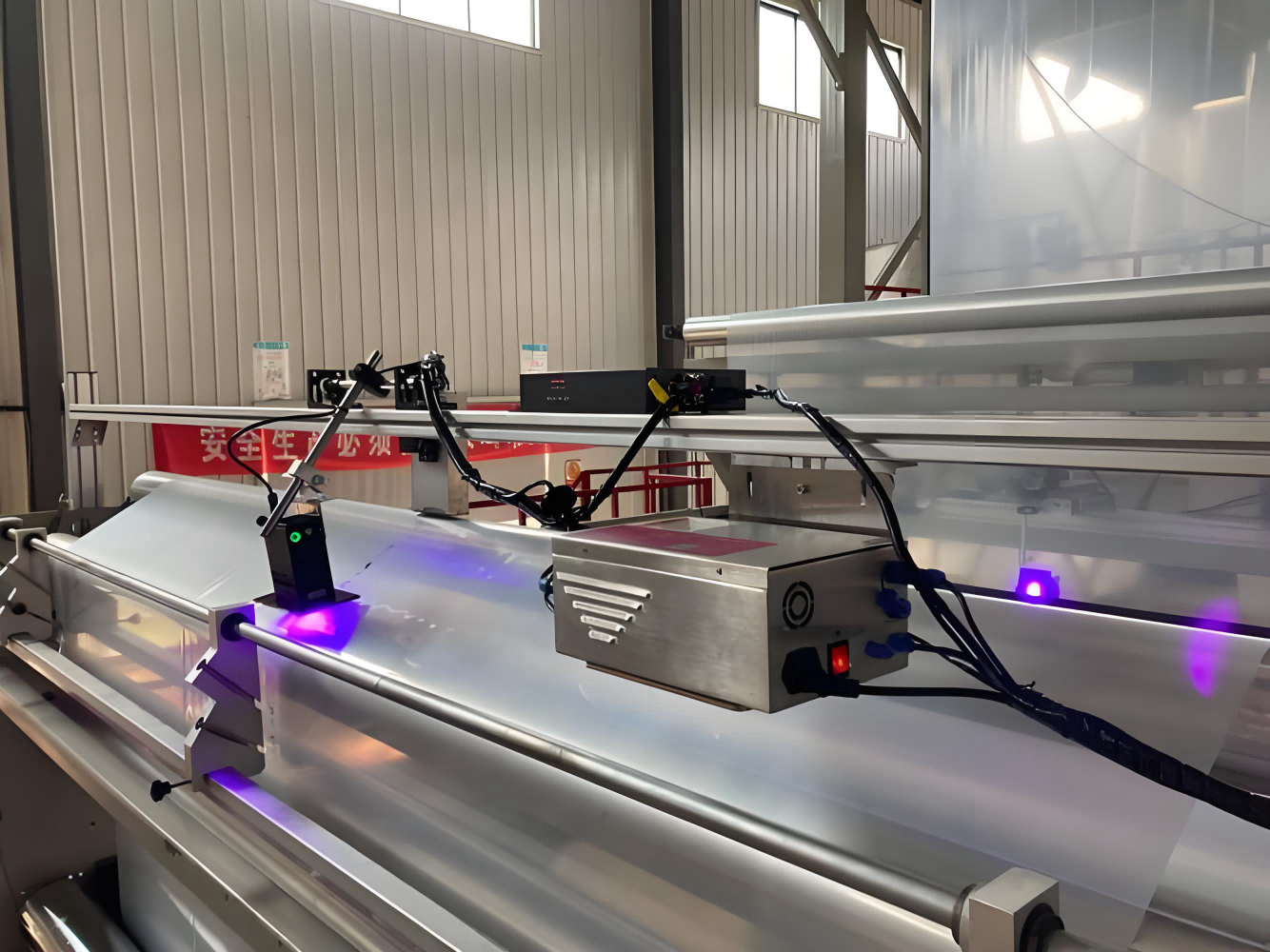
Factory floors punish markings. Grease, metal shavings, and constant vibration scrub away identifiers that look fine in a clean demo room. A part number stamped on an engine block has to survive machining coolant, heat cycling, and a pressure washer before it ever reaches assembly. That's why coding systems built for these settings lean toward physical marking methods—dot peen, laser etching, or aggressive thermal transfer—that bite into the surface rather than sitting on top of it.
Chemical exposure changes the rules even more. In food plants, conveyors get washed with alkaline foam and hot water daily. An inkjet code that smears on day two is worse than no code at all, because it creates rework and recall confusion. Here, laser ablation on stainless or specialized resins that bond into polycarbonate hold up better. The code has to stay legible through sanitizer baths, acetic acid splash, and freezer-to-oven swings without flaking.
Outdoor storage adds another layer. Equipment that spends months in a shipping yard faces UV, salt spray, and rain. A printed label will fade and curl, but a properly set dot peen mark stays readable because it's a physical indentation. Some operations switch to stainless steel tags with laser-annealed data for critical assets—those tags resist rust and remain scannable even after surface pitting starts. The real test isn't the first scan after installation; it's the five-hundredth scan after two winters and a pressure wash cycle.
Precision Codes on Any Substrate, From Cartons to Cables
Printing crisp, legible codes on corrugated cartons isn't just about dropping ink on a surface — the fibers wick moisture unevenly, and standard nozzles often leave blurred edges. A precision system compensates by adjusting droplet size and drying time on the fly, so every barcode stays scannable even after rough handling.
Cables and extruded profiles throw a different curve: the printing area is curved, often no wider than a pencil, and PVC or rubber jackets shed most inks. Here, the code needs to cure within milliseconds while hugging the contour. Piezo-driven printheads paired with high-adhesion, fast-cure inks deliver 2D codes and small text that survive flexing and abrasion.
Between these extremes sit coated boards, shrink films, metal casings, and glass vials — each with its own surface energy and temperature swing. Rather than forcing one ink or one setting, a well-tuned unit stores substrate-specific profiles and automatically switches voltage, throw distance, and ink viscosity. That keeps a single line running cartons at dawn and cable spools by noon without a technician hovering over the controls.
Built-In Intelligence for Error-Free Batch Coding
Mistakes in batch coding rarely come from a single bad keystroke. They accumulate when operators juggle product changeovers, variable date formats, and rush-order deadlines. Built-in intelligence for error-free batch coding addresses this by automating the decision points that typically rely on memory. The system cross-references the selected product recipe, current date/time, line number, and approved code structure before a single print command goes out. If a field falls outside the expected range, the coder flags it immediately, blocking production until an authorized user reviews the entry.
This layer of embedded validation goes beyond simple format checks. It learns from historical job data to spot patterns that frequently precede rejections, such as an expiry date that does not match the product’s shelf-life rules or a lot number that duplicates one already assigned to a different SKU. Operators see clear, plain-language prompts instead of vague error codes, which shortens recovery time and keeps the line moving. Because the intelligence lives inside the coding unit itself, it works even during network interruptions, maintaining accuracy without relying on a constant connection to a central database.
The result is a coding station that behaves less like a passive printer and more like a quality checkpoint. Human oversight remains essential, but it shifts from catching typos to managing exceptions. That reduces scrap, prevents costly recalls, and gives production supervisors confidence that every carton leaving the line carries the right date, lot, and barcode data.
Low-Maintenance Design That Cuts Production Downtime
The machine's core subsystems are built around a modular architecture, so worn parts can be swapped out in minutes without pulling the entire line offline. Access panels are tool-free and placed at operator height, eliminating the need for ladders or specialized technicians during routine checks. This approach keeps scheduled service windows short and prevents small issues from snowballing into unscheduled stoppages.
Bearings and drive components run on sealed lubrication circuits that only need attention every twelve months, and all filters are front-facing with quick-release clamps. Real-time wear indicators give a clear visual signal before a part reaches its replacement threshold, allowing maintenance to be planned around production peaks instead of interrupting them.
Because the design uses fewer consumable parts and standardizes fasteners across the frame, inventory for spare components shrinks by roughly a third. That directly reduces the chance of a missing bolt or gasket halting output, while also cutting the hidden costs of rush orders and emergency callouts.
Fast, Flexible Coding for Changing Product Lines
Building a codebase that holds up across shifting product lines isn't about predicting the future—it's about designing for motion. The core idea is to separate what changes from what stays the same. Instead of hard-coding feature flags or copying modules for each variant, you create small, composable pieces that can be reassembled quickly. Think of it like a set of building blocks: the blocks themselves don't change, but the structures you build with them can be torn down and rebuilt without starting from zero.
One practical approach is to keep your domain logic independent from delivery mechanisms. When a product line branches, you only need to swap out the outer layer—the API, the UI, the data source—while the inner rules remain intact. This lets you spin up a new variant in days rather than months. It also reduces the risk of breaking existing products, because the shared core is tested once and reused everywhere.
Flexibility comes from discipline, not from adding more options. Write code that is boring in the best way: small functions, clear boundaries, and minimal dependencies. When a new requirement arrives, you can trace the change to one or two files, not fifty. Over time, this compounds—teams stop fearing change and start treating it as a normal part of the workday.
FAQ
From beverage cans and food pouches to automotive parts and pharmaceutical cartons, the systems handle a wide range. We've tuned printheads and ink formulations for porous and non-porous materials, so codes stay sharp even on curved or textured surfaces.
We use a combination of fast-drying inks, precise nozzle control, and real-time printhead monitoring. That means no smudging or drop-out when your line is running at full tilt. We also run validation tests on your actual substrate before installation.
It’s less about the hardware and more about calibration. We match ink viscosity, drop size, and print resolution to the exact surface and production environment. Many suppliers sell printers; we engineer the whole coding process so every code is consistent from shift to shift.
Yes, we focus on grade A and B barcode verification. Our printers handle Data Matrix, QR, and traditional barcodes with adjustable cell sizes and contrast settings. We also offer inline verification cameras that flag any unreadable code before it leaves the line.
Most of our systems run with minimal daily upkeep—just a quick nozzle wipe and an ink level check. Preventive maintenance is typically quarterly, and we include remote diagnostics so we can often fix software issues before you notice downtime.
Absolutely. Our engineers do a site survey, map out the conveyor and sensor layout, and then install brackets, encoders, and HMI connections. We usually complete integration during a scheduled line stop, so there's no extra downtime.
We’ve worked mainly in food and beverage, cosmetics, electronics, and building materials. For example, one beverage plant needed codes that survived condensation and pasteurization, so we developed a specialty ink that wouldn’t bleed or fade.
We start with surface energy testing, then select or formulate an ink that bonds without a primer if possible. For very low-energy plastics we use a pre-treatment module or a quick-dry solvent ink. We always send sample-coded parts for your approval before full rollout.
Conclusion
Keeping codes crisp at line speeds that leave conventional printers struggling, this inkjet marking system company has built its reputation on precision that doesn't fade when production tempo rises. Their units shrug off dust, humidity, and temperature swings that would sideline less rugged equipment, making them a dependable fit for harsh industrial environments. Whether marking corrugated cartons in a busy packaging hall, printing directly onto cables, or coding on films and foils, the same sharp, smudge-resistant output holds true. That kind of substrate flexibility means no swapping hardware or adjusting chemistry when production shifts between materials—one system handles the range.
The real difference shows in how the system manages errors before they happen. Onboard intelligence checks every drop placement in real time, flagging potential misprints early instead of waiting for batch rejection downstream. That proactive control keeps batch coding error-free without constant operator oversight. Maintenance windows stretch further thanks to a design that minimizes wear points and self-cleans critical nozzles between runs, which directly cuts production downtime. When product lines change, operators can switch code layouts, expiry dates, or serialized data in minutes, not hours. This fast, flexible coding capability means short runs and frequent changeovers no longer disrupt throughput, giving manufacturers room to respond to shifting demand without sacrificing print quality.
Contact Us
Contact Person: Jacky
Email: [email protected]
Tel/WhatsApp: 086 15000607053
Website: https://www.danmajet.com