

OA Network Floor Vendor Checklist for Durable Office Infrastructure
2026-11-02
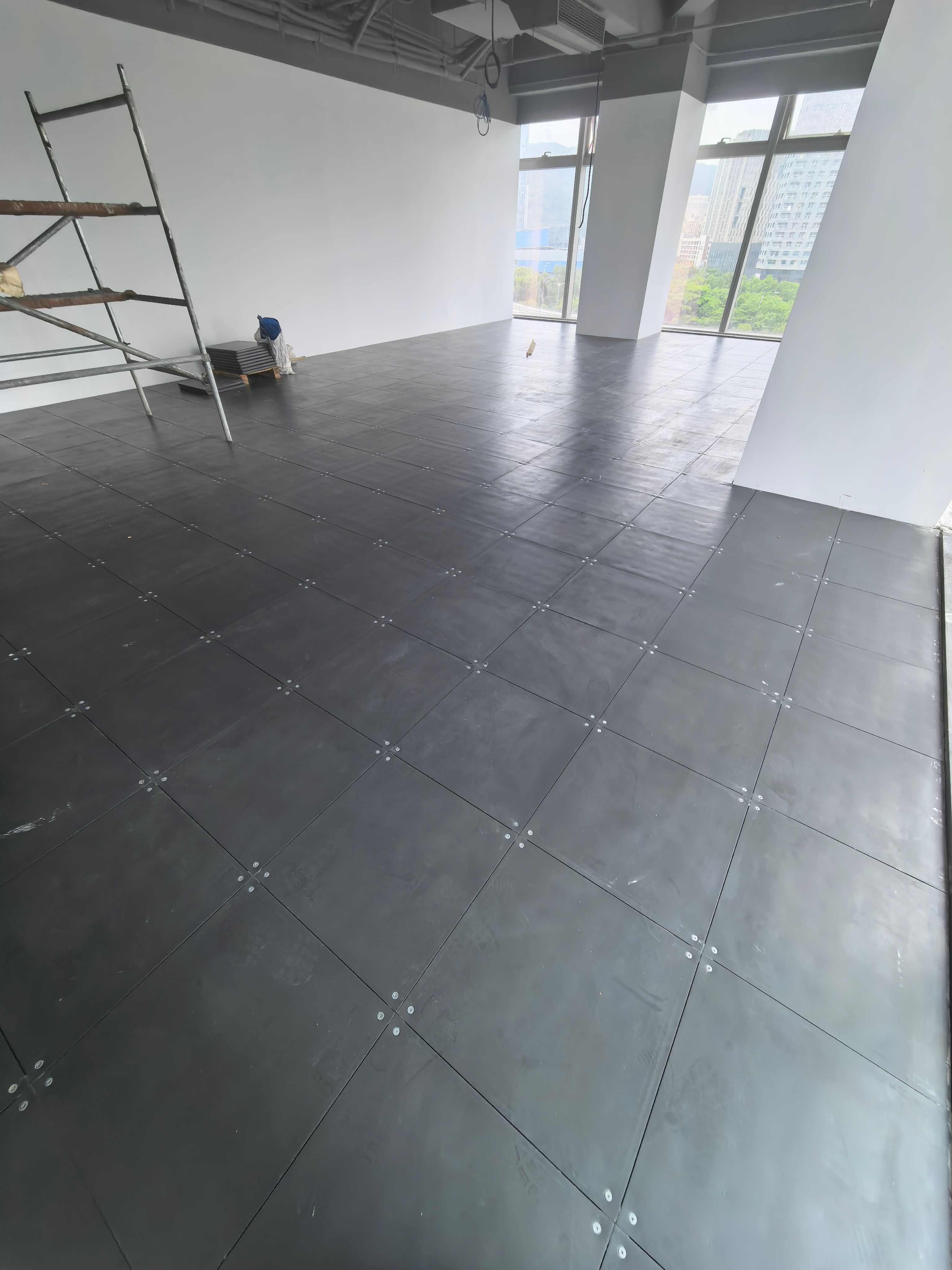
You've probably seen it: raised floors that creak, panels that shift, and cable trenches that become dust traps. Choosing the right OA network floor vendor shouldn't be a gamble. A solid checklist turns guesswork into confidence—and partnering with names like Lipin Floor helps ensure your office infrastructure stays solid for years.
Where Vendor Experience Shows Up in Floor Longevity
Experienced vendors catch subfloor problems that quietly shorten floor life. They check moisture readings, flatness tolerances, and old adhesive residue before any plank goes down. That early diagnosis prevents cupping, hollow spots, and seam separation months later.
Their judgment shows in matching materials to how a space is actually used. A vendor who asks about carts versus foot traffic, or wet mopping versus dry dusting, will steer you away from attractive but fragile options. This fit-to-use selection is where most longevity is gained or lost.
Installation habits also separate seasoned teams from the rest. They allow proper acclimation time, leave expansion gaps where needed, and handle transitions that amateurs skip. Those small allowances keep floors stable through seasonal humidity changes.
Reading Past the Spec Sheet on Load Capacity
Load capacity numbers on a spec sheet are a starting point, not a promise. They're usually derived from ideal lab conditions—evenly distributed weight, a flat surface, and brand-new components. In the real world, your shelf, cart, or rack will face uneven loads, vibration, and years of wear. Understanding that means expecting the real safe limit to be lower than the printed figure, and planning accordingly.
Another detail spec sheets rarely highlight is how load capacity shifts with configuration. Adding casters, adjusting shelf height, or mounting the unit to a wall can change the stress points dramatically. A rack rated for 1,000 pounds with four leveling feet might buckle at half that if it sits on three wheels and a cracked floor. Look past the headline number and consider the specific setup you'll actually use.
Finally, the materials and fasteners matter more than the final rating suggests. Cheaper units often achieve high numbers only with perfect assembly, while better-built options hold up under imperfect conditions. Check the thickness of steel, the type of welds, and the quality of connectors. If a spec sheet doesn't list these, it's often because the manufacturer doesn't want you to compare them side by side.
Cable Management That Survives Reconfiguration
Reconfiguring a workspace usually means unplugging, rerouting, and wrestling with a tangle of cables that refuse to cooperate. The usual fix—zip ties and adhesive clips—works fine until the next move, then you're cutting and redoing everything. What actually survives reconfiguration is a system that treats cables as movable parts: modular channels that snap open and shut, adjustable-length sleeves that slide along the bundle, and magnetic anchors that let you shift a power strip without peeling off adhesive. The goal isn't a perfect one-time layout; it's a setup that forgives change.
Start with the spine of the desk or rack. Instead of hard-mounting every cable to the frame, use a slotted raceway that allows individual wires to drop in or out at any point. Pair that with flexible spiral wrap on the segments that move most—monitor arms, adjustable shelves, rolling carts—so the bend radius stays controlled without locking anything into place. For temporary pivots, like moving a dock from one side to the other, keep a few low-profile hook-and-loop straps in a drawer; they're faster than zip ties and don't leave residue.
The trick is building slack with intention. Leave a service loop at every transition point, but coil it inside a small, soft pouch or a velcro-backed sleeve that can be repositioned. When you reroute a cable, the loop gives you extra length without pulling the whole run out of its channel. Reconfiguration stops being a project and becomes a two-minute adjustment—no new parts, no waste, just the same management system working in a different shape.
Fire Ratings and the Materials Behind Them
Fire ratings often get treated as a simple checklist item, but they are really a shorthand for how specific materials behave when heat and flame come into direct contact. Class A materials, which include poured concrete, brick, and certain gypsum boards, share one practical trait: they don’t ignite on their own and won’t add fuel to a growing fire. Yet even within this group, performance varies widely. A thin layer of fiber-reinforced cement board may pass the same rating as a solid masonry wall, but under extreme heat it can spall or crack long before the masonry gives way. Understanding what sits behind the rating means looking past the label and asking how the material fails.
Class B and C ratings cover a much wider family of products, from fire-retardant-treated lumber to specific plastics and composites. These materials do burn, but chemical additives or structural design slow the spread enough to meet lower hazard thresholds. The catch is that many of these treatments degrade over time. A wood panel rated Class B when it leaves the factory may behave very differently after a decade of humidity, UV exposure, or simple wear. Builders and inspectors who rely on a once-issued certificate without checking the material’s current condition can end up with a false sense of security.
In practice, the most useful way to read a fire rating is not as a guarantee of safety but as a starting point for asking better questions. How does the material transmit heat to the structure behind it? Does it produce thick, toxic smoke even if it doesn’t flame? Does it hold its shape long enough for occupants to escape? Gypsum board and cement board both carry Class A ratings, yet gypsum slowly loses bound water and crumbles, while cement board tends to transfer heat more aggressively to studs and fasteners. Neither is universally “better” — they simply fail in different ways. That distinction matters more in a real fire than any letter grade on a product sheet.
Panel Interchangeability and Tolerance Control
In modular construction, the ability to swap one panel for another without field modification often decides whether a project stays on schedule or drifts into costly rework. True interchangeability hinges on strict dimensional control at the mating edges and fastener locations, not just on nominal panel size. When every panel is produced within the same narrow tolerance band, a replacement part can be pulled from inventory and installed immediately, eliminating the trial-and-error fitting that plagues less disciplined fabrication processes.
Tolerance control, however, is not simply about tightening every dimension. It requires an understanding of which features actually drive interchangeability. Edge straightness, hole position relative to a common datum, and consistent thickness at connection points typically matter far more than overall length or width. Overly restrictive tolerances on non-critical surfaces raise manufacturing costs without improving fit, while loose control on interface dimensions leads to visible misalignment and compromised structural integrity. The art lies in assigning appropriate limits to each feature based on how it interacts with adjacent components.
A practical way to maintain interchangeability is through disciplined process monitoring at the point of fabrication. Rather than relying on final inspection to catch deviations, leading shops use in-process checks at key stages, such as after edge profiling and before fastener hole drilling. This catches drift early, when adjustments are cheap and fast. Over time, collected measurement data reveals which machines or operators introduce the most variation, allowing targeted corrective action. Panels then become reliably interchangeable, and tolerance control shifts from a reactive gate to a proactive part of daily production.
What Ongoing Support Looks Like After the Handover
The first few weeks after the handover can feel like a test drive in a new car—you know where the basics are, but the little quirks only surface once you're on the road. That's why the support doesn't end when the final document is signed or the last training session wraps up. Instead, it shifts into a quieter, more responsive mode. You might get a scheduled check-in call or a shared channel where questions land without needing a formal meeting. The goal isn't to hover, but to make sure no one feels stranded the moment a real-world scenario doesn't match the script.
A good handover leaves room for follow-through. Think of it as having a safety net that's visible but not intrusive. Maybe you'll receive a short written recap with the most common troubleshooting paths, or a point person who can jump on a quick call when something feels off. The rhythm often settles into something like: a check-in at day three, another at two weeks, then a lighter touch after the first month. By then, most teams have found their footing, and the support becomes more about refinement—answering edge-case questions or clarifying decisions that were made in a hurry during the transition.
What matters most is that the support feels human, not like a ticket queue. A brief message asking how a specific workflow is holding up, or a note pointing to a relevant resource, can go further than a generic satisfaction survey. The best ongoing support after a handover is less about hand-holding and more about being there just before you realize you need it.
FAQ
Look for a track record with commercial fit-outs, detailed load test reports for the specific pedestal and panel system, and willingness to walk you through past installations. A vendor who hesitates on technical specs or can't explain how their components work together usually isn't equipped for durable infrastructure.
Most office zones need at least 12 kPa for distributed load and 4.5 kN for point loads under concentrated equipment. But always have the vendor confirm calculations against the building slab and actual furniture plan, not generic charts.
Ask for samples you can scratch, drop, and spill coffee on. High-pressure laminate or vinyl finishes with sealed edges hold up better than bare steel or cheap powder coating. Also confirm the coefficient of friction for slip resistance when people are moving carts.
Uneven pedestal leveling and skipped perimeter bracing are the big ones. If the crew doesn't laser-level each stringer or ignores movement joints near columns and walls, you'll get rocking panels and squeaks long before the warranty expires.
Usually yes, because the vendor's crew knows the exact torque settings and alignment tolerances for their system. Third-party installers often rush pedestal spacing to save time, which compromises load transfer and voids the warranty.
Request the full test certificate for the complete assembly, not just the panel. The floor system should meet ASTM E84 for surface burning and, in many jurisdictions, NFPA 251 for structural integrity. If they can't produce third-party documentation, keep looking.
Once a year, remove affected panels in high-traffic lanes, clean debris from pedestal heads, and re-tighten pedestal lock nuts. If you notice a slight dip near rolling file cabinets, have the vendor re-level that zone before it spreads to adjacent panels.
Yes, if your layout changes often. Modular outlets let you move services without cutting panels or hiring an electrician each time. The initial markup pays back after two or three reconfigurations in a typical open-plan office.
Conclusion
Durability of an access floor isn't about initial appearance; vendor experience reveals itself in the details. A supplier who has managed many installations knows how load capacity specs can be misleading—real performance depends on understructure, pedestal spacing, and how panels behave under rolling loads over years. Reading past the spec sheet means asking about deflection under repeated traffic, edge support, and what happens when a panel chips. Fire ratings also can't be reduced to a certificate; materials behind the rating—core composition, coatings, adhesives—determine smoke development and long term stability. Cable management should accommodate reconfiguration without losing integrity: grommets, outlet boxes, and pathways that handle frequent moves without cracking panels or creating trip hazards.
Panel interchangeability and tolerance control separate precision manufacturing from one-off fabrication. In a large floor, slight size variations accumulate and cause lippage or rocking; a vendor should supply measured tolerance ranges and replacement panels from the same production line. After handover, ongoing support matters more than warranty language. Does the vendor maintain local stock for matching finishes? Are they able to advise on cleaning methods that don't degrade static dissipative properties? A vendor checklist should reward those who document as-built layouts, track batch numbers, and commit to replacement availability. Durable office infrastructure isn't a product purchased once but a system with an operational life, and vendor accountability after the sale is the best predictor of how that floor will perform in its fifth or tenth year.
Contact Us
Contact Person: yuki
Email: [email protected]
Tel/WhatsApp: +86 18664390732
Website: https://www.lipinfloor.com/