
Optimizing Your Adult Diaper Production: A Guide to Full Servo Machines
2026-03-27
In the competitive landscape of adult diaper manufacturing, optimizing production isn’t just a goal—it’s a necessity. As demand for high-quality, comfortable products grows, producers face the challenge of balancing efficiency with precision. This guide explores how full servo machines are revolutionizing this process, offering unparalleled control and flexibility to meet these evolving needs. At Womeng, we’re dedicated to empowering manufacturers with cutting-edge technology, like our advanced servo systems, to streamline operations and enhance product outcomes. Whether you’re new to automation or looking to upgrade, read on to discover practical insights and strategies that can transform your production line and set you apart in the market. Let’s dive into the key ways these machines can drive your success.
Choosing the Right Servo Machine for Your Diaper Line
Selecting the ideal servo machine for your diaper production line can significantly impact your efficiency and product quality. It's crucial to look beyond just specifications and consider how the machine integrates with your existing setup, such as whether its speed matches your output goals or if its precision handling reduces material waste. Anecdotes from industry peers suggest that machines with robust software for real-time adjustments often lead to smoother operations and fewer disruptions, making it worth prioritizing those with user-friendly interfaces and reliable support.
Another aspect to weigh is the machine's adaptability to various diaper designs and sizes, as flexibility can future-proof your investment in a fast-evolving market. For instance, some models offer quick-change tooling or modular components that allow you to switch between products without lengthy downtime, which is especially valuable for manufacturers aiming to offer a diverse product range. Personal experiences shared by plant managers highlight that opting for a machine with energy-efficient servos not only cuts operational costs but also aligns with sustainability trends, giving your brand a competitive edge.
Lastly, don't overlook the total cost of ownership, which includes maintenance and training expenses—machines with longer warranty periods or comprehensive service agreements might seem pricier upfront but can save money over time. Engaging directly with suppliers for demonstrations and feedback from current users can provide insights into reliability and performance in real-world scenarios. Ultimately, the right choice blends technical prowess with practical considerations, ensuring it enhances your diaper line's productivity and meets your specific manufacturing needs.
Enhancing Production Speed with Advanced Servo Controls
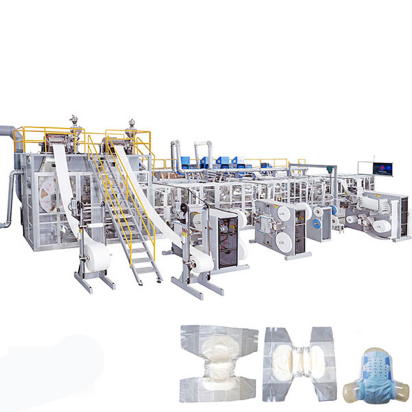
In manufacturing operations, leveraging advanced servo controls can dramatically boost production speed through their exceptional precision and responsiveness. These systems enable equipment to move with seamless accuracy, minimizing setup times and reducing the downtime between cycles. By employing real-time feedback loops and adaptive algorithms, servo motors can adjust on the fly to changes in material properties or environmental shifts, ensuring consistent performance without manual intervention. This results in a faster overall throughput, allowing facilities to meet tight deadlines and scale up output efficiently.
Moreover, the integration of advanced servo controls often includes features like predictive maintenance and energy optimization. This not only speeds up production by preventing unexpected breakdowns but also streamlines energy usage, making operations more sustainable. Controllers can anticipate wear and tear, scheduling maintenance during planned downtimes rather than halting processes mid-cycle. As a result, factories experience fewer interruptions, maintaining a steady pace that enhances productivity and supports long-term growth in competitive markets.
Reducing Waste in Diaper Manufacturing Through Servo Precision
In the competitive landscape of diaper manufacturing, minimizing waste isn't just about cost savings—it's a critical step towards sustainability. Servo precision technology plays a pivotal role here by offering enhanced control over production processes. Unlike traditional mechanical systems, servo drives allow for real-time adjustments in speed, torque, and position, ensuring that materials like pulp, adhesives, and films are used more efficiently. This reduces over-application and misalignment, directly cutting down on scrap rates and raw material consumption. Moreover, the ability to fine-tune operations on the fly means fewer defective products end up in landfills, aligning with environmental goals while boosting overall plant productivity.
Another key advantage of servo-driven systems is their adaptability to varying production demands. Diaper lines often need to switch between different sizes or absorbency levels, and manual recalibrations can be time-consuming and error-prone. With servo precision, these transitions become seamless, as programmable logic controllers (PLCs) automatically adjust settings to match specific product specifications. This not only reduces downtime but also minimizes the waste generated during changeovers, such as excess material from trial runs or misaligned components. As a result, manufacturers can maintain higher throughput with less material loss, making operations more agile and responsive to market fluctuations.
Beyond operational efficiency, servo precision fosters a culture of quality assurance that indirectly curbs waste. By integrating sensors and feedback loops, these systems continuously monitor parameters like cutting accuracy and bonding strength. Any deviations trigger immediate corrections, preventing minor errors from escalating into large-scale defects. This proactive approach means fewer diapers are discarded due to quality issues, and resources are conserved throughout the supply chain. Ultimately, embracing servo technology isn't just an upgrade in machinery—it's a strategic move towards leaner, greener manufacturing that resonates with both consumers and regulators.
Integrating Servo Technology for Flexible Product Customization
In today's fast-paced manufacturing landscape, integrating servo technology has become a pivotal strategy for achieving flexible product customization. This approach allows companies to swiftly adapt their production lines to handle diverse product specifications without extensive downtime. By utilizing servo motors with high precision and programmability, manufacturers can adjust tool paths, speeds, and positions on-the-fly, enabling a seamless transition between different custom orders. For instance, in the automotive industry, this technology supports the creation of personalized vehicle features, such as tailored interior components or unique exterior finishes, meeting individual customer preferences while maintaining efficient workflows.
Servo technology’s real-time feedback mechanisms play a crucial role in enhancing customization capabilities. These systems continuously monitor performance metrics, allowing for immediate corrections and optimizations during production. This results in higher quality outputs and reduced waste, which is particularly beneficial for industries like electronics, where custom circuit boards or specialized devices require exact tolerances. As demand for bespoke products grows, the agility provided by servo integration helps businesses stay competitive by offering more responsive and adaptable manufacturing solutions that cater to niche markets and evolving trends.
Moreover, the integration of servo technology fosters innovation in product design and development. By enabling more complex and variable manufacturing processes, it empowers engineers to experiment with new materials and configurations that were previously impractical. This flexibility not only accelerates time-to-market for customized items but also encourages a culture of continuous improvement. Companies leveraging this technology can quickly prototype and iterate on customer feedback, leading to products that better align with specific needs and preferences, ultimately driving customer satisfaction and loyalty in an increasingly personalized economy.
Maintaining High-Quality Standards with Automated Servo Systems
Maintaining high-quality standards with automated servo systems hinges on their precise control and adaptability, which ensures consistent performance in dynamic environments. These systems use feedback mechanisms to adjust in real-time, minimizing deviations and errors that could compromise output quality. For example, in manufacturing, servo motors maintain tight tolerances by continuously correcting positions, which is essential for producing components that meet exact specifications. This reliability allows industries to uphold stringent quality benchmarks without frequent manual interventions, enhancing overall efficiency and reducing waste.
Beyond basic precision, automated servo systems contribute to quality by enabling advanced functionalities like predictive maintenance and adaptive tuning. By analyzing data from sensors, these systems can foresee potential failures or performance drops, allowing preemptive adjustments that prevent defects. In sectors like robotics or automotive assembly, this capability ensures that processes remain stable and high-quality, even under varying loads or speeds. It transforms quality control from a reactive to a proactive approach, fostering a culture of continuous improvement and reducing downtime associated with quality issues.
In practice, the integration of automated servo systems into diverse applications, from packaging lines to medical devices, showcases their role in elevating quality standards through customization and scalability. They can be fine-tuned to specific tasks, ensuring that each operation adheres to optimal parameters, which is crucial for meeting industry regulations and customer expectations. By delivering repeatable, high-fidelity results, these systems not only maintain but often enhance quality over time, making them indispensable in competitive markets where consistency is key to success and reputation.
Scaling Up Production Efficiently Using Full Servo Automation
Imagine walking into a manufacturing facility and seeing rows of robotic arms seamlessly working in sync, adjusting their movements in real-time based on sensor feedback. This isn't science fiction—it's the reality of full servo automation in modern production. Unlike traditional fixed automation, which relies on rigid mechanical systems, servos provide precise, programmable control over every motion. By incorporating servomotors into assembly lines, machines can now handle complex tasks like picking delicate components, applying exact amounts of adhesive, or assembling intricate parts with minimal human intervention. This flexibility allows factories to switch between product variants quickly, reducing downtime and making it easier to scale operations without massive retooling costs.
But how does this translate into efficient scaling? When production demands spike, servo-driven systems shine by offering unparalleled adaptability. Think of it as giving machines a brain and muscles that respond instantly to changes. For instance, in electronics manufacturing, where components are shrinking and tolerances are tighter, servos adjust their speed and force on the fly to avoid damaging sensitive parts. This capability means companies can ramp up output without sacrificing quality or safety. Moreover, with integration into smart factory networks, these systems collect real-time data on performance, enabling predictive maintenance that prevents unexpected breakdowns and keeps lines running smoothly during high-volume periods.
Beyond just keeping pace with demand, full servo automation fosters a leaner, more resilient production environment. It eliminates many inefficiencies tied to manual labor or outdated equipment, like wasted materials from errors or slow setup times. In sectors like automotive or pharmaceuticals, where precision is non-negotiable, servo technology ensures consistent results batch after batch, which is crucial when scaling to meet global markets. As businesses look to future-proof their operations, investing in such automation isn't just about cutting costs—it's about building a foundation that can evolve with technological advances, from AI-driven optimizations to IoT connectivity, ultimately making scalability a sustainable, long-term strategy.
FAQ
Full servo machines enhance precision and efficiency in adult diaper production, reducing waste and improving product consistency.
Unlike traditional machines, full servo models use computerized controls for smoother operation, faster changeovers, and better energy management.
Focus on features like adaptive speed control, modular design for flexibility, and integrated sensors for real-time quality monitoring.
Yes, most advanced full servo machines are designed to easily switch between different sizes and absorbency levels with minimal downtime.
Regularly clean and lubricate moving parts, calibrate sensors periodically, and follow the manufacturer's scheduled service checks to prevent breakdowns.
They optimize material usage, reduce scrap rates, and often use less energy, supporting eco-friendly production practices.
Conclusion
This guide explores how full servo machines optimize adult diaper production, focusing on selecting the right equipment, enhancing speed, reducing waste, enabling customization, maintaining quality, and scaling efficiently. It details how advanced servo controls boost line speed and precision, minimizing material waste while supporting flexible product variations through integrated technology, all automated for consistent high standards.
By leveraging full servo automation, manufacturers can achieve efficient scaling, adapting quickly to market demands without compromising quality. The synergy of these aspects ensures a streamlined, cost-effective operation that stands out in the competitive diaper industry, offering reliability and innovation for long-term growth.
Contact Us
Contact Person: Jessie Lai
Email: [email protected]
Tel/WhatsApp: 86-188594442931
Website: https://www.wm-machinery.com