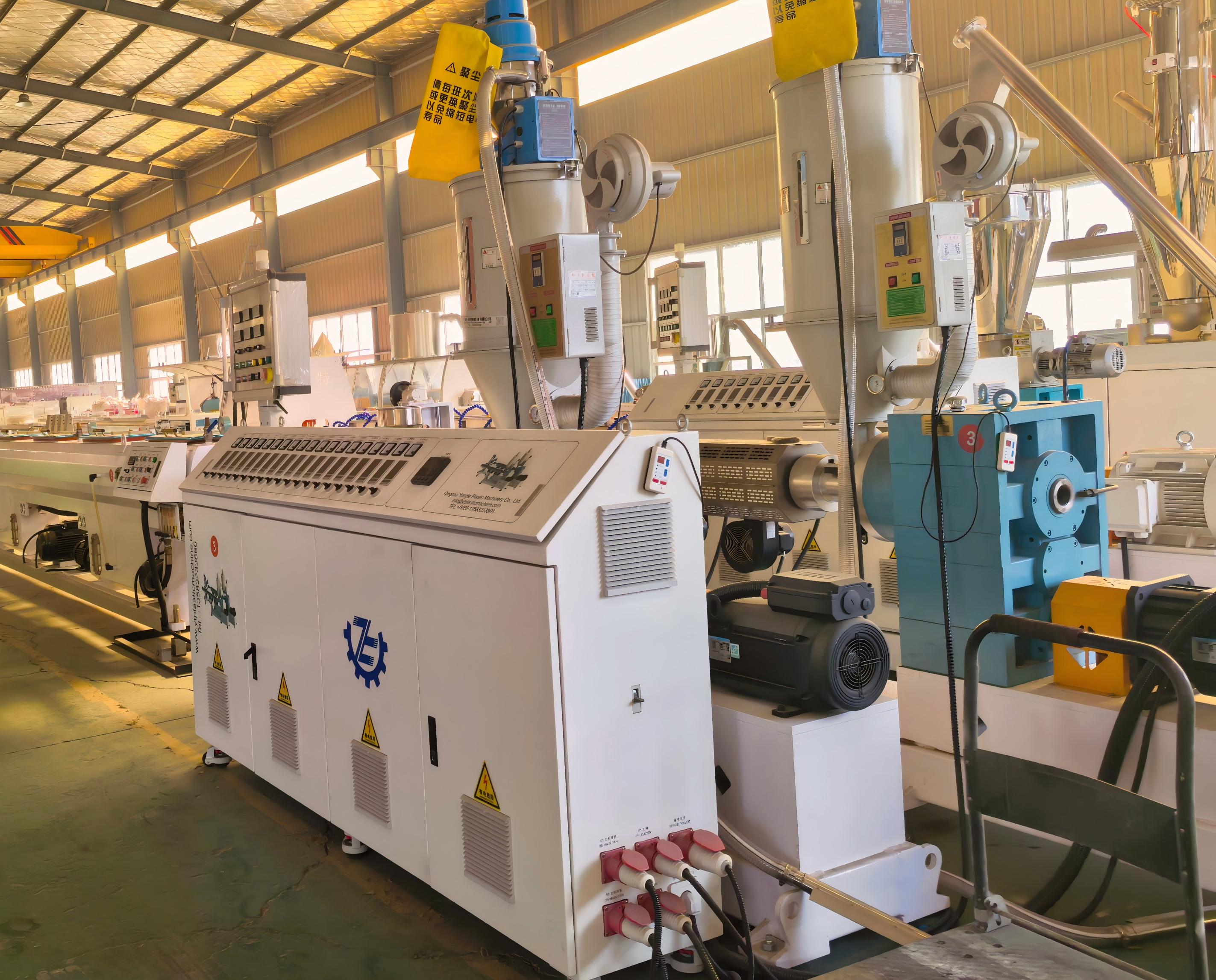

Plastic Lumber Machine Maker: Key Considerations for Selecting a Dependable Supplier
2026-11-02
Choosing a plastic lumber machine supplier isn't just about comparing spec sheets or price tags. It's about betting on a partner whose engineering, after-sales support, and parts availability will determine whether your production line hums along or stalls when you can least afford it. In this guide, we break down the non-negotiable factors—from screw design and temperature control to real-world uptime records—that separate dependable manufacturers from costly gambles. Along the way, we'll show why seasoned operators increasingly look to Yongte as a benchmark for reliability and long-term value.
Verify Their Experience with Recycled Material Processing
Ask for concrete examples of projects where the supplier handled recycled feedstock, not just finished goods. A credible partner can walk you through the entire chain—from sorting and washing to contamination removal and melt filtration. Pay attention to how they describe challenges like odor control, inconsistent melt flow, or dealing with mixed polymer streams. If their answers stay vague or focus only on marketing claims, dig deeper. Real experience shows up in the details: specific equipment they use, the grades of recycled resin they have produced, and how they handled batch-to-batch variability without compromising output quality.
Request documentation that goes beyond a simple certificate. Look for process validation reports, trial run data, or third-party lab results from actual recycled material runs. Suppliers with genuine expertise will have records showing how they adjusted temperature profiles, screw designs, or filtration mesh sizes when switching from virgin to recycled input. Ask about their rejection rates and how they manage off-spec material—these numbers reveal whether they truly understand recycled processing or just dabble in it. A trustworthy partner will also be transparent about limitations, such as which types of recycled polymers their lines can handle efficiently.
Finally, talk to their technical team directly, not just sales representatives. Have a detailed conversation about your specific recycled material—its source, contamination level, and intended end-use. An experienced processor will ask sharp questions about bulk density, moisture content, and expected regrind percentages. They will propose realistic trial parameters instead of promising perfect results on the first run. If they can reference past projects with similar recycled feedstocks and describe both successes and setbacks, that is a strong signal of hands-on capability rather than theoretical knowledge.
Inspect the Core Components: Screw, Barrel, and Drive System
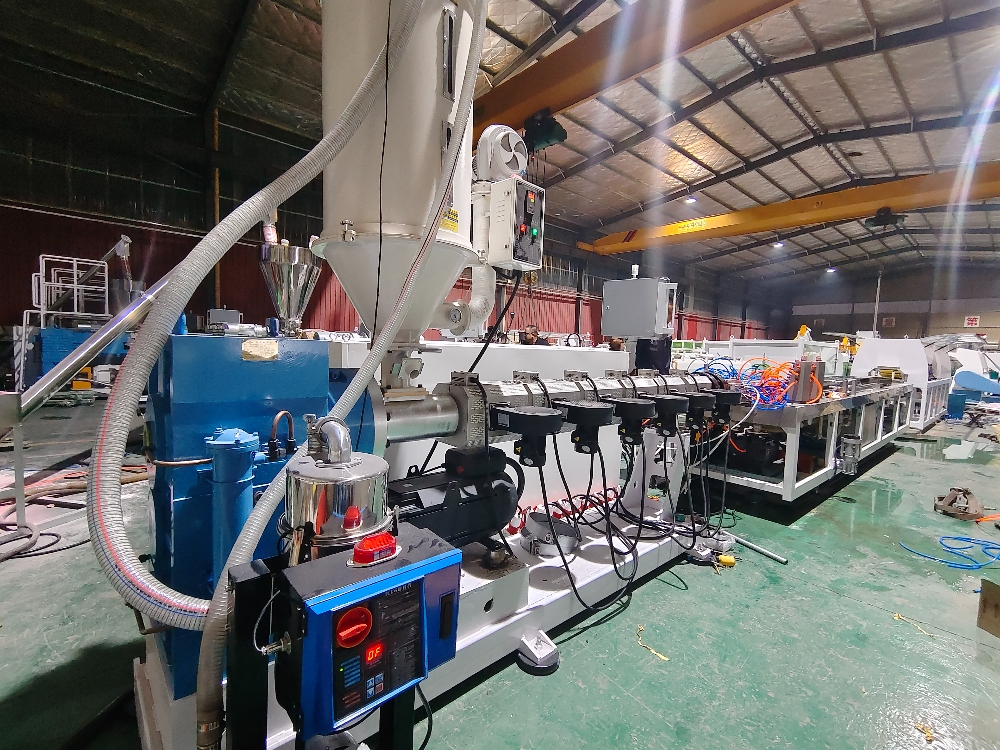
Before diving into performance tuning, take the time to physically examine the screw, barrel, and drive system. Look for visible wear patterns on the screw flights, especially in the compression and metering zones. Uneven grooves, pitting, or a shiny, polished appearance can indicate abrasive or corrosive wear that will directly affect melt quality and output consistency. Pay close attention to the root diameter and flight clearance—excessive clearance leads to melt backflow and reduced pumping efficiency, while overly tight clearance risks metal-to-metal contact.
The barrel interior deserves equal scrutiny. Use a bore gauge or a straightedge with a strong light to check for scoring, ovality, or a bell-mouthed feed throat. Even minor deviations can create dead spots where material degrades and contaminates the melt stream. If the barrel has a hardened liner, confirm its thickness at multiple points along the length; thin spots near the feed section often signal uneven screw alignment or inadequate support from the drive coupling.
Finally, examine the drive system as an integrated unit rather than isolated parts. Check the gearbox for unusual vibration, oil leaks, or rising operating temperature under load. Inspect the coupling between the motor and gearbox for signs of misalignment, such as fretting marks or cracked elastomeric elements. A drive that hunts or fluctuates in speed, even by a small margin, will translate directly into inconsistent melt pressure and dimensional variation in the final product.
Evaluate Customization and Flexibility for Your Product Line
Customization often gets reduced to a checkbox on a spec sheet, but real flexibility lives in the quiet details. How easily can a customer tweak a dimension, shift a color, or swap a material without triggering a fresh production run? The difference between a product that bends and one that breaks is rarely dramatic—it shows up in tolerances that allow minor adjustments, modular components that snap together in unexpected ways, and backend systems that don't treat every change like a new SKU. If your current line forces buyers to accept a preset menu, you're not just losing sales; you're leaving behind the customers who need a reason to stay.
Look past the obvious features and trace the path of a change request from first email to final delivery. Does your team have to open a new ticket for a slightly longer cable? Are your manufacturing partners locked into fixed dies and minimum order quantities that strangle small runs? Flexibility isn't about offering infinite options—it's about making the most common adjustments feel effortless. A product line with real adaptability lets a customer shift from a standard length to a custom one without doubling the lead time or the cost. That capability often comes from design decisions made years earlier: standardized connections, parametric CAD models, or a bill of materials that tolerates substitution.
Finally, measure flexibility against your actual market. A boutique furniture maker and an industrial sensor supplier face wildly different expectations. Map the most frequent customization requests you've received in the last twelve months. Then test your current product architecture against those five or six scenarios. If every one of them requires heroic effort from your engineering team, the problem isn't the customer—it's the line. Sometimes the bravest product decision is deliberately limiting customization to deepen support for the changes that matter most. Other times, the smart move is to build a platform that treats variation as a first-class citizen, not an afterthought bolted on at the end.
Test Their Support Response Before You Commit
Many businesses promise “24/7 support” but fall short when you need them most. Send a simple pre-sales question on a weekend or late evening, and see if you receive a timely, helpful reply. This small test reveals more about their actual response times and tone than any polished feature list ever will.
Also pay attention to the quality of their answer. Do they ask clarifying questions, or do they copy-paste a generic help article? A team that engages thoughtfully before you pay is far more likely to treat you well after the invoice is sent. If your inquiry goes unanswered for three days, imagine how a critical issue would be handled once you are locked in.
Review Real Installations and Customer Outcomes
Walking through a completed project tells you more than any spec sheet ever could. When we visit sites where our systems have been running for months or years, we don't just glance at the equipment—we watch how people actually use it. One warehouse manager showed us how a simple layout change cut picking time by nearly a third. That kind of on-the-ground feedback reshapes our next design far more than a lab test ever will.
Talking to customers after the dust settles reveals patterns you'd never notice from a distance. A food processing plant reported fewer temperature swings after we adjusted sensor placement based on their maintenance logs. Another client in logistics mentioned that their staff stopped bypassing safety interlocks once we shortened the reset procedure. Those small, human details don't show up in standard performance metrics, but they drive real satisfaction.
We also look at the numbers that matter to the customer's bottom line: downtime, energy use, repeat orders. Comparing before-and-after data from actual installations helps us spot where our assumptions were right and where they drifted. Last quarter, revisiting three older sites led to a firmware update that reduced idle power draw by 18% across the installed base. Real outcomes, not projections, are what keep our designs grounded.
Balance Initial Price Against Long-Term Operating Costs
Focusing only on the sticker price can lead to expensive surprises down the road. A cheaper machine or system might look attractive on day one, but higher energy consumption, frequent repairs, or shorter replacement cycles quietly drain your budget. Instead of comparing just the purchase cost, estimate the total spend over the expected lifespan—including maintenance, utilities, downtime, and disposal. Sometimes paying 15% more upfront cuts your operating costs by 30% each year, which quickly pays for itself.
Long-term operating costs have a way of compounding. A unit that costs less to buy but demands specialized parts, consumes more power, or requires more operator attention will eat into any initial savings. Smart buyers run the numbers across at least five years: energy use, service contracts, consumables, and labor hours. When you weigh those recurring expenses against the upfront price, the "expensive" option often turns out to be the frugal choice. The goal isn't to chase the lowest bid—it's to avoid locking yourself into a cash drain.
A useful habit is to ask sellers for a cost-of-ownership breakdown before signing anything. If they can't or won't provide it, that's a signal. Real-world examples from facilities that switched from bargain equipment to mid-range models show total savings of 20–40% over a decade, driven by lower energy bills and fewer unplanned outages. Balancing initial price against long-term operating costs means treating the purchase as an investment in future stability, not just a transaction to minimize today.
FAQ
Pay close attention to the screw length-to-diameter ratio, the number of barrel heating and cooling zones, and whether the system includes melt pressure sensors. A well-designed die head with uniform flow channels and a properly sized calibration and cooling tank also matter more than most people realize. These details directly affect melt homogeneity, board density, and dimensional stability.
Ask for a live video walkthrough of their workshop or, better yet, visit the facility if possible. Look at what components they actually build in-house versus what they buy in. If they assemble gearboxes, screws, and barrels from external vendors, ask who those vendors are. Request footage of a similar machine running your type of raw material, and ask for a sample of the output board to examine for warping, voids, or surface roughness.
It means you can reach a real engineer, not just a salesperson, when something goes wrong. Check their average response time for remote diagnostics, whether they stock common wear parts locally or ship them quickly, and how many field service technicians they have for your region. A supplier that offers structured operator training and a clear escalation path for unresolved issues is far more valuable than one that promises fast delivery but disappears after installation.
It depends on your feedstock. If you are processing clean, consistent post-industrial scrap, a standard machine often works fine and keeps costs lower. But if your input includes mixed plastics, high moisture, or abrasive contaminants, a custom configuration with vented barrels, special screw coatings, or larger filtration areas will save you from constant downtime. Ask the supplier to explain how their design handles your specific contamination level, not just the machine's nominal output.
Look at energy consumption per kilogram of output, the expected service life of screws and barrels, and how often heating elements or thermocouples need replacement. Also factor in die changeover time and the cost of keeping spare parts on hand. A machine that costs 20 percent less upfront but wears out screws every six months and consumes significantly more electricity can end up far more expensive over five years.
Be wary of anyone who guarantees maximum output without asking about your raw material characteristics. Vague answers about screw design or heat control are a bad sign. Also watch for reluctance to provide customer references, pressure to sign before you can test your own material, and quotes that seem too low to include proper safety features or genuine brand-name components. If they avoid discussing failure modes or maintenance schedules, keep looking.
Absolutely. A factory that is closer to your port reduces freight costs and delivery time, but also consider how quickly they can ship spare parts later. If the machine needs installation and commissioning, travel costs for their engineers can add up fast. Check whether they have a local distributor or service partner in your country, because relying solely on overseas support can stretch a two-day repair into a two-week wait.
Most suppliers offer 12 months or roughly 2,000 operating hours, whichever comes first. However, the fine print often excludes wear parts like screws, barrels, and heaters. Negotiate for coverage that includes the main motor, gearbox, and control system, and clarify who pays for technician travel if a major failure occurs during the warranty period. Ask about extended warranty options and what they cover, especially for the extruder and die assembly.
Conclusion
Choosing a plastic lumber machine supplier rarely comes down to a single spec sheet. The most telling signal is how they handle recycled feedstock—batches vary in moisture, contamination, and melt flow, and a builder who hasn't run tons of mixed post-consumer scrap won't anticipate the screw wear or vent clogging you'll face. Look past the glossy brochure and ask to see the screw, barrel, and drive system up close; undersized motors and shallow flight depths show up quickly once you push beyond virgin pellets. Equally important is whether the line can be reconfigured for different board profiles, thicknesses, or hollow-core dies without a full redesign, because your product mix will shift.
Before signing, test how fast their engineers answer a real troubleshooting question—not a sales call, but a request for startup settings or a torque curve at low RPM. Then visit or contact two or three operations running the same machine for at least a year; ask about downtime, die changes, and parts lead times, not just output numbers. Finally, treat the quoted price as only one input. A cheap extruder with a fragile gearbox and frequent barrel replacements will cost more in year three than a slightly pricier unit built for abrasive recycled material. The dependable supplier is the one who talks openly about wear rates, spare parts inventory, and energy consumption per kilogram—not the one who promises the lowest upfront figure.
Contact Us
Contact Person: Ms Qin
Email: [email protected]
Tel/WhatsApp: 8613583233866
Website: https://www.yongteplast.com