

Reach Truck Manufacturer Best Practices for Safe and Efficient Warehouse Operations
2026-09-04
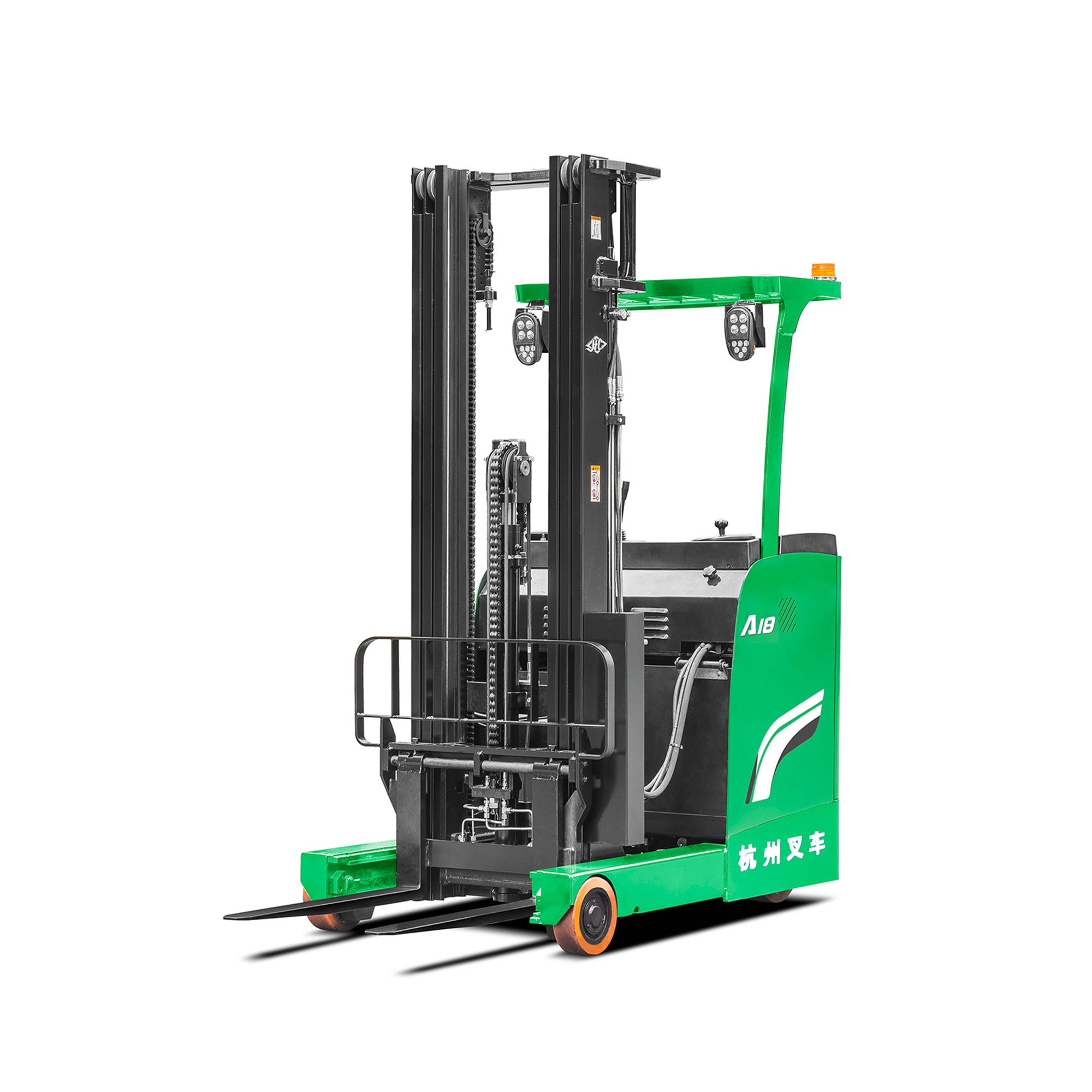
Every warehouse manager knows the tension: push for speed, and safety slips; over-prioritize caution, and productivity stalls. The missing link is often the reach truck itself—and the practices its manufacturer recommends. HANGCHA, with decades of engineering insight, has distilled what separates a chaotic aisle from a smooth-running operation. This isn't a generic checklist. It's about the specific maneuvers, load-handling habits, and daily routines that turn a reach truck from a mere machine into a precise tool. Curious what those look like in a real, fast-paced warehouse? Read on.
Training That Replays Real Near Misses to Sharpen Operator Instincts
Operators rarely get a second chance when a near miss unfolds in the field. Traditional simulations rely on scripted scenarios, but this training pulls footage from actual incidents where everything nearly went wrong. By replaying these moments in immersive environments, operators are forced to make split-second decisions under the same pressure they would face on the job.
The realism cuts through false confidence. Instead of learning generic responses, each operator encounters the exact sensory cues—sounds, vibrations, visual details—that preceded a real close call. These details are easy to gloss over in a classroom but impossible to ignore when they appear inside a headset or full-scale simulator. The result is a sharper instinct that comes from repeated exposure to authentic failure points.
After each replay, the debrief focuses on what the operator noticed and what they missed. This isn't about punishing mistakes; it's about building a mental library of warning signs. Over time, operators begin to recognize patterns from incidents they never personally experienced, giving them a practical edge that textbook training simply can't provide.
Pre-Shift Inspections Built Around the Parts That Actually Wear
The usual checklist covers everything from lights to leaks, but that scattergun approach misses the point. Wear happens where friction, heat, and pressure concentrate. On most equipment, that means ground-contact surfaces, braking components, and any flexing hose or belt. Spend the first five minutes of a shift kneeling by the tires or tracks, running a glove along the sidewalls, and checking for cuts, bulges, or embedded debris. If the rubber looks polished in one spot, something is rubbing that shouldn't be.
Next, move to the parts that move. Brake pads, rotors, and drums lose material every time the machine stops. Hydraulic lines swell from repeated pressure cycles, and their fittings can weep without leaving a puddle. Rather than just eyeballing these areas, touch them—heat that lingers after a cold start often points to a dragging brake or a restricted valve. Listen for the short hiss of air escaping a split coupling. These small signals show up before a failure does.
Build your inspection around what actually wears on your specific fleet, not a generic list pulled from a manual. Keep notes on which components get replaced most often. If alternator belts fray at 300 hours, check them at 200. If a certain hose rubs against a bracket, make that a fixed point every morning. A pre-shift inspection that respects real wear patterns catches problems while they're still cheap to fix.
Aisle Layouts That Eliminate the Need for Blind Reverse Moves
Warehouse designers have long struggled with the hidden dangers of blind reverse moves—those moments when a forklift operator backs into an unseen corner or intersection. The solution often lies not in better cameras or louder alarms, but in rethinking the aisle structure itself. One effective approach is the one-way loop layout, where every aisle feeds into a continuous path that naturally guides vehicles forward through pickup and drop-off points. By eliminating dead ends and forcing consistent direction, operators never need to reverse into a blind spot; the layout itself prevents the maneuver from being necessary.
Another proven configuration is the angled parking aisle, borrowed from grocery store parking lots but adapted for pallet racks and staging areas. Instead of 90-degree turns into narrow rows, aisles are set at 45 or 60 degrees relative to the main travel lane. This allows forklifts to enter and exit slots using shallow forward turns only—no sharp backing, no craning to see around corners. The angle creates a natural line of sight for the operator, and because vehicles always approach from the same direction, the risk of collision drops sharply. It feels almost intuitive, like the space was designed by someone who actually drives a lift every day.
For facilities with high ceiling clearance or narrow footprints, the through-aisle with multiple entry points works best. Rather than one long corridor ending in a wall, every aisle has an opening at both ends—sometimes via cross-dock doors or dedicated pass-throughs. This turns reversing from a routine requirement into a rare exception. Operators can simply continue forward, loop around the next cross aisle, and come back head-on. It requires more square footage for turning radii, but the payoff is a dramatic drop in backing incidents and a smoother overall flow. In the end, the best reverse move is the one the layout never asks you to make.
Load Rules That Respect the Stability Triangle at Every Lift Height
A forklift’s stability triangle isn’t a fixed safety zone—it shifts as the mast climbs. At ground level, the combined center of gravity of the truck and load sits comfortably inside the triangle formed by the two front wheels and the rear axle pivot. But every inch of lift height moves that center upward and forward, narrowing the margin before tip-over. The practical rule is to treat the data plate capacity as the ceiling only at its specified load center and maximum lift height. If you’re lifting above that point or handling an oddly shaped load, derate accordingly instead of guessing.
Keep the mast vertical or tilted slightly back before raising, and never tilt forward with a load elevated; that pushes the center of gravity toward the triangle’s edge and can flip the truck on uneven ground or during a sharp turn. Lower the load to safe travel height—usually just enough to clear obstacles—before moving. And if the load blocks your view, travel in reverse or use a spotter rather than relying on high lift to see under it. Respecting these rules means the stability triangle stays intact through the full lift range, not just at the start.
Onboard Alerts That Act Before a Driver Can Look Up
The steering wheel vibrates twice, then a soft chime rolls through the cabin — but the driver hasn't even glanced down yet. That's the whole trick. Modern onboard alerts are moving past the old "beep after you've already messed up" model and into predictive territory. The car reads the road, the traffic, the wobble of the lane lines, and it nudges you before your brain registers the danger. No dashboard flashing, no frantic text on a screen. Just a physical pulse in the seat or a subtle tension in the wheel, timed so you correct the drift half a second before the rumble strips would have screamed at you.
What makes these systems feel different is how they use your own body as the interface. Instead of demanding that you decode a warning icon while doing seventy, the alert hits your hands, your back, your left ear — whichever spot you'll notice without thinking. A slight brake tap to warn about a slowing car ahead, a tug on the belt when you start to merge into a blind spot. By the time your eyes finally flick up to the mirror or the speedometer, the car has already solved the immediate problem. It's not about scolding you after a mistake; it's about quietly erasing the mistake before it even counts.
This shift brings a strange new trust into the driver's seat. You start to lean on those little physical whispers, the way you lean on a friend who always spots the pothole before your wheel finds it. The system doesn't lecture or nag — it just moves the situation slightly left or right, then lets go. Some drivers swear they can feel the car's "mood" when it gets quieter on open highways and more chatty in dense city traffic. And maybe that's the real breakthrough: alerts that act like a co-pilot with good instincts, not a backseat driver waiting to say "I told you so."
Battery Rotations Timed to Real Shift Data, Not Generic Schedules
Warehouse managers often rely on fixed battery rotation charts that assume every shift runs the same way. The problem is that real operations rarely match those assumptions. A morning crew might push forklifts harder than the afternoon team, or a sudden order surge could drain batteries far earlier than planned. By syncing rotation timing to actual shift data, you stop guessing and start swapping batteries exactly when they hit the discharge threshold that matters for your fleet.
This approach treats each truck’s battery as a data source rather than a unit on a clock. Telematics and battery monitoring systems log amp-hour draw, temperature spikes, and idle periods per operator and per shift. When that live feed shows a battery dipping below 20% state of charge at 2:15 p.m. instead of the scheduled 3:30 p.m., the rotation trigger adjusts immediately. The result is fewer deep discharges that shorten battery life and fewer emergency swaps that stall loading docks.
Operationally, it means your battery room becomes a pull system driven by demand signals from the floor. Supervisors see a dashboard of predicted depletion times based on yesterday’s shift patterns and today’s workload, not a printed spreadsheet from last quarter. That kind of responsiveness keeps trucks running through peak hours and lets you rotate batteries during natural lulls — saving both labor hours and the hidden cost of premature battery replacement.
FAQ
Focus on models with adjustable floor plates, low step-in heights, and thumb-operated hydraulic controls. These features minimize repetitive stretching and allow the operator to keep both feet planted, which cuts down on lower back strain and keeps reaction times sharper through the second half of a shift.
Many suppliers now offer side-extraction battery compartments and roller beds that let a single technician swap a drained unit in under five minutes. Paired with automatic battery latches and insulated emergency disconnects, the process stays hands-off enough to prevent crush injuries while keeping the truck out of service for a minimal window.
Regenerative braking recovers kinetic energy during plugging and ramp travel, feeding it back into the battery instead of burning it off as heat. In high-cycle operations, that can extend runtime enough to skip a mid-shift battery swap, and it also reduces brake wear, so maintenance teams spend less time replacing friction components.
Teaching drivers to keep the mast tilted back only when traveling and to lower forks to floor level before entering a cross-aisle has a measurable effect. Manufacturers also stress 'corner-to-corner' scanning, where the operator checks both fork tips and the counterweight swing before changing direction, since most pinning accidents happen during that transition.
Measure the distance between your widest load and the rack uprights at full lift height. If the clearance drops below 100 mm on either side, you need a truck with a different mast staging sequence or a narrower chassis. Manufacturers also recommend comparing residual capacity at maximum fork height against the heaviest pallet you store, not the average one.
For operations running two shifts or more, manufacturers typically recommend checking hydraulic hose chafing and cylinder drift every 250 hours rather than waiting for a quarterly PM. That means cycling the mast to full height with a rated load and timing any settle over three minutes. More than 15 mm of drop signals the need for seal replacement before a failure blocks an aisle.
Excessively smooth floors reduce the traction needed for a reach truck's stabilizing casters and drive tire during a hard turn. The resulting slide can throw off the load center and trigger the truck's stability system at the worst moment. A matte epoxy with a coefficient of friction above 0.5 keeps the truck predictable without adding enough rolling resistance to hurt battery runtime.
Conclusion
Reach truck manufacturers are redefining safety and efficiency by embedding real-world incident data directly into operator training. Instead of generic drills, programs now replay actual near misses, sharpening instincts through visceral scenarios that mirror the precise moments things went wrong. Meanwhile, pre-shift inspections have evolved from checkbox rituals into targeted checks on the components that genuinely wear—masts, load wheels, and hydraulic fittings—so operators spend minutes on meaningful verification rather than hours on paperwork.
On the floor, smarter aisle layouts eliminate the need for blind reverse maneuvers altogether, reducing one of the most common causes of rack and pedestrian collisions. Load rules are now tied explicitly to the stability triangle at every lift height, ensuring operators understand how fork elevation shifts center of gravity. Onboard alerts act faster than human reaction times, flagging instability or proximity risks before a driver even looks up. Finally, battery rotations are timed to actual shift data—not generic schedules—so trucks never sit idle mid-peak. Together these practices form a cohesive system where safety is engineered into the equipment, the layout, and the operator's daily rhythm, not bolted on as an afterthought.
Contact Us
Contact Person: Liuxue
Email: [email protected]
Tel/WhatsApp: +86-19084200370
Website: https://www.hf-ec.com/