

Stainless Steel Hex Self Drilling Screws Wholesaler Guide for Contractors and Builders
2026-09-29
Every contractor knows the frustration of stripping a hex head halfway through a metal roofing job. The right stainless steel hex self drilling screws don't just save time—they make or break your reputation. This wholesaler guide from Wanluo cuts through the noise to help builders choose fasteners that actually hold up.
Why Stainless Hex Self Drilling Screws Outlast Coated Carbon Steel on Exposed Decks
Most deck failures trace back to fastener corrosion, not wood rot. Coated carbon steel screws rely on a thin zinc or polymer layer that gets scratched the moment the hex head meets the driver bit. Exposed decks face constant UV, salt spray, and standing water, so those micro-scratches become rust blooms within the first season. Stainless hex self drilling screws carry their corrosion resistance through the entire alloy, not just the surface. There is no plating to flake off or wear thin at the thread roots where stress concentrates.
The self-drilling point also changes how the fastener interacts with the deck structure. Carbon steel screws often require pre-drilling, which leaves raw steel edges inside the hole. Any moisture wicking into that cavity attacks the screw shank from the inside out. Stainless versions cut their own path cleanly, reducing the gap between screw and substrate. Less water trapped at the interface means less galvanic activity, especially where ACQ or other copper-treated lumber meets the fastener.
Field reports from coastal installations show stainless hex screws still backing out cleanly after seven to ten years, while coated carbon steel of the same diameter snaps during removal or leaves rust staining that bleeds into the decking. The upfront cost difference is real but small compared to replacing a deck surface or dealing with a structural failure. For any deck that sees weather, stainless is not an upgrade, it is the baseline.
Decoding Supplier Spec Sheets for True Marine-Grade 316 vs 304 Claims
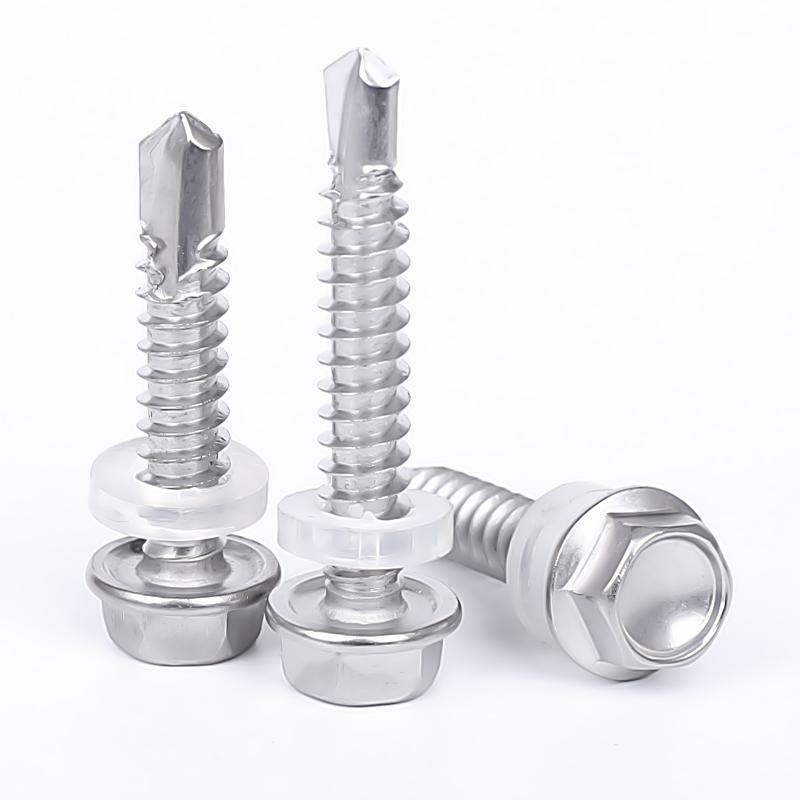
A supplier can stamp “marine grade” on almost anything, but the spec sheet tells a different story. The first line to check is the alloy designation: true 316 stainless contains 16–18% chromium, 10–14% nickel, and 2–3% molybdenum. Without that molybdenum, you're looking at 304, which will pit and crevice-corrode far sooner in salt-laden air or splash zones. Many low-cost “316” products quietly substitute 304 or use a lower-moly variant, so the raw numbers matter more than the marketing language.
Look beyond the headline grade as well. A spec sheet might list “316” but omit the required ASTM or EN standard, leaving room for non-certified melts with reduced nickel or moly content. Ask for the mill test report (MTR) and compare the heat number against the physical product. Also check for suffixes like “L” (low carbon) or “Ti” (titanium stabilized) if welding is planned; these affect corrosion resistance at the weld zone, where failures often start. If the sheet only shows tensile strength and finish, not the full chemical composition, treat the marine-grade claim as unproven.
Finally, consider the environment the hardware will actually face. 316 performs well in atmospheric marine exposure and intermittent salt spray, but it won't hold up indefinitely in continuous seawater immersion or crevice conditions where oxygen is depleted. A vendor who admits that limitation is more credible than one who promises universal “marine grade” performance. For through-hull fittings, propeller shafts, or standing rigging, you may need 316L, duplex, or a higher alloy, regardless of what the spec sheet's bold print claims.
Bulk Ordering Without Overstocking: A Contractor's Reorder Formula
Every contractor knows the tension between grabbing volume discounts and watching surplus materials collect dust in the warehouse. The smart move isn't just buying more—it's buying on a rhythm that matches your actual burn rate. Start by tracking your last four jobs, not your best month or worst month. Find the median weekly consumption for each staple item, then map your supplier's lead time against that pace. If your drywall screws disappear at 400 per week and your vendor takes ten days to deliver, you need a trigger point around 600 units—enough to cover the wait plus a small buffer for schedule hiccups.
The reorder formula itself should feel like a simple habit, not a spreadsheet marathon. Take your average daily usage, multiply it by your longest realistic lead time, and add a safety stock that equals about twenty percent of that total. Adjust the safety stock based on how painful a stockout would be: running out of caulk mid-job costs an hour, but running out of roofing underlayment during a storm window can stall a crew for days. Write the final number on a magnetic whiteboard near your hardware bins, and update it once a quarter as your job mix shifts.
Bulk pricing only works when you buy what you'll actually deplete before the next invoice cycle. Contractors who nail this formula often start with a lean trial order—maybe two weeks of supply at the discounted tier—then scale up only after the reorder cadence proves stable. Keep a short list of “never overbuy” items like adhesives with shelf lives or color-matched finishes, and reserve the deep-bulk discounts for inert materials like fasteners, conduit, and framing lumber. The goal is a storeroom that turns over steadily, not one that becomes a shrine to a past project.
Preventing Galvanic Corrosion When Fastening Dissimilar Metals
Galvanic corrosion starts the moment two different metals touch in the presence of an electrolyte, and fasteners often create exactly that condition. The less noble metal acts as an anode and sacrifices itself, which is why a stainless steel bolt in an aluminum panel can leave the aluminum pitted and weakened over time. The first line of defense is simply to break the electrical path: add a non-conductive barrier such as a nylon washer, a polymer gasket, or an insulating coating between the mating surfaces.
If the joint must stay electrically conductive or the environment is aggressive, choose fastener and base metal combinations that sit close together on the galvanic series. For example, pairing aluminum with zinc-plated or cadmium-plated steel creates a smaller potential difference than pairing aluminum with bare stainless steel. Where dissimilar metals cannot be avoided, apply a protective coating to the cathode—the more noble surface—because a small defect in the coating then exposes only a tiny cathode area, slowing the attack on the anode.
Installation details matter just as much as material selection. Sealing the assembly with a moisture-displacing compound or using anaerobic adhesives can limit electrolyte ingress at the threads. In outdoor or marine environments, inspect joints periodically and replace sacrificial washers or coatings before visible corrosion spreads, since hidden crevices under fastener heads are often where the damage begins.
Tool Compatibility Checks Before You Commit to a Wholesale Screw Lot
Before you sink money into a pallet of screws, pull the bits and drivers you actually reach for on a daily basis. A Phillips #2 might look universal, but recess depth and angle vary enough between manufacturers that a batch can suddenly start camming out under torque. Grab a handful from the sample box and run them through your most-used impact driver, not just a hand driver you keep in a drawer. If the bit wobbles or needs excessive downward pressure to stay seated, that lot will slow down every single job.
Check the shank and thread compatibility with your existing collated attachments or auto-feed systems. Some bulk screws have a slightly different head diameter or underhead angle, and that small difference can jam a strip-fed gun every dozen fasteners. It's not enough to match the nominal size—dry-fit a strip in the actual tool you will use on site. Pay attention to how cleanly the screw drops into the magnetic holder and whether the depth stop engages without crushing the material.
Finally, test the coating and finish against your bits and sockets. A heavy wax or zinc layer might look fine on paper but can gum up the inside of a driver collet or make the bit slip after a few hundred drives. Run a short batch—say fifty screws—through the same tool you will use in production. If you find yourself cleaning the bit or clearing a jam before you finish, that wholesale price isn't the bargain it seems.
Case Study: How One Crew Cut Installation Time Using Hex Head Self Drillers
We were staring at a tight deadline on a metal roof retrofit, and the standard screws we'd always used were slowing us down. Drill a pilot hole, switch bits, drive the screw—it added up to a full extra hour across a single panel run. The foreman came back from a supply run with a box of hex head self drillers and said we'd try them on the next section. Nobody expected much, but within twenty minutes we'd already finished what used to take twice as long.
The real difference came from the hex head itself. Our impact drivers bit into the six-sided head without slipping, even when we were working at awkward angles near the eaves. And because the screw drills its own hole, we skipped the pilot step entirely. One crew member handled layout while two others drove screws, and the pace felt almost effortless. By lunch, we'd covered a quarter more roof area than the previous day's best.
We kept a rough tally: removing the pilot holes cut about fifteen seconds per fastener. On a job with over two thousand screws, that's more than eight hours of direct labor saved. The hex head also meant fewer stripped heads, so we weren't wasting time backing out ruined screws. That single switch didn't just speed up one project—it changed how we bid on future metal work. Now the drill-and-drive method feels like using a rotary phone.
FAQ
Look beyond the price per box. Confirm the stainless grade—304 is fine for most indoor and light outdoor work, but 316 is non-negotiable near salt water or chemical exposure. Also verify the drill point capacity, because some hex washer heads are only rated for light-gauge steel while others will plow through 1/4 inch plate without burning out. Ask for a sample pack and run them through your worst-case substrate before committing.
A good wholesaler will have mill certificates and batch traceability on hand, not just a catalog claim. Check whether they stock both 304 and 316 in the same diameters and lengths, because mix-and-match backorders kill project schedules. Call them and ask how they handle warranty claims on stripped drill points or snapped heads. The ones with clear replacement terms and local warehouse stock are the ones you keep.
304 resists basic rust and oxidation, so it works for general construction, HVAC, and interior metal framing. 316 adds molybdenum, which gives it real protection against chlorides—think coastal buildings, pools, water treatment plants. You will pay 30–60% more for 316, but it is cheap insurance compared to replacing corroded fasteners later. Do not let a supplier sell you 304 for a marine job.
For contractors, yes—the hex washer head gives you a solid socket for high-torque driving and the built-in flange spreads pressure without needing a separate washer. That matters when you are fastening sheet metal to steel studs or heavy purlins. Phillips or square drive self drillers tend to cam out under production speeds, but a hex head stays seated with an impact driver.
Match the point number to total material thickness. A #3 point handles up to about 1/4 inch combined steel, while a #5 point is made for 1/2 inch or thicker. If you are joining two 16-gauge sheets, a #3 is plenty. Going too long wastes bit life and can create oversized holes; going too short means the screw stalls before threads bite.
Most stainless self drillers come with a mill finish or a light passivation to remove surface iron and improve rust resistance. If you need a specific look, ask about coated stainless options, but avoid painted stainless screws for structural connections because the coating can interfere with torque and thread engagement. For exposed architectural work, a passivated finish is the standard choice.
You will usually see bulk boxes from 100 to 1,000 pieces, plus contractor buckets or shrink-wrapped master cartons. Some wholesale suppliers offer private label packaging or job-site kits with mixed lengths. If you use a lot of one size, negotiate per-piece pricing on full pallets and ask for reinforced cartons—loose screws in thin boxes arrive with damaged threads.
Be specific: material grade, head style, diameter, length, drill point number, and finish. For example: "316 stainless, hex washer head, #12-14 x 1-1/2", #3 point, passivated." That removes guesswork when the supplier quotes and when the site foreman checks the delivery. If corrosion resistance is critical, add a note requiring mill test reports with the shipment.
Conclusion
Contractors who build exposed decks learn quickly that coated carbon steel screws don't hold up, but the right stainless hex self drillers do more than resist rust—they cut callbacks. The catch is that not all stainless is equal. A supplier's "marine grade" label doesn't tell you much until you check the molybdenum content on the spec sheet. 316 holds up in salt spray and coastal conditions, while 304 is fine inland but fails faster near the water. If you're fastening stainless into aluminum or other dissimilar metals, isolate the contact point or pick a compatible washer setup, otherwise galvanic corrosion will eat the fastener before the deck shows wear.
On the ordering side, bulk discounts tempt you to overbuy, but a simple reorder formula based on square footage and fasteners per board keeps inventory lean without stalling a job. Before you commit to a wholesale lot, run a quick tool check—hex head self drillers need enough torque and the right driver bit size, or your crew will burn through bits and strip heads. One framing crew switched from standard Phillips self drillers to hex head stainless and reported about a third less install time per panel, mostly because the bit stayed seated and the drill tip didn't wander. That's the difference between a spec that looks good on paper and screws that actually perform on site.
Contact Us
Contact Person: Shane
Email: [email protected]
Tel/WhatsApp: 8613357785029
Website: https://www.wanluohardware.com