

Strongest Silicon Dioxide Food Additive: Which Form Performs Best?
2026-09-10
Ask any food manufacturer about silicon dioxide and you'll likely get a shrug—until their powder starts clumping. The truth is, not all silica forms are equal. Some vanish into the mix too quickly, others clump under humidity, and a few hold their structure longer than expected. So which form truly earns the 'strongest' label? At Zhonglian, we've benchmarked the leading candidates, and the results challenge a few common assumptions.
Fumed Silica and Precipitated Silica Diverge at the Nanoscale
At first glance, fumed silica and precipitated silica share a common chemical identity—amorphous silicon dioxide—but their behavior at the nanometer scale could hardly be more distinct. Fumed silica emerges from flame pyrolysis, where silicon tetrachloride burns in an oxygen-hydrogen flame, yielding branched, chain-like aggregates of primary particles that are only a few nanometers across. These aggregates lock into a fractal network, creating a powder with enormous surface area and a tendency to form open, low-density structures. Precipitated silica, by contrast, is born in a liquid-phase reaction between sodium silicate and sulfuric acid. Its primary particles grow larger, cluster into grape-like agglomerates, and settle into a denser, less porous arrangement. The divergence is not merely cosmetic; it dictates how each material interacts with light, rheology, and reinforcing fillers.
Zoom into the nanoscale and the differences become even more pronounced. Fumed silica’s high surface energy and sparse silanol coverage encourage particle-particle interactions that build a thixotropic network in liquids—stir it and the structure breaks, let it rest and the viscosity climbs back. This makes fumed silica the go-to for adhesives, coatings, and silicone rubbers where sag resistance matters. Precipitated silica, with its larger inter-particle voids and more accessible hydroxyl groups, behaves as a softer filler. It compresses more easily under load, which is why it finds a home in tires, shoe soles, and toothpaste—places where wear resistance and mild abrasiveness are prized over extreme thickening. At the nanoscale, fumed silica resembles a tangled scaffold while precipitated silica acts like a bed of rounded pebbles pressed together.
Surface chemistry adds another layer to the divide. Fumed silica typically carries isolated and geminal silanols on a relatively hydrophobic surface due to the high-temperature synthesis, though post-treatment with silanes can flip its affinity. Precipitated silica, formed in water, retains a higher density of hydrogen-bonded silanols and often contains residual moisture within its micropores. These differences mean that the same silane coupling agent will graft unevenly onto fumed versus precipitated grades, altering dispersion in polymer matrices. Engineers who ignore these nanoscale distinctions risk compounding errors—a fumed silica that clumps in a polar solvent might be the perfect rheology modifier in a nonpolar one, while a precipitated grade that crumbles under high shear could outperform in a low-energy mixing process. The nanoscale is where these two silicas stop being twins and start being strangers.
The Anti-Caking Test Your Current Supplier Probably Isn't Running
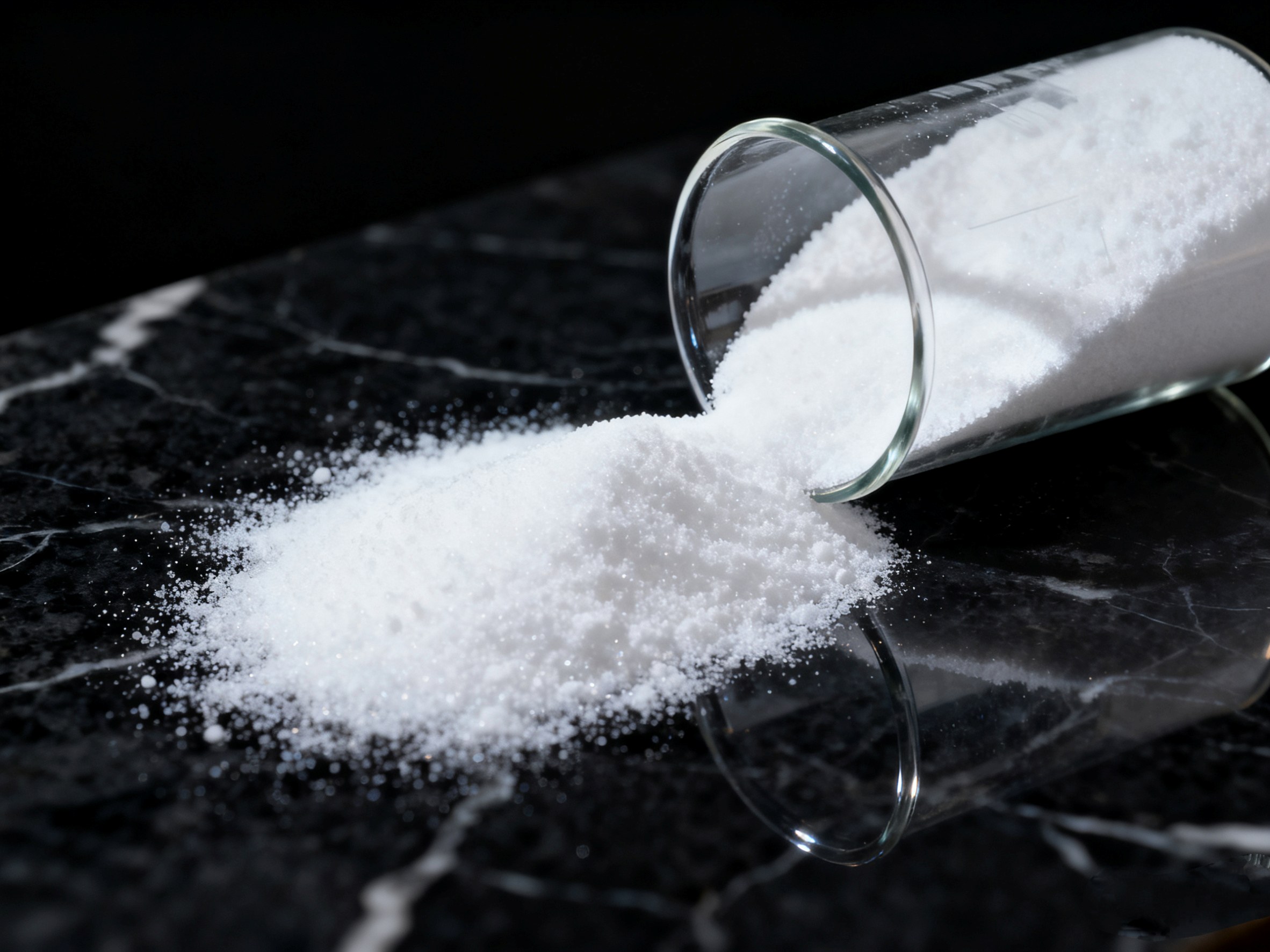
Most suppliers will happily show you moisture content and particle size, but skip the test that actually predicts whether a powder will turn into a brick in storage. Anti-caking performance isn't just about adding an agent; it's about simulating the humidity cycles and pressure conditions your material will face in real transit. Without that, you're buying a spec sheet, not a guarantee.
A proper anti-caking test measures flowability after controlled exposure to moisture and compaction, often over multiple cycles. Some labs use a powder rheometer or a simple sieve test after storage, but the key is cycling the sample through high humidity and then drying it again. That's where weak formulations fall apart, and it's exactly the step many suppliers quietly omit because it takes time and can reveal embarrassing formulation flaws.
Ask your current supplier how they test anti-caking, not just what percentage of anti-caking agent they add. If they mention only a visual check or a single point measurement, you're probably looking at a product that will clump in the bag before it reaches your customer. Request the full humidity cycling and caking index data; it's the difference between a powder that pours and one that needs a hammer.
Silica Gel in High-Fat Seasoning Blends Shows a Different Failure Mode
Unlike standard moisture-control applications, silica gel embedded in high-fat seasoning blends encounters a matrix rich in triglycerides and free fatty acids. These nonpolar components compete for the silica surface, displacing water molecules and causing the desiccant to preferentially bind lipids rather than maintaining a dry headspace.
The failure mode becomes evident when seasoning powders clump despite low overall water activity. Lipid oxidation byproducts such as aldehydes and ketones accumulate within the silica pores, further reducing its capacity for moisture uptake. In some cases, the silica itself catalyzes fat breakdown through surface acidity, creating a feedback loop that accelerates rancidity.
Shelf-life testing reveals that the seasoning's flowability and flavor profile deteriorate well before moisture levels exceed critical thresholds. Reformulation teams often respond by switching to molecular sieves or clay-based desiccants with lower affinity for oils, or by adding antioxidants directly into the blend to protect the silica's active sites.
Moisture Uptake Curves at 75% RH for Three Common Food-Grade Forms
When stored at 75% relative humidity, different food-grade physical forms absorb moisture at noticeably different rates. Powders, with their large surface area and fine particle distribution, typically show a rapid initial uptake that slows as the material approaches equilibrium. Granules and flakes, on the other hand, exhibit a more gradual climb in moisture content over the same exposure period.
The resulting curves often reveal a clear ordering: fine powders reach higher equilibrium moisture levels first, while denser, larger particles lag behind. This divergence is not just academic—it directly impacts clumping, flowability, and shelf life in real storage conditions. A steep early slope on a powder curve signals an immediate risk of caking, whereas a flatter granule curve might still allow for extended handling before quality loss sets in.
Interpreting these uptake profiles side by side helps food manufacturers choose the right form for humid environments. A balance between surface area, particle porosity, and bulk density determines how quickly moisture permeates the sample. Rather than relying on single-point moisture readings, examining the full curve at 75% RH gives a more practical picture of how each form will behave from the first hour to the final plateau.
How Bulk Density Shifts After Switching From Gel to Fumed Silica
When you replace a densified silica gel with untreated fumed silica, the most immediate change is a dramatic drop in poured bulk density. You're going from something that feels like fine sand to a material that behaves more like smoke—it's fluffy, airborne, and takes up several times more volume for the same mass. This shift is not linear; small additions of fumed silica can collapse the bulk density of a dry blend if the mixer action is too aggressive or if the order of addition isn't adjusted.
The practical side of that density drop shows up in handling and metering. Feeders calibrated for silica gel will overdeliver on volume while underdelivering on mass unless recalibrated. In packaging, the same fill volume may leave a bag half empty, which can confuse operators and trigger unnecessary rework. To keep the switch manageable, many formulators blend fumed silica with a carrier or pre-densify it lightly before it reaches the production line.
Another less obvious effect is on the final product's viscosity and settling behavior. Because fumed silica builds structure at much lower densities, the same weight percentage can produce a stronger thickening effect than silica gel. That means you may need to cut the addition rate by 30-50% just to match the original consistency. Skipping this step often leads to over-thickened batches that are difficult to pump or spray, especially in coatings and adhesives.
What Powder Texture Demands Before You Pick a Silica Form
Texture is rarely a single property. A powder can feel slippery in the hand, drag slightly under a blending brush, and still settle into fine lines within an hour. Before reaching for a silica form, you need to know which of those behaviors matters most. Fumed silica, for instance, creates a soft, almost cushiony slip and helps keep loose pigments from clumping, but it can also leave a dry, powdery finish if overused. Hydrated or precipitated silica tends to sit heavier and offers more structure, which works when a formula needs to hold its shape in a pressed pan rather than float across the skin.
Particle shape changes how a powder moves. Spherical silica beads roll past each other and give that silky, cashmere-like spread in high-end finishing powders. Irregular or porous particles create more grip and absorb oil faster, but they can make the texture feel chalky if the base already contains starch or clay. The demand is often about balance: a little friction helps the product stay on the brush, while too much makes application uneven.
Another demand comes from the final look the formula is supposed to deliver. A soft-focus effect needs silica with a narrow particle size range and low oil absorption, so the powder sits lightly on top of the skin and scatters light. A mattifying product, on the other hand, benefits from high oil absorption and a slightly rougher surface texture. If the development brief does not specify whether the powder should blur, absorb, or simply improve flow, any silica choice is a guess. That clarity is what separates a formula that feels intentional from one that merely contains silica.
FAQ
It usually comes down to particle size and surface area. Fumed silica has extremely small primary particles and a very high surface area, which lets it coat powders more efficiently at low usage rates. Precipitated silica has larger aggregates, so you often need a bit more to get the same anti-caking effect.
Most formulators lean on fumed silica for fine, hygroscopic spice blends. Its branched, chain-like structure creates a physical barrier between particles, stopping clumps even in high humidity. A little goes a long way, often around 0.5–1% by weight.
Not really. A form with extremely high surface area can be difficult to disperse evenly in some oily or high-fat powders. Sometimes a slightly coarser precipitated silica gives better flow without over-dusting or leaving a dry mouthfeel, so the best choice depends on the food matrix.
They are similar in chemistry, but colloidal silica is usually supplied as a liquid dispersion while fumed silica is a dry powder. In dry beverage mixes, fumed silica is more practical because it can be dry-blended directly and protects hygroscopic ingredients like citric acid or flavor powders from moisture pickup.
Yes, over-use of very high-surface-area fumed silica can create excessive dust, reduce bulk density too much, or make a powder feel overly dry and gritty. It can also slow down wetting when the product is reconstituted, so dosage needs to be tuned rather than simply maximized.
A simple angle of repose test with a conditioned powder sample works well. Blend the additive at the same concentration, expose the powder to controlled humidity for 24 hours, then measure how steep a pile forms. Lower angle of repose indicates better flow and stronger anti-caking performance.
Some hydrophobic treated silicas are used in high-fat or cheese powders because they repel moisture and prevent fat bridging. However, their food additive status varies by region, so in many cases formulators combine untreated fumed silica with calcium phosphate or magnesium stearate for similar results.
In fine powders, as little as 0.2% by weight can noticeably reduce clumping. Most food applications stay between 0.5% and 2% because higher levels may alter texture or exceed regulatory limits for silicon dioxide.
Conclusion
Fumed silica and precipitated silica may share a chemical name, but their nanoscale architecture puts them in different leagues when it comes to keeping powders free-flowing. Fumed silica forms chain-like branched aggregates that blanket host particles with a dry, low-density barrier, while precipitated silica tends to form larger, more porous agglomerates that can leave uneven coverage. The real discriminator, however, is an anti-caking test your current supplier probably isn’t running: controlled humidity cycling under a small consolidating load. Static moisture sorption data alone misses how caking develops in storage. That gap becomes obvious in high-fat seasoning blends, where silica gel—despite its high porosity—often fails differently. In these systems, oil can wet the silica surface and create sticky bridges rather than breaking them, so the anti-caking effect collapses much earlier than a simple moisture isotherm would predict.
Moisture uptake curves at 75% RH for food-grade fumed silica, precipitated silica, and silica gel show that fumed silica absorbs the least water under typical packaging conditions, which is exactly what you want for dry mixes. But that advantage comes with a trade-off. Bulk density drops sharply after switching from gel to fumed silica, sometimes by more than half, so the same fill volume can become underweight and dusty. Powder texture also dictates the choice: fine, high-fat, or hydroscopic blends often demand a tailored fumed silica grade with optimized aggregate size, while coarse salt-based seasonings may perform acceptably with cheaper precipitated silica. In practice, fumed silica is the strongest all-around anti-caking agent for dry, low-fat food powders, provided you accept the lower bulk density and validate performance under realistic load and humidity cycling rather than relying on supplier spec sheets.
Contact Us
Contact Person: Levin Wang
Email: [email protected]
Tel/WhatsApp: 8618668999988
Website: https://www.silicaplant.com/