

Top 10 Copper-Nickel-Chrome Barrel Plating Equipment for Superior Finishing
2026-11-02
Ask any plating shop manager what separates a premium copper-nickel-chrome finish from a mediocre one, and they’ll point straight at the barrel equipment. It’s not just about throwing parts into a drum—it’s about current distribution, drainage, and the kind of agitation that keeps every tiny component from shadowing its neighbor. In this roundup, we look at ten high-performance systems built for exactly that, including standout options from Junda that are worth a closer look if superior finishing is non-negotiable.
Barrel Plating Geometry That Keeps Small Parts from Hiding
A plating barrel that lets tiny components settle into dead zones is essentially stealing from your yield. The fix starts with the perforation pattern. Instead of uniform round holes, consider using slotted or tapered openings that encourage solution exchange without letting parts wedge themselves into corners. A slight inward bevel on each hole reduces the chance of a small screw or contact pin finding a lip to catch on, while still allowing aggressive agitation.
The barrel’s internal shape matters just as much as the holes. Flat-sided barrels create predictable pockets where parts can huddle. Adding subtle ribs or a gentle spiral along the interior wall forces the load to tumble continuously, breaking up clusters. For micro-components, a double-barrel design with a rotating inner basket can keep parts moving through the solution rather than settling at the bottom.
Load volume also dictates hiding behavior. Overfilling a barrel almost guarantees some parts never see fresh electrolyte. Keeping the fill level around forty to fifty percent of total capacity, combined with the right geometry, gives each piece enough room to shift and rotate during the cycle. Real-world setups often benefit from a brief reverse rotation every few minutes to dislodge anything that tries to nest in a corner.
Copper Strike Baths Worth Tuning Before the Nickel Hits
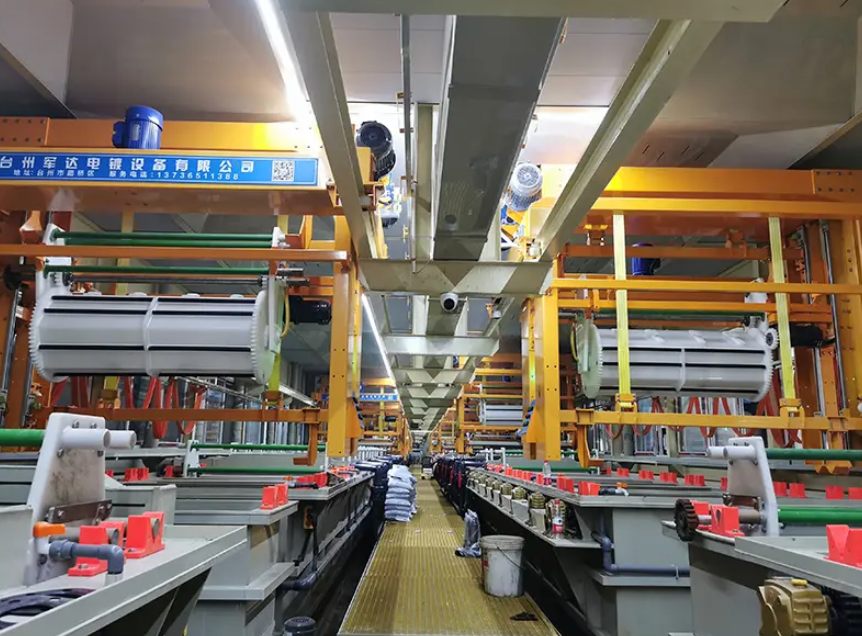
Getting the copper strike right isn't just a formality—it's the difference between a nickel layer that grabs hold and one that peels off under stress. A strike bath that's too thin, too alkaline, or starved of brightener will leave micro-roughness you won't see until the nickel highlights every flaw. Check the temperature and agitation first; small shifts here change how evenly the copper flashes across complex shapes.
Metal content drifts more than most platers admit. If the copper concentration has crept up while the cyanide-to-metal ratio slips, you'll get a spongy, powdery deposit that sabotages adhesion. Titrate the bath weekly, not just when parts start failing. Also watch for carbonate buildup—it narrows the bright range and forces you to overcompensate with additives, which creates its own set of problems under the nickel.
Don't wait until the nickel line is already running to adjust the strike. A quick Hull cell panel can reveal more in ten minutes than a month of production rejects. Tune the strike now, and the nickel will lay down smoother, brighter, and with far fewer surprises.
Nickel Thickness Control Without Racing the Clock
Getting nickel thickness right usually feels like a trade-off: push the line faster and you risk burned edges and uneven plating, slow down and you lose throughput. The trick is to stop thinking of time as the enemy. Instead, focus on keeping the current density matched to the actual surface area of each part, and make sure the bath stays within its sweet spot for temperature and chemistry. Small, consistent adjustments beat sudden rush jobs every time.
Pulse plating and real-time thickness monitors take a lot of guesswork out of the equation. Rather than cranking up the amps to compensate for a tight schedule, you can use short, controlled pulses to build nickel evenly, even in low-current-density areas. Monitoring the deposit as it grows lets you stop exactly when you hit the target, not when the clock says you should be done.
The payoff is fewer rejects, less rework, and a plating line that runs calm instead of frantic. Operators can trust the process because the controls do the heavy lifting. Thickness consistency becomes a habit, not a heroic effort.
Chrome Rinsing and Drag-Out Recovery: Less Waste, Cleaner Finish
When plated parts leave the chrome bath, they drag out a thin film of concentrated plating solution. This drag-out, if not recovered, quickly contaminates the rinse tanks. Traditional rinsing simply dilutes the chrome and sends it to waste treatment, which is costly and creates hazardous sludge. Recovering that drag-out before it reaches the rinse cuts waste at the source.
A simple static drag-out tank placed after the chrome bath catches most of the dripping solution. Parts pause over the tank, letting the solution drain back. Spray rinses that return the rinse water to the plating tank also work well. These recovery steps keep the chrome in the process, reducing the need to buy fresh chromic acid and lowering the load on waste treatment filters and chemicals.
Less drag-out in the rinse means the rinse water stays cleaner for much longer. This leads to a more thorough final rinse, which prevents staining, water spots, and poor adhesion of later coatings. Operators see fewer rejected parts and spend less time changing rinse water. The result is a tighter process with less waste and a visibly cleaner finish.
Balancing Barrel Speed, Current Density, and Load Size
Getting the barrel speed right is less about hitting a fixed rpm and more about controlling how solution flows through the load. If rotation is too slow, parts at the center of the barrel see depleted chemistry, which forces you to push current density higher to maintain coverage — and that easily leads to burnt edges or rough deposits on the outer layer. Speed it up too much, though, and the parts tumble violently, causing wear and making it harder for a uniform current path to form. A practical starting point is to observe the rinse water clarity after unloading: cloudy water often means you are grinding off plating as fast as it deposits.
Load size quietly changes both of the other variables. Overfill a barrel and you create shielded zones where current barely reaches, so raising current density to compensate simply burns the exposed areas. Underfill is no safer — with too few parts, the electrical contact between pieces becomes sporadic, and the same current that was fine for a full load now concentrates on a smaller surface area. Many platers find that keeping the barrel between 50 and 70 percent full gives the most predictable balance, but that range shifts with part shape. Flat stampings pack differently than threaded fasteners, so the real rule is to watch the voltage trace during the first few minutes of plating; a wandering trace usually means the load is not settling into stable contact.
Rather than tuning each factor in isolation, treat them as a single system. Start with a moderate barrel speed and a load size that allows parts to tumble without locking together, then adjust current density upward only until the low-current-density areas just begin to plate. If you need more speed to get coverage, lower the load slightly instead of cranking the rectifier. The goal is a steady, slight rattle from the barrel, a stable voltage reading, and a deposit that looks the same on the inside edges as it does on the outer surfaces. When those three observations line up, the balance is close enough for production.
Operator Routines That Preserve a Mirror-Bright Chrome Layer
A mirror-bright chrome layer doesn’t stay that way on its own. Experienced operators begin each shift by scanning the surface under a low-angle light, looking for the faint haze that signals embedded dust or a fingerprint that’s already begun to etch. They keep a dedicated microfiber cloth and a bottle of diluted, non-alkaline cleaner within arm’s reach, never reaching for a shop rag or glass cleaner that leaves micro-scratches.
The real preservation happens between cleanings. Gloves go on before any contact with the chrome, because skin oils and sweat are aggressive enough to dull the reflectivity within hours. When a chemical splash occurs—coolant mist, road film, or polishing compound—it gets rinsed off immediately with clean water and blotted dry, not wiped in circles. That single habit prevents the cloudy rings that often get mistaken for plating failure.
At the end of the shift, a quick inspection routine pays off. Operators run a clean finger along the edge where chrome meets trim, checking for roughness that could trap moisture. Any dull patch is treated with a non-abrasive metal polish applied in straight lines, then sealed with a breathable wax. It’s not about making the surface shine for the next inspection; it’s about keeping the mirror depth that customers notice the moment they walk into the bay.
FAQ
Parts can get scuffed and the plating thickness turns uneven, especially on flat edges. The nickel layer may also become cloudy if agitation is too aggressive.
Copper and nickel require good solution exchange, so larger perforations help. Chrome needs more current distribution control, and finer mesh can reduce edge burning on small parts.
Polypropylene with reinforced ribs is common because it resists warping at 140-160°F and doesn't crack from acid exposure. Some shops switch to PVDF for chrome lines with fluoride catalysts.
Use quick-change danglers and dedicated barrels for each bath if possible. Also, automated hoists with pre-programmed transfer sequences shorten the time between stations.
A common spec is 20-30 microinches of copper, 100-150 microinches of nickel, and 5-10 microinches of chrome. This balances corrosion protection and brightness without excessive build-up.
Chrome has poor throwing power, and parts tumbling in a barrel shield each other from the current. Using auxiliary anodes or a higher free space in the barrel can improve coverage.
Fume extraction at each bath, spill containment, and automatic ventilation interlocks are critical. Chrome mist suppressants and proper PPE stations also reduce operator exposure.
Conclusion
Getting a mirror-bright copper-nickel-chrome finish on small parts starts long before the first rack enters the tank. Barrel geometry has to keep tiny stampings, fasteners, or eyelets from tucking into dead zones where current cannot reach them. Perforation patterns, dangler placement, and internal fins or dams all decide whether every part sees uniform copper coverage. Once the copper strike bath is involved, it pays to treat it as a living bath rather than a fixed step: anode area, agitation, and organic brightener balance shift through the day. Tuning the strike before nickel lands prevents rough, burnt edges that later destroy the final chrome layer. Nickel thickness control is equally practical. Instead of chasing the clock, operators rely on ampere-hour meters, periodic current density checks, and load-weight rules that keep deposition steady without over-plating or under-cutting recessed areas.
Chrome is where small mistakes become visible. Spray rinses above the chrome tank, static drag-out recovery cells, and counterflow rinse stages cut waste and stop chromic acid from drying on parts. The balance between barrel speed, current density, and load size matters more than any single setting: a fast barrel with a heavy load can starve the parts in the center, while a slow barrel with high current risks burning outer edges. Good equipment makes that balance repeatable through speed controllers, ramp-up rectifiers, and load guides. Operator routines do the rest. Daily checks on contacts, anode bags, and rinse water conductivity preserve the bright chrome layer longer than any single upgrade. The best copper-nickel-chrome barrel plating lines, then, combine thoughtful tank design, responsive chemistry, and simple daily habits that keep the finish consistent from first load to last.
Contact Us
Contact Person: hayyr
Email: [email protected]
Tel/WhatsApp: 8613082110525
Website: https://www.jundaelectroplating.com