

Top High Precision Shunt Resistors for Accurate Current Sensing in Modern Electronics
2026-08-04
Accurate current sensing is the silent backbone of modern electronics, from battery management systems to precision motor controls. Yet, achieving that accuracy often comes down to a single, often overlooked component: the shunt resistor. At Milliohm, we know that not all shunts are created equal. In this post, we’ll explore the top high-precision shunt resistors that are setting new standards for reliability and performance, helping you make informed choices for your next design.
Why Your Current Measurements Depend on a Tiny Resistor
It’s easy to overlook the shunt resistor when setting up a current measurement, but that tiny component defines your entire signal chain. The principle is straightforward: current passing through a known resistance creates a voltage drop, and Ohm’s law does the rest. Yet the subtle part is that every milliohm of resistance, every trace on the board, becomes part of the measurement. A poorly chosen resistor adds thermal drift, parasitic inductance, and noise — turning what should be a clean proportional voltage into a mess of offset and gain errors.
The physical size of the resistor matters more than most realise. A larger package can dissipate heat better, keeping self-heating from skewing the resistance value mid-measurement. But go too big and you introduce series inductance that distorts fast-changing current waveforms. That’s why precision current sensing often uses four-terminal Kelvin connected resistors — they move the voltage sensing points right to the resistive element, bypassing voltage drops in the high‑current path. Even the solder joints and copper pours around the resistor can create thermocouple effects that introduce microvolt-level offsets, enough to ruin a low-side measurement.
Then there’s the burden voltage: the drop across the resistor steals voltage from the load. Crank up the resistor value to get more signal, and you might starve a low-voltage circuit. Drop it too low, and your ADC or amplifier struggles to resolve the signal out of the noise floor. The sweet spot balances full-scale signal against acceptable power loss and thermal drift. In practice, that means selecting a resistor with a low temperature coefficient, properly derating it, and often adding a precision amplifier right at the measurement node before sending the signal across a noisy board. The tiny resistor isn’t just a passive part — it’s the silent decision‑maker for the whole measurement chain.
The Overlooked Art of Choosing a Shunt
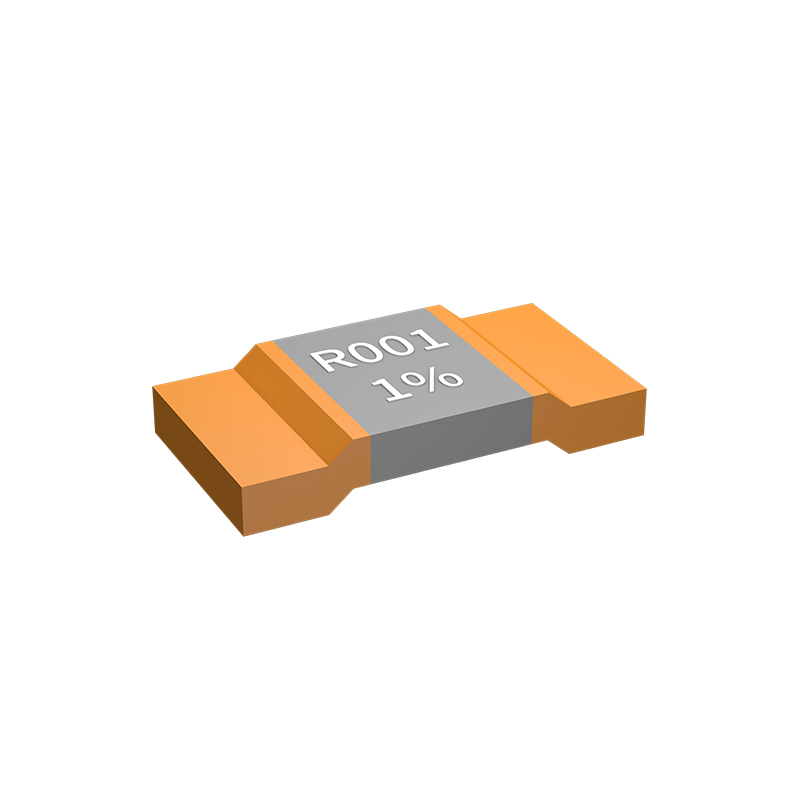
When selecting a shunt, many engineers fixate solely on nominal resistance and power rating, but this binary approach often leads to measurement errors or thermal drift that can compromise an entire design. A shunt resistor is not just a passive component; it is a precision element whose performance hinges on the nuanced interplay of temperature coefficient, parasitic inductance, and even the geometric layout of the connection points. Ignoring these factors might work for coarse current sensing, but in applications spanning electric vehicle battery management to high-frequency power converters, the art lies in balancing the conflicting demands of accuracy, thermal stability, and physical space—a challenge that textbooks rarely address with the necessary depth.
One of the most common yet under-discussed pitfalls is the misinterpretation of the shunt's thermal electromotive force, which can introduce DC offsets that mimic actual current signals, especially when dissimilar metals meet at the sensing junctions. A well-chosen shunt is often a compromise between low resistance to minimize power loss and sufficiently high voltage output to overcome noise floors, yet this delicate trade-off is frequently overshadowed by impulse selections based on datasheet headlines. The true craft emerges when designers begin to treat the shunt as part of the overall signal chain, considering the amplifier's input bias current, the PCB trace's kelvin routing, and even mechanical strain—each of which can quietly erode measurement fidelity if left unchecked.
Ultimately, the art of choosing a shunt is about anticipating the real-world environment where it will live: vibration, humidity, and thermal gradients all conspire to distort minute voltage drops. Specialized alloys like manganin or zeranin offer stable temperature coefficients but at a cost premium, while simple metal strips may suffice for non-critical tasks if you mitigate their inductance with careful layout. Seasoned practitioners know that no single parameter dominates—rather, it's the aggregate behavior under transient loads and aging effects that separates a robust design from one destined for calibration drift. Investing time in understanding these subtleties transforms an ordinary bill-of-materials decision into a strategic advantage.
Material Tricks That Boost Precision
Precision isn't just about tighter tolerances or fancier software—it often comes down to the materials you choose. When you swap a standard aluminum alloy for a stabilized, fine-grained variant, thermal expansion becomes far more predictable, and micro-deformations under load all but vanish. Some engineers go a step further by specifying metal matrix composites, where ceramic particles are embedded in the metal to suppress the subtle creep that can throw off long-term repeatability. Even something as mundane as a granite surface plate illustrates the principle: its low thermal coefficient and vibration-damping properties are the quiet backbone of metrology labs worldwide.
Beyond traditional metals, advanced polymers and ceramics are rewriting the rules. Consider the growing use of carbon-fiber-reinforced polymers in precision robotics: the stuff is light, stiff, and has virtually zero thermal growth in certain directions, making it ideal for high-speed pick-and-place systems where every micron matters. Meanwhile, silicon carbide and alumino-silicate glasses are creeping into machine-tool beds and measurement frames because they don't warp under temperature swings, and they laugh off corrosive coolants that would rust steel in months. These materials might cost more up front, but they reduce the need for recalibration and environmental control, which pays off in the long run.
Then there's the subtle art of using material anisotropy to your advantage. Some single-crystal alloys, for instance, have directionally tailored stiffness that can channel vibrations away from sensitive axes, turning a ringing bell into an ultra-stiff, quiet frame. Even in everyday precision engineering, clever use of laminated shim stock can fill the dozens of tiny gaps that add up to lost accuracy—each layer peels away until the fit is just right, no grinding required. Ultimately, the trick isn't to find a magic material, but to understand the specific failure modes of your system and pick a material that sidesteps them entirely.
Thermal Drift: The Silent Accuracy Killer
When a rifle barrel heats up, it doesn’t just get hot—it subtly changes shape. This phenomenon, known as thermal drift, can quietly push your point of impact off target without any obvious warning. Even the finest barrels aren’t immune; uneven heating causes the steel to warp by mere thousandths of an inch, but at long range those tiny shifts translate into missed shots. The frustrating part? It starts the moment you pull the trigger on that first round.
Most shooters don’t notice thermal drift until groups mysteriously start wandering after a few strings of fire. The barrel might begin cool, printing tight clusters, but as heat builds friction against the stock or uneven cooling from a suppressor takes hold, the zero slowly walks. It’s not always linear—sometimes a barrel will shift left after 10 rounds, then down after 20. This unpredictability is what makes thermal drift such a headache for precision shooters who rely on consistency.
Mitigating the effect isn’t just about buying a thicker barrel. It’s about understanding your rifle’s unique heat pattern. Free-floating the barrel helps, but so does knowing when to pause and let things cool. Some competitors actually chart their barrel’s drift by shooting groups at different temperatures and logging the shift. After all, you can’t fight what you can’t see—accepting that your barrel has a thermal personality of its own is the first step toward keeping it from sabotaging your next shot.
Real Circuits Where Shunts Earn Their Keep
Inside a battery management system for an electric vehicle, a shunt resistor sits quietly between the cells and the load, translating current into a tiny voltage drop. That millivolt signal, often amplified and fed into a microcontroller, tells the system exactly how much charge is leaving the pack—or how much regenerative braking is stuffing back in. Without this unassuming component, state-of-charge estimates would be guesswork, and thermal runaway could go unnoticed until it's far too late.
Switch over to a solar inverter, and you'll find shunts doing the grunt work of maximum power point tracking. By constantly reading the current flowing from the panels, the control loop adjusts the converter's duty cycle to squeeze every possible watt from the array, regardless of whether a cloud just drifted by. The shunt's low resistance keeps losses minimal, but its precision ensures that even small changes in irradiance aren't wasted—making the difference between a system that merely works and one that pays for itself ahead of schedule.
In an industrial motor drive, shunts provide the feedback that keeps torque smooth at low speeds and prevents trips during sudden load changes. Three-phase currents, reconstructed from a shunt on the DC bus or from multiple inline shunts, feed into a field-oriented control algorithm that adjusts PWM outputs in microseconds. When a conveyor belt jams or a pump runs dry, the instant overcurrent detection—often done right at the shunt sense lines—triggers a shutdown before the IGBTs can pop. It's the sort of protection that never grabs headlines but averts expensive downtime every day.
Pushing the Limits: Next-Gen Current Sensing
Modern circuit design demands more from current sensing than ever before. As devices shrink and power densities climb, the ability to measure current with extreme precision and speed becomes a critical enabler. Next-generation current sensing technologies are breaking through traditional boundaries, offering sub-microsecond response times and noise floors that were once thought impractical. This leap forward allows engineers to monitor battery charge states with near-perfect accuracy, protect sensitive components from overcurrent events almost instantaneously, and optimize power conversion stages to eke out every last percentage point of efficiency.
The core of this evolution lies in new materials, novel topologies, and integrated intelligence. Wide-bandgap semiconductors, such as GaN and SiC, are pushing the operational envelope, enabling current sensors that function reliably at higher voltages, temperatures, and frequencies. At the same time, the shift toward fully differential shunt-based sensing, combined with isolated amplifiers and delta-sigma modulators, delivers remarkable common-mode rejection and linearity. Onboard digital filtering and temperature compensation are no longer afterthoughts but embedded features, allowing real-time calibration and drift correction that adapt to system conditions.
These advances are not merely upgrades; they are unlocking whole new classes of applications. In electric vehicles, ultra-fast current monitoring enables advanced traction inverter control, battery management with coulomb counting down to the milliamp, and fault detection that can react within microseconds. Industrial motor drives benefit from higher bandwidth sensing that reduces torque ripple and eliminates external filtering stages. Even consumer electronics tap into these gains—fast chargers, drones, and audio amplifiers all see noticeable improvements in performance and safety. By challenging the assumed limits of sensitivity, bandwidth, and robustness, next-gen current sensing is quietly reshaping power electronics from the ground up.
FAQ
High precision shunt resistors are specialized components designed to measure electric current by generating a tiny voltage drop proportional to the current flowing through them. They have very low resistance values, often in the milliohm range, and are built with materials and construction techniques that minimize errors. In modern electronics, they act as the sensing element that allows circuits to monitor current accurately for control, protection, and efficiency optimization.
Focus first on resistance value and tolerance, as these directly define the measurement range and accuracy. Power rating is critical because the resistor must dissipate heat without drifting. Temperature coefficient of resistance (TCR) tells you how much the resistance changes with temperature—lower is better. Also consider the physical size, as it affects PCB layout and heat management, and look for a low thermal EMF (electromotive force) to avoid voltage offsets from thermocouple effects at the junctions.
Shunt resistors offer a simple, cost-effective way to get very accurate, wideband measurements with minimal phase shift. Unlike Hall-effect sensors or current transformers, they don't saturate and aren't influenced by external magnetic fields. The trade-off is that they introduce a small voltage drop and power loss, and they require an amplifier to boost the sensed signal. For high-precision DC and low-frequency AC sensing in compact electronics, shunts often win on accuracy and linearity.
Temperature coefficient (TCR) quantifies how much the resistance value drifts as temperature changes. In real-world operation, shunt resistors heat up from the current they carry, so a high TCR leads to significant measurement errors unless compensated. For precision applications, you want a TCR of 50 ppm/°C or lower, sometimes even 15 ppm/°C. Metal alloy resistors, like those made from Manganin or Nichrome, are often chosen specifically because they maintain stable resistance across a wide temperature range.
Use a true Kelvin (four-terminal) connection where sense traces run separately from force (power) traces, tapping directly at the resistor pads. Keep sense traces short, symmetrical, and routed away from noisy digital signals to avoid coupling interference. Place the amplifier as close as possible to the shunt. Also, ensure adequate copper for heat spreading so the resistor stays cool and its TCR doesn't ruin the measurement. Ground planes should be managed carefully to prevent ground loops.
You'll find them in battery management systems for electric vehicles and portable devices, where knowing the exact state of charge relies on precise current monitoring. They're critical in server power supplies and telecom equipment to optimize energy efficiency. Medical devices use them for safe and accurate operation in sensing circuits. Motor controllers, solar inverters, and high-end audio amplifiers also depend on them for feedback loops and overcurrent protection. Essentially, any system that needs to tightly regulate power or track energy usage benefits from a high precision shunt.
Conclusion
In modern electronics, accurate current sensing hinges on a component that often goes unnoticed: the shunt resistor. These tiny devices convert current into a measurable voltage, but their simplicity belies the complexity of achieving true precision. Selecting the right shunt isn't just about resistance value and power rating—material composition, temperature stability, and parasitic inductance all play critical roles. For instance, metal-alloy elements exhibit lower thermal EMF than pure metals, reducing measurement artifacts. Yet even the best materials face the nemesis of thermal drift, where self-heating and ambient temperature changes skew readings. Without careful thermal management and compensation, a shunt's accuracy can silently degrade, undermining system performance.
Shunts earn their place in a wide array of demanding circuits. In battery management systems, they enable precise state-of-charge estimation, while in motor drives, they provide the feedback needed for efficient torque control. Industrial power supplies and renewable energy inverters rely on them for fault protection and efficiency optimization. As electronics advance, the push for higher power densities and faster switching speeds demands shunts with ultra-low resistance values, minimal inductance, and enhanced surge handling. Emerging designs, such as surface-mount metal-element resistors with integrated temperature sensing, are pushing the limits of what's possible, ensuring that current measurement keeps pace with the next generation of high-performance electronics.
Contact Us
Contact Person: Yuying Gao
Email: [email protected]
Tel/WhatsApp: +86 18926013721
Website: https://en.milliohm.net/