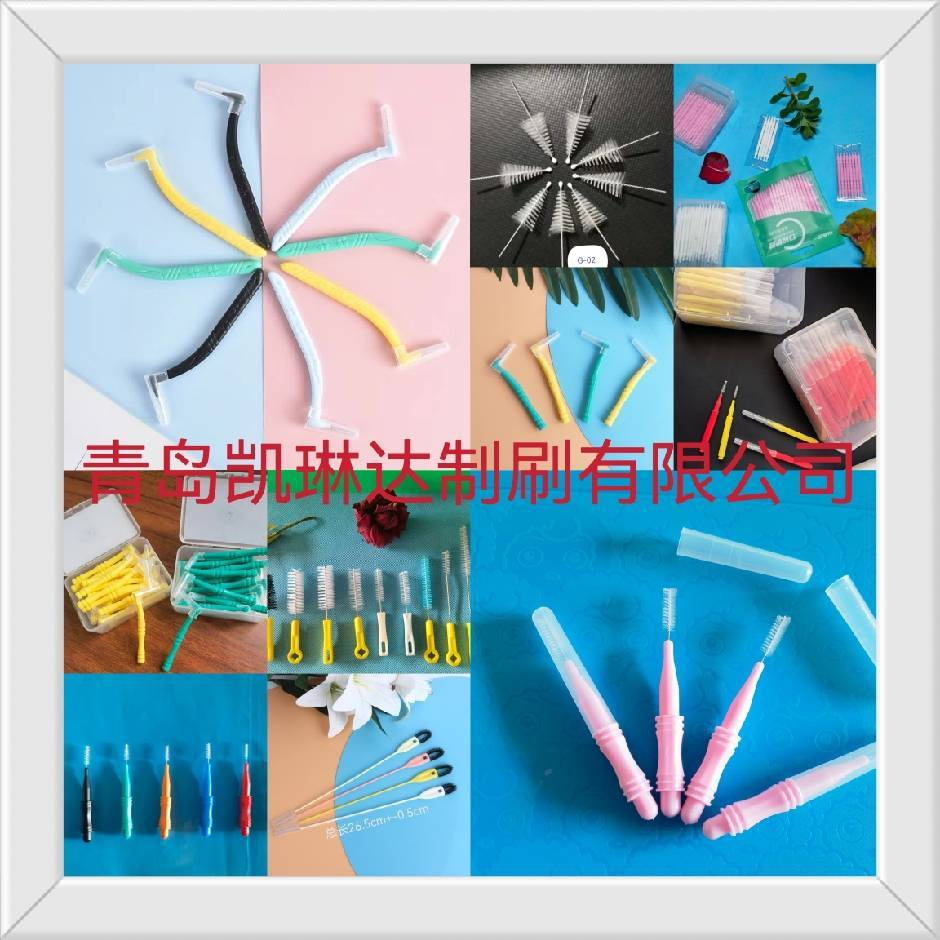

Top Oral Care Brush Manufacturer Practices That Ensure Premium Quality
2026-11-02
Quality in oral care brushes isn't just about the final polish—it's baked into every bristle, every mold, every inspection. Yet most manufacturers cut corners where customers can't see. That's where KLDZS flips the script. By treating premium quality as a non-negotiable process rather than a marketing phrase, KLDZS has redefined what top-tier brush production looks like. In this post, we'll unpack the specific practices that separate genuine quality from clever packaging—and why your next brush choice might hinge on what happens behind the factory door.
Choosing Filaments That Bend Without Breaking
Flexible filament isn't one category. A spool labeled 'flexible' might survive a few bends and then snap along layer lines if the polymer lacks true elastic recovery. The base resin matters more than the marketing name.
TPU tends to handle repeated flexing far better than PLA-based flex blends, but even within TPU the Shore hardness changes everything. A 95A TPU will fold a couple hundred times, while an 85A or 75A can keep going for thousands—provided the layers fused well.
Before committing to a full spool, grab a sample or print a thin strap and bend it back and forth. Watch for whitening at the crease, which usually means micro-cracks are already forming. If it survives a few hundred cycles without stiffening or splitting, that's a filament you can trust in a living hinge or wearable design.
The Ergonomic Checks Every Handle Shape Must Pass
A handle shape fails immediately if it forces the wrist into awkward angles during natural use. Check by holding with eyes closed, then note where pressure accumulates. If hard edges dig into the palm or the grip requires constant muscle tension, the shape needs reshaping. Good contours follow the natural curl of fingers without forcing the thumb into a stretched position.
Another check involves switching among common hand sizes. A handle that feels secure for large hands often becomes a liability for smaller grips, especially in tools that get used for hours. Test with wet or gloved hands because real tasks rarely happen under ideal friction. If the cross-section is too circular, it may roll; if too rectangular, corners create hot spots.
Finally, watch how the handle behaves during the full motion it is designed for, not just a static hold. Pushing, twisting, lifting—each changes where load concentrates. The best shapes shift pressure across the palm and fingers instead of pinning it in one spot. Run a simple fatigue test: after ten minutes of real use, if you feel numbness or need to adjust your grip constantly, the shape hasn't passed.
Keeping Assembly Lines Free of Airborne Particles
Airborne particles are more than a nuisance on the factory floor—they can silently degrade product quality, clog precision machinery, and create costly rework loops. In assembly environments where microscopic debris settles onto sensitive components, even a single stray fiber can void a batch or trigger a warranty failure. The most effective defense starts with zoning: separating raw material handling, machining, and final assembly areas so that dust generated upstream never drifts downstream. Physical barriers, negative air pressure in high-risk cells, and strategically placed air curtains at transfer points keep particle migration in check without slowing the line.
Filtration alone won't save a line if the airflow pattern pushes contaminants across workstations. Engineers often overlook that overhead fans or poorly positioned vents can create turbulent eddies that lift settled dust back into the breathing zone of the product. Instead, laminar flow systems—where filtered air moves in uniform, unidirectional streams—work far better above sensitive assembly steps. Pairing these with high-efficiency particulate air (HEPA) filters rated for the specific particle size range you're fighting, and replacing them on a calendar-based schedule rather than waiting for visible buildup, prevents the slow creep of contamination that goes unnoticed until defects spike.
Beyond equipment, the human element often introduces more particles than any machine. Cleanroom-style gowning may be overkill for many assembly lines, but simple practices like tacky mats at entry points, dedicated tools per station, and banning cardboard or fibrous packaging inside the critical zone yield outsized returns. Regular particle counting—using handheld optical counters at different times of day and during different production phases—turns air quality from an assumption into a measured parameter. When teams see the real-time data, they start treating airborne particles not as an invisible threat but as a process variable they can control, and that shift in mindset keeps lines running cleaner with far less effort than reactive cleanups after a contamination event.
Rounding Bristle Tips Under High Magnification
Under a microscope, the difference between a sharply cut bristle and a properly rounded tip becomes impossible to ignore. The former ends in an angular, almost jagged edge that can scratch delicate surfaces or irritate skin; the latter tapers into a smooth, domed profile that glides rather than digs. This rounding is not a cosmetic afterthought—it is a deliberate mechanical transformation achieved through precision abrasion or thermal polishing, where each filament end is softened into a consistent, microscopic sphere.
Achieving that uniformity across thousands of bristles demands tight process control. Too little rounding leaves a flat plateau with faint burrs, while too much can melt the polymer and create a brittle, prone-to-snapping tip. High magnification inspection separates acceptable from exceptional: a well-rounded tip should measure within a narrow radius tolerance and show no cracks, pits, or asymmetrical wear. When done right, the result is a brush head that feels noticeably gentler, lasts longer before fraying, and performs more predictably on every stroke.
Simulating Two Years of Scrubbing in a Few Days
Accelerated wear testing doesn't have to be guesswork. By dialing in a robotic scrubbing arm with adjustable pressure, stroke length, and cycle speed, we can collapse twenty-four months of routine cleaning into a 72-hour window. The key is matching the exact motion pattern—back-and-forth with a slight arc, just like a person wiping a countertop—while swapping between microfiber cloths, cellulose sponges, and diluted alkaline cleaners at set intervals. This isn't about brute force; it's about reproducing thousands of small, repetitive abrasions that gradually dull a surface.
The real value shows up in the details you'd normally miss. After the first day, gloss measurements may drop by only a few points, but that's the same early-stage micro-scratching seen after months of real use. By day three, we start seeing edge wear around printed patterns and a slight haze on high-touch zones—exactly what field samples from two-year-old installations look like. Running multiple samples side by side with different finish chemistries lets us rank durability without waiting for seasons to change.
Tracking Each Lot from Resin Pellets to Retail Box
Every batch starts as raw resin pellets delivered from our suppliers, each sack stamped with a unique lot code before it even enters the facility. That code follows the material through drying, melting, and injection molding, with operators scanning at each station. No pellet moves unaccounted for—if a hopper runs low mid-shift, the refill gets logged against the same lot, ensuring a continuous chain of custody on the production floor.
Once the parts are formed, the lot number is etched into the mold cavity itself, so every finished component bears a subtle, permanent mark. Our quality lab pulls samples from each shift and checks them against a master retention file, then the remaining units are packed into retail boxes that carry the same origin data on the side label. This lets us trace a single box back through assembly, molding, and even to the specific pallet of resin it came from—usually within fifteen minutes.
We also run a quarterly mock recall, picking a random retail box from a distributor's shelf and walking the entire chain backwards. It rarely takes more than a couple of hours to reconstruct every handoff, because the data isn't scattered across spreadsheets—it lives in one system that anyone on the floor can query with a handheld scanner. That kind of accountability means if a resin batch ever shows an unexpected variance, we can pull affected inventory before it reaches store shelves, rather than issuing a blanket recall later.
FAQ
Top manufacturers often use medical-grade polymers for the handle and PBT or nylon 612 for bristles, chosen for water absorption resistance and consistent flex fatigue performance. They avoid recycled plastics that can become brittle or harbor micro-cracks, and they specify bristle diameter tolerances within a few microns to maintain uniform stiffness.
They invest in anchorless tufting or fusion techniques rather than relying solely on metal staples. This creates a sealed base that resists bacterial ingress and physical pull-out. Some brands then run automated pull-force testing on every batch, rejecting any brush where a tuft releases below a threshold like 15 Newtons.
Because poorly finished bristle tips can scratch gums and cause micro-abrasions. Top factories use multi-stage abrasive polishing and then inspect under magnification, often requiring at least 80-90% of bristle tips to be fully rounded with no jagged edges. This step directly impacts comfort and long-term gum health.
Premium manufacturers use precision injection molding with tight cavity pressure control and sometimes gas-assisted molding to prevent sink marks and warpage. They also design handles with non-slip elastomer overmolding, testing for skin sensitivity and ensuring the material doesn't degrade after repeated exposure to toothpaste and mouthwash.
They integrate inline camera systems and laser micrometers that measure bristle height, tuft spacing, and overall dimensions in real time. Instead of sampling only, they often perform 100% automated inspection for critical features, then random destructive testing for tensile strength and fatigue life on finished brushes.
Yes. The head contour is usually engineered to follow the natural dental arch, with a slim neck that flexes under a specific force to prevent excessive pressure on enamel. Some companies use finite element analysis to simulate brushing angles and ensure the neck bends predictably without snapping, even after thousands of cycles.
They may use antimicrobial additives in the handle resin or bristle coating, but more importantly they control the production environment to minimize particulate contamination. Finished brushes are often sealed in individual hygienic packaging immediately after cooling, and many facilities follow ISO 13485 standards for medical devices, not just general consumer goods.
Look for evidence of third-party audits, such as ISO 9001 or ISO 13485 certificates, and ask about specific test methods like bristle retention force, end-rounding acceptance rate, and chemical safety reports under FDA or EU regulations. A transparent manufacturer will share batch-level quality data and allow factory visits to observe the actual processes.
Conclusion
Premium oral care brushes don't happen by accident. The first thing that separates serious manufacturers from the rest is how they source and test filaments: the fibers have to bend under pressure and spring back without snapping, even after thousands of flexes. If a filament breaks or loses its original curve too early, the entire brush is rejected. Handle shapes receive equally demanding treatment. Every prototype goes through a series of ergonomic checks—grip circumference, thumb placement, neck angle, and overall balance—using panels with different hand sizes and brushing habits. A handle only moves forward when it consistently feels secure and natural during extended use, not just in a quick hand test.
Behind that design work, the production floor is kept unusually clean. Airborne particles are filtered out and positive pressure is maintained so that dust or fiber fragments never settle into tufting machines or freshly molded heads. Bristle tips are rounded under high magnification, which is a slow, deliberate step, but it prevents microscopic jagged edges from irritating gums. Before any lot ships, accelerated wear machines run brushes through the equivalent of two years of scrubbing in just a few days, checking that the bristles don't splay or fall out. Finally, each batch is tracked from raw resin pellets all the way to the retail box, with records kept at every molding, tufting, and packaging stage. That traceability means a single defective brush can be followed back to its exact machine, date, and material lot—so problems get fixed, not repeated.
Contact Us
Contact Person: Caiju Zhang
Email: [email protected]
Tel/WhatsApp: +86 14763963294
Website: https://www.kldbrush.com