
Top Storage Tank Solutions for Reliable Liquid Containment
2026-11-02
What do a chemical processing plant, a remote agricultural site, and a municipal water reserve have in common? They all live or die by the integrity of their storage tanks. Yet many operators still treat tank selection as an afterthought—until a small crack turns into a full-scale containment failure. That’s exactly where DYE comes in. We don’t just manufacture tanks; we engineer containment systems built around the realities of your liquid, your environment, and your operational pressure. In the following sections, we’ll break down the top storage tank solutions for reliable liquid containment and show you what to look for before making a decision you’ll have to live with for decades.
Steel, fiberglass, or polyethylene: what your liquid actually demands
Most tanks get picked based on price or habit, but the real question is what you plan to put inside them. Steel holds up well against heavy loads and high temperatures, yet it can corrode when exposed to certain acids or salts unless linings or coatings are maintained religiously. Fiberglass offers a strong resistance to a wide range of chemicals and won't rust, but it can become brittle under UV exposure or physical impact if not properly supported. Polyethylene, especially high-density cross-linked types, is lightweight and shrugs off many corrosive liquids, though it struggles with some solvents and extreme heat. Matching the material to the specific chemical profile of your liquid is not a detail to skip.
Think about the everyday reality of your operation. If you're storing wastewater with fluctuating pH or trace hydrocarbons, a steel tank might demand constant inspections and sacrificial anodes. A fiberglass tank could be ideal for hydrochloric acid storage, but the resin system must be chosen for that exact concentration and temperature range. Polyethylene often wins for agricultural chemicals or mild caustics because it's seamless and forgiving, yet a strong oxidizing acid may degrade it over time. The liquid's temperature, concentration, and even whether it's continuously agitated or sitting stagnant will push you toward one material over another.
Don't fall for the myth that one material is universally better. Your liquid has its own personality: some fluids eat through metal slowly over years, others cause stress cracking in plastics within weeks. Look at the tank's history with similar chemicals, ask for chemical compatibility charts from multiple manufacturers, and consider the full lifecycle including cleaning and disposal. The right choice isn't the cheapest or the most familiar—it's the one that won't leak, warp, or contaminate your process when the real liquid finally meets the tank wall.
How internal pressure and temperature swings quietly test your tank
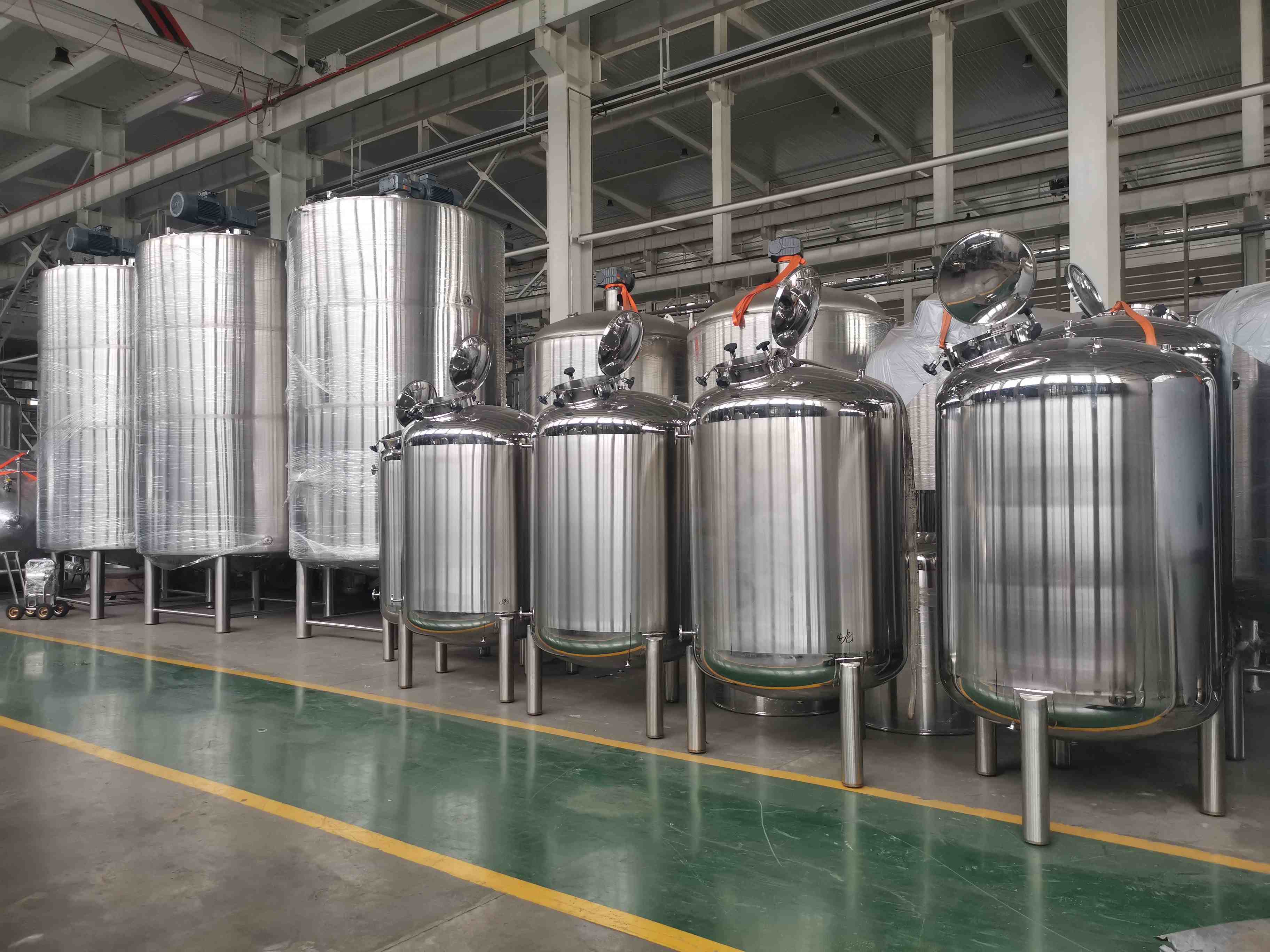
Most tanks look static from the outside, but the steel or polymer walls are constantly flexing under daily load shifts. A fill cycle raises internal pressure enough to stretch the shell a few thousandths of an inch, and when the level drops, it relaxes again. Over thousands of cycles, that tiny movement works like a slow-motion fatigue test, concentrating stress around nozzles, brackets, and seam welds where geometry changes.
Temperature adds another layer of strain. Sunlight on one side of an outdoor tank can create a 30-degree difference from the shaded side, causing uneven expansion. Metal wants to grow in one area while staying put in another, so joints and welds become the unwilling mediators. Repeated heating and cooling can open hairline cracks that are invisible to a visual inspection but wide enough for vapor or liquid to creep through over time.
What makes this quiet is the lack of obvious warning. There is no loud bang or sudden deformation, just a gradual loosening of seals, slow relaxation of bolt tension, and the faint smell of product near a fitting that eventually gets dismissed as normal. By the time a visible stain or drip appears, the wall thickness near a stress riser may already be well past its original margin.
Double-wall vs. single-wall: when the extra layer pays for itself
A double-wall design earns its keep the moment you're dealing with anything hot enough to make a bare hand flinch. That air gap between the two layers acts as a thermal buffer, keeping the outside surface comfortable to hold while the contents stay at their intended temperature for longer. If you've ever watched a customer juggle a single-wall cup of fresh coffee or needed a sleeve just to carry your own tea, you already know why the extra layer exists.
The real payoff shows up in environments where temperature retention and condensation control matter more than saving a few grams of material. Cold drinks in humid weather will bead up and drip all over a single-wall container, but a double-wall version keeps the exterior dry and the drink colder. For anyone serving premium beverages, that difference translates directly into fewer napkins, fewer spills, and a more polished experience without having to add a separate sleeve or coaster.
Still, double-wall isn't a universal upgrade. If the liquid is consumed quickly, stored in a temperature-controlled room, or the priority is minimizing weight and cost per unit, the extra layer becomes a burden rather than a benefit. Single-wall containers remain the right call for short-term use or bulk distribution where the user handles the item briefly. The trick is matching the structure to the actual moment of use—when heat or moisture becomes a recurring complaint, the second wall stops being a luxury and starts paying for itself in fewer complaints and less wasted product.
Remote sensors and gauges that send alerts before a spill
Tank level sensors and pipeline pressure transducers report readings every few minutes, not just during scheduled walkthroughs. A steady drop in line pressure at 3 a.m. or a tank fill rate that suddenly exceeds the pump curve trips an alert well before liquid reaches the rim. Operators see the trend on a phone, often with enough lead time to close a valve or dispatch someone instead of dealing with a cleanup.
Gauges paired with small telemetry modules use cellular or radio signals to bypass control room limitations. Because the units are battery-powered and clamp onto existing fittings, they get installed in remote sumps and secondary containment areas where wiring would cost more than the sensor itself. Redundant float switches and pressure diaphragms cut down on false alarms that desensitize crews.
The real value shows up in the logs after a near miss. A rapid temperature swing on a storage tank or an unexpected backflow event becomes a pattern the system flags for review, so the next alert arrives even earlier. Maintenance teams stop reacting to spills and start scheduling valve replacements or gasket checks based on what the gauges actually measure.
Why a quality liner can outlast the tank shell itself
It might seem backwards, but a properly chosen liner often outlives the steel or concrete shell around it. The shell faces sunlight, rain, temperature swings, and physical impacts from the outside, while the liner is shielded indoors and only has to manage the stored substance. A high-quality liner made from cross-linked polyethylene, PVC, or sprayed polyurea is chemically inert enough to shrug off acids, salts, and solvents that would rapidly corrode an unprotected shell.
Installation also plays a big role. Unlike welded or bolted shell seams, a seamless liner leaves no microscopic gaps where corrosion can start. It flexes with the tank as the structure expands and contracts, avoiding the stress cracks that shorten shell life. Over a decade or more, the liner stays smooth and intact while the exterior develops rust blooms, coating failures, or stress fractures from handling and weather.
Field reports from tank replacement projects back this up: it's common to cut open a discarded shell and find the liner still flexible, with no leaching or blisters. In many cases the liner can be peeled out, cleaned, and reinstalled in a new shell, which is hard evidence that its service life was far from over when the outer structure gave up.
Groundwork: the part of tank installation most people rush
Most tank failures trace back to what happened before the tank ever touched the ground. The rush to set the vessel in place often leads to skimping on soil compaction, drainage slopes, and base material. You can level a spot by eye, but a two-percent grade error means water pools at one end and the bottom plate flexes more than designed. That flex works the welds and coating until a pinhole appears.
Proper groundwork starts with removing topsoil and organic matter, then compacting the subgrade in lifts rather than one deep pass. A crushed stone or sand pad gives uniform bearing, but it is not a substitute for a stable subgrade. If the pad thickness varies because you tried to fix low spots with extra fill, you are building in differential settlement from day one.
The time to check all this is before the crane arrives. Walk the perimeter with a hand level or laser, check the pad thickness with a probe rod, and verify that the crushed stone is moist enough to compact yet not so wet it pumps. Ten minutes of verification beats a costly re-leveling job once the tank is full and the ground has had a season to settle.
FAQ
Stainless steel and fiberglass-reinforced plastic tend to outlast carbon steel when you're storing acids, brines, or industrial chemicals. For highly aggressive substances, consider a lined carbon steel tank with an epoxy or rubber interior — it gives you structural strength plus chemical resistance without the full cost of exotic alloys.
Regular weld inspections and ultrasonic thickness testing catch weak spots before they fail. You also want to monitor the tank foundation for uneven settling, which can stress seams and fittings. Pair that with a proper cathodic protection system if the tank is buried or sitting on soil with high moisture.
A sloped bottom with a low-point drain makes cleaning and water removal much simpler. Weather-resistant coatings, wind-rated anchoring, and an overflow pipe that directs excess liquid away from the tank shell are just as critical. Don't overlook UV-stabilized gaskets and seals, since sunlight breaks down standard rubber quickly.
If you're storing fuel, solvents, or anything regulated near a water source, the built-in secondary containment usually saves money over building a separate dike. Double-wall tanks also simplify leak detection because you can monitor the interstitial space with a vacuum or liquid sensor instead of relying on visual checks alone.
A visual walk-around every month catches obvious issues like rust blooms, loose bolts, or clogged vents. For structural integrity, plan a formal internal inspection every five years for most tanks, or every two to three years if you're storing corrosive or temperature-cycling liquids. Keep a written log so you can spot patterns in wear and maintenance.
They act as a backup layer that captures spills or slow seepage before it reaches the ground. This can be a concrete berm, a lined pit, or an integrated double-wall design. The key is sizing it to hold at least 110% of the largest tank's volume, so a worst-case failure doesn't overwhelm the containment area.
Yes, with the right engineering. Above-ground tanks make leak detection and repair far easier, but they need proper secondary containment, pressure relief, and fire-rated supports if you're storing flammable liquids. Underground tanks avoid weather exposure, but corrosion is stealthier and repairs often mean excavation, so above-ground is frequently the more practical choice for active hazmat management.
Conclusion
Choosing a storage tank isn't just about capacity; the liquid itself should drive the material decision. Corrosive chemicals often demand fiberglass or polyethylene, while high-temperature or pressurized contents usually sit more safely in steel. But even the right shell can fail silently if temperature swings and internal pressure are ignored—thermal expansion and vapor pressure shifts create stress that weakens welds and seams over time. That's why a quality internal liner matters as much as the outer wall; a flexible, chemical-resistant liner can absorb minor movement and outlast the shell, preventing leaks before they reach the ground. When evaluating double-wall versus single-wall tanks, the extra layer is worth it for hazardous or environmentally sensitive liquids, providing a built-in containment zone that pays for itself after one avoided spill.
But no tank solution is complete without proper monitoring and installation. Remote sensors and gauges that send real-time alerts for level, pressure, or temperature changes give operators a chance to act before a small anomaly becomes a rupture. Just as critical is the groundwork—compaction, drainage, and foundation slope are often rushed, yet uneven settling can distort the tank and concentrate stress on fittings. A well-prepared base with adequate drainage keeps the structure stable and prevents groundwater corrosion from below. Together, material choice, liner integrity, containment redundancy, smart monitoring, and careful site preparation form the core of reliable liquid containment.
Contact Us
Contact Person: Ada Xu
Email: [email protected]
Tel/WhatsApp: 0577-86806088
Website: https://www.dayuwz.com/