

Top UL FM Post Indicator Valve (PIV) Options for Reliable Fire Protection Systems
2026-11-02
When flames are seconds away, your fire protection system is only as reliable as its weakest link—often the post indicator valve (PIV). Choosing a UL or FM approved PIV isn't just a checkbox; it's the difference between instant water flow and a costly failure. In this guide to top PIV options, one brand consistently stands out for durability and real-world performance: DRIFCO. Here’s what to look for before you trust your next system.
What Actually Changes When a PIV Earns UL and FM Approval
A post indicator valve that carries both UL and FM approval has passed independent testing that goes well beyond a basic open/close cycle. The internal stem packing, thrust collar, and connection points are built to tolerate repeated operation under full rated pressure without leaking or binding. Manufacturers must also document every material lot and heat number, so a valve from one production run matches the exact design that was tested.
The more visible changes show up in the markings and the maintenance expectations. Approved PIVs carry the UL and FM marks along with the pressure rating, model, and year of manufacture, making it easier for inspectors to verify that the installed unit matches the system design. For building owners, the approval means the valve has been subjected to unannounced factory audits and periodic retesting, so the reliability isn't just a one-time promise but an ongoing obligation.
Gate vs. Butterfly Post Indicator Valves: The Overlooked Maintenance Trade-Off
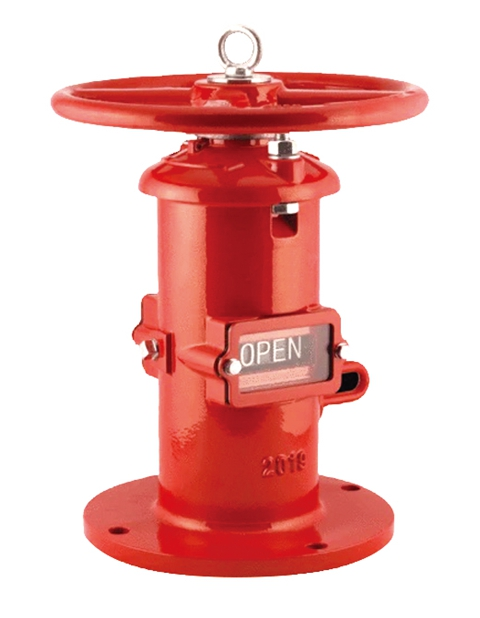
When comparing gate and butterfly post indicator valves, the spec sheet rarely captures what happens after installation. Gate valves rely on a threaded stem and wedge that need regular exercise to keep from seizing, while butterfly valves depend on a disc and seat that can wear quietly until the valve no longer seals. That difference shapes the entire maintenance routine.
A gate post indicator valve gives you a clear rising stem and a positive shutoff, but the stem packing and threads are magnets for corrosion and leaks if the valve sits untouched for months. Repacking a gate valve is a straightforward but physical job, and the valve’s weight makes it less pleasant to cycle during weekly tests. Butterfly post indicator valves, by contrast, turn with a quarter-turn handle and need less muscle, but the rubber seat can take a permanent set, crack, or become dislodged—problems that often require pulling the valve from the line.
The maintenance trade-off comes down to how your crew actually works. If they will exercise the valve on a fixed schedule and can inspect the seat, a butterfly saves time and effort. If the valve is likely to be forgotten between inspections, a gate valve’s stubborn reliability on position indication may be worth the extra packing upkeep. Ignoring this choice means inheriting either a leaking stem or a silently failing seat.
Material Selection for PIVs in Corrosive Water and Soil Conditions
In aggressive water and soil, the obvious weak points on a PIV are the buried stem, flange faces, and any bolted joints where moisture lingers. Ductile iron bodies with a high-build fusion-bonded epoxy coating handle most mildly corrosive sites, but once chloride levels climb or the soil stays saturated, we specify 316 stainless steel for the valve body and stem. The extra cost is small compared to digging up a pitted valve after five years.
Internal trim matters just as much. Bronze or brass seats and discs can dezincify in soft, low-pH water, so a nickel-aluminum bronze or 316 stainless trim is often the safer call. For seals, EPDM works well with water and mild acids, while FKM handles hydrocarbons and stronger chemical exposure. Always check the soil resistivity—anything below 1,000 ohm-cm usually means cathodic protection or a fully nonmetallic valve is worth considering.
Galvanic corrosion is another hidden failure mode. If a stainless stem passes through a ductile iron bonnet, use a dielectric bushing or isolation washer to break the electrical path. Also avoid stainless fasteners in direct contact with aluminum or galvanized parts in wet conditions. A simple continuity test during installation can catch these issues before backfill locks them in place.
Why Tamper Switches on PIVs Deserve More Attention Than They Get
Most maintenance teams glance at a post indicator valve and see only the wheel and the housing. The tamper switch attached to it rarely gets a second thought until something goes wrong. That is exactly the problem. If the valve is shut for routine work or by accident and the switch is not monitored, the fire protection system can sit dead quiet for weeks. The switch is the only component that tells the panel the valve is no longer open, and ignoring it turns a minor oversight into a serious exposure.
Regular checks reveal issues that visual inspections alone miss. A corroded contact, a loose cover, or a misaligned actuator can keep the switch from sending a signal at all. Worse, some older installations have the switch wired incorrectly, so the panel never learns the valve was closed. Paying closer attention to these small devices means testing them under real conditions and treating every trouble signal as a clue rather than a nuisance. It is a low-cost habit that preserves the point of having a sprinkler system in the first place.
Weatherproofing Strategies for Above-Ground PIV Installations
Above-ground PIV (Post Indicator Valve) assemblies face constant exposure to rain, snow, ice, and UV radiation. The first layer of defense is a properly sealed valve body and indicator housing. Apply a high-grade, non-hardening sealant around all threaded connections and the handwheel stem penetration. Avoid standard plumber's putty, which dries out and cracks within a season. Instead, use a polyurethane or silicone-based compound rated for outdoor metal-to-metal joints. For coastal or industrial environments, add a corrosion-inhibiting wrap around the lower riser section where standing water tends to collect.
Protect the indicator mechanism itself by ensuring the glass or polycarbonate window is gasketed on both sides. Many failures start at the top flange where condensation forms inside the post. Drill two small weep holes at the lowest point of the indicator chamber to let trapped moisture escape. Angle the holes downward at 30 degrees and cover them with stainless steel mesh to prevent insect entry. In freezing climates, fill the post's interior cavity below the valve stem with closed-cell foam inserts—this stops ice from jamming the travel indicator while still allowing manual operation.
Finally, pay attention to the paint system. A two-part epoxy primer followed by an aliphatic polyurethane topcoat offers far better weather resistance than standard alkyd enamel. Touch up any scratches immediately, especially where the wrench nut meets the post. For installations in areas with heavy de-icing salt spray, consider a hot-dip galvanized post with a sacrificial zinc anode buried adjacent to the foundation. Keep the surrounding ground graded away from the base so that puddled water never reaches the flange bolts.
Smart PIV Monitoring: Closing the Gap Between Manual Checks and Real-Time Alerts
Traditional PIV (Particle Image Velocimetry) workflows often hinge on sporadic manual checks, leaving experimentalists blind to subtle flow changes until hours after data collection. Smart PIV monitoring flips that model by embedding lightweight analysis directly into the acquisition loop, so each captured frame is evaluated against expected flow statistics on the fly. Instead of waiting for a post-processing script to flag outliers, researchers get a live read on correlation quality, vector yield, and region-of-interest stability—right as the laser fires.
The real advantage shows up in transient or hard-to-repeat experiments. A sudden drop in seeding density, a misaligned light sheet, or an unexpected vortex shedding mode can all be caught within seconds rather than after the tunnel shuts down. By pairing threshold-based alerts with a simple time-series preview of key metrics, smart monitoring turns PIV from a batch job into an interactive diagnostic tool. Operators can adjust parameters mid-run, save compromised data from being silently averaged into a result, and avoid the costly gap between “something looks off” and “we’ve already torn down the rig.”
Closing that gap doesn’t demand a full deep-learning pipeline. Even basic checks—mean particle displacement, peak ratio trends, or histogram drift in vector residuals—deliver enough signal to separate a healthy run from a degrading one. When these checks run continuously and surface as real-time alerts, the lab gains a safety net that manual spot checks never provided: not just faster error detection, but a clearer trail of evidence for why a dataset should be trusted or discarded.
FAQ
It is a control valve mounted above ground on a post so crews can quickly see whether the water supply to a sprinkler or standpipe system is open or shut. A target on the post shows OPEN or SHUT, and the valve can be operated with a special wrench from ground level.
UL and FM each run their own fire protection testing programs, so a dual listing tells an owner or AHJ that the valve has passed independent checks for strength, leakage, and durability. Many insurers and local codes simply refuse to accept a valve that lacks one or the other.
The two workhorses are the traditional gate valve PIV and the butterfly valve PIV. Gate valves are older and handle debris better; butterfly valves are lighter, cheaper, and open or close with a quarter-turn, which is why they now dominate new construction.
A wall post indicator mounts on the outside wall of a building and connects directly to the riser, so no underground pit is needed. A yard post indicator stands in the ground away from the building and typically serves an underground supply line. The wall type saves space and money in tight urban lots.
Check the water quality, space, and torque limitations. Butterfly valves are compact and fast but can be sensitive to sand or scale; gate valves are forgiving with debris but slower and bulkier. Also confirm the local AHJ accepts a butterfly PIV as the main control, since some older codes still favor gate types.
Leaving the valve in the closed position after hydrostatic testing, failing to secure the post against vehicle impact, burying the operating nut under mulch or pavement, and misaligning the indicator so it reads OPEN when the internal gate is still partially closed are the big ones.
NFPA 25 calls for periodic inspection and operation of control valves, with a full open-close test typically done at least once a year for a main PIV. After any system work, run the valve through a complete cycle to make sure the indicator matches the actual position.
Yes, most modern PIVs accept a supervisory switch that sends a signal to the fire alarm panel if someone moves the valve handle. That early warning prevents a simple act of vandalism or an accidental shutdown from silently leaving the building unprotected.
Conclusion
Selecting a post indicator valve that holds both UL and FM approvals isn't just about paperwork—it reshapes how the valve performs under real fire conditions. Approved units are tested for end-to-end functionality, meaning the target, stem, and handwheel survive actual operating torque rather than just static pressure. Between gate and butterfly designs, the overlooked trade-off is maintenance: gate valves tolerate debris but demand regular exercising to prevent seizure, while butterfly PIVs stay easier to turn yet their rubber seats degrade quietly in systems with poor water quality. In corrosive soil or coastal air, material choice becomes the difference between a ten-year valve and a thirty-year one, with ductile iron bodies and 316 stainless steel trim outperforming standard cast iron and brass.
Tamper switches deserve more attention because a closed PIV with a failed supervisory signal is a hidden liability—vibration, moisture, and rodents can all defeat cheap switches, so specifying hermetically sealed contacts and testing them under load matters. For above-ground installations, weatherproofing goes beyond a coat of paint: proper drainage, UV-stable extension bonnets, and freeze protection prevent false alarms and operational failures. Smart PIV monitoring closes the gap between weekly manual checks and real-time alerts by adding position sensors that transmit open/closed status directly to a fire alarm panel or building management system. This combination of approval-backed mechanics, corrosion-resistant materials, rugged tamper detection, and continuous monitoring is what separates a reliable fire protection valve from one that only looks good on a spec sheet.
Contact Us
Contact Person: George
Email: [email protected]
Tel/WhatsApp: 13863633883
Website: https://www.es-fire.com